The woman accused of murdering eight-year-old Rickah’Shae Keefe-Haerewa has admitted multiple assault charges involving him and another child, while continuing to deny murder. The case, now before the High Court, raises difficult questions about prolonged violence against children, the responsibilities of caregivers and whether warning signs are recognised before tragedy strikes
eLocal Report: Based on reporting by Hannah Bartlett for the New Zealand Herald, republished by RNZ HERE.
Content warning: This report concerns the death and alleged abuse of a child.
Assaults Admitted
Maya Hati, the woman charged with murdering eight-year-old Rickah’Shae Keefe-Haerewa of Te Teko, has pleaded guilty to four assault charges involving Rickah’Shae and another child. However, she continues to deny charges of murder and ill-treatment of a child, which remain before the High Court and are scheduled for trial in April 2027.
At a hearing in the High Court at Tauranga, Hati admitted two representative charges of assaulting a child and two representative charges of assault with a weapon. Representative charges cover multiple incidents of a similar nature over a period of time, rather than one isolated event. The admitted charges relate to conduct occurring between 20 October 2021 and 15 November 2024, a period extending over approximately three years.
Although Hati has admitted the four assault charges, the specific allegations surrounding those offences remain disputed and are expected to be examined during the murder trial. Her guilty pleas must therefore not be confused with an admission of responsibility for Rickah’Shae's death. The murder and ill-treatment allegations have yet to be determined by the court.
A Child's Death
Rickah’Shae, also known affectionately as Joppy, died on 15 November 2024 after being taken to Whakatāne Hospital. Medical staff found him unresponsive in the back seat of a vehicle, and attempts to resuscitate him were unsuccessful. He was eight years old.
The reported cause of death was blunt force trauma to the abdomen. Medical examinations also identified other injuries, including evidence of older injuries described as consistent with non-accidental assault. Those findings form part of the wider circumstances surrounding his death, although responsibility for the alleged fatal assault remains a matter for the forthcoming trial.
For Rickah’Shae's whānau, the legal proceedings have meant repeatedly returning to court while awaiting the resolution of the remaining charges. Family members attended the latest hearing and remained quiet as Hati entered her guilty pleas. At previous appearances, supporters have worn clothing carrying the words "Forever 8", a tribute to the young boy whose life ended before his ninth birthday.
The Accused Before Court
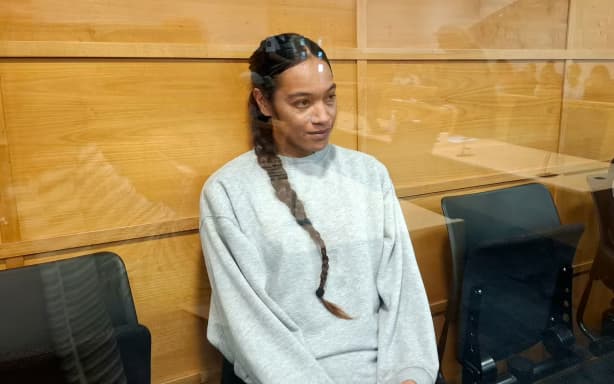
Maya Hati at an earlier appearance in the Tauranga District Court. Photo: NZME.
Following the guilty pleas, convictions were entered on the four admitted assault charges. Sentencing on those offences has been deferred until after the murder trial, allowing the court to consider the relevant matters once the outstanding proceedings have concluded.
Hati's lawyer, Caitlin Gentleman, sought to have her client readmitted to bail. Justice Kiri Tahana declined to grant bail at the callover hearing, indicating that the issue should instead be considered at a separate hearing. Gentleman confirmed she would seek another court date for that application.
The decision did not determine the outstanding murder charge. Hati retains the presumption of innocence on the charges she denies, and the court must assess the evidence presented at trial before any finding of guilt can be made.
Caregiver Already Sentenced
Rickah’Shae's caregiver, Pauline Timu, has already been sentenced for manslaughter in connection with his death. According to earlier reporting, her case concerned her role in his injuries and her failure to intervene in the alleged fatal assault. That earlier outcome forms an important part of the wider history of the case, but it does not establish Hati's guilt on the charges she continues to contest.
The distinction between the two proceedings is essential. One caregiver has been dealt with by the courts, while Hati has admitted specified assaults but denies the alleged murder. The remaining allegations must be tested through the criminal justice process, where evidence, witness accounts and the legal requirements for each offence will be examined.
The proceedings nevertheless place renewed attention on the circumstances in which a young child could experience repeated violence over an extended period. The admitted representative assault charges cover conduct over several years, making the case particularly distressing for those concerned with the safety and protection of vulnerable children.
Warning Signs
Cases involving prolonged violence against children raise questions that extend beyond the criminal responsibility of individual defendants. They bring into focus the ability of families, communities, schools, health professionals and child protection agencies to recognise signs of harm and respond effectively when concerns emerge.
The present reporting does not establish which agencies, if any, received warnings about Rickah’Shae before his death, nor whether specific opportunities to intervene were missed. Those matters should not be assumed without documentary evidence or findings from an authorised investigation. Nevertheless, the existence of admitted assaults over an extended period makes the broader question of early detection and intervention a legitimate matter of public concern.
Child protection depends on more than legislation or formal reporting procedures. It requires adults who encounter children to recognise potential warning signs, effective channels for escalating concerns and institutions capable of acting promptly when credible evidence of abuse emerges. Where responsibilities are fragmented, or where reports are not adequately followed through, vulnerable children may remain exposed to harm.
Does This Affect New Zealand?
Rickah’Shae's death is a New Zealand tragedy, and the issues it raises are directly relevant to the country's child protection and justice systems. The case highlights the difference between responding to serious harm after it has occurred and establishing safeguards capable of preventing that harm in the first place.
The criminal courts have a vital responsibility to determine individual guilt according to evidence and law. But criminal proceedings alone cannot answer every public policy question arising from a child's death. Where a case reveals sustained violence, it is reasonable to ask whether existing systems are sufficiently coordinated, whether concerns can be reported without unnecessary barriers and whether vulnerable children have access to adults able to act in their interests.
Any broader review must be grounded in established facts rather than assumptions about the particular people or agencies involved. The public interest is best served by understanding what is known, identifying what remains uncertain and ensuring that any systemic lessons are supported by evidence.
Will This Make New Zealand Stronger?
A stronger New Zealand is one in which children can grow up free from violence, caregivers understand their responsibilities and serious concerns about a child's safety receive timely attention. Achieving that outcome requires effective prevention, reliable intervention and a justice system that treats both victims and accused persons fairly.
Rickah’Shae's case has not yet reached its final legal conclusion. The guilty pleas entered by Maya Hati establish responsibility for the assault offences she has admitted, while the murder and ill-treatment charges remain contested. The forthcoming trial will determine the outstanding criminal allegations according to the evidence.
For the family and whānau who continue to mourn Rickah’Shae, the proceedings represent another stage in a long and painful process. Beyond the courtroom, the enduring question is whether New Zealand can learn enough from cases of serious child abuse to protect other children before it is too late.
Justice requires accountability for offences proved in court. A stronger society also requires the determination to prevent children from suffering such harm in the first place.
Sources
Image credits: Both original photographs supplied by NZME and reproduced via RNZ. No alterations or AI reconstruction.