Ofer Cassif tells RT the war is driven by personal and political agendas, not real threats
As
Israel and the United States press ahead with their sweeping military
campaign against Iran, political consensus in Jerusalem appears nearly
absolute.
In Israel, the war has drawn support across much of the
political spectrum. Opposition leader Yair Lapid, long a fierce critic
of Netanyahu, has embarked on a series of international interviews
defending the campaign. Former Prime Minister Naftali Bennett, another
political rival, described the offensive as an effort to weaken “the machinery of oppression” in Iran so that its people might later decide their own future.
But
inside the 120-seat Knesset, one lawmaker is challenging the official
narrative, arguing the war is driven less by security than by political
calculation.
Ofer Cassif, the only Jewish member of the
predominantly Arab Hadash party, has emerged as one of the very few
lawmakers openly opposing the war. In an interview with RT, he offered a
sharply critical assessment of its motives, timing and likely
trajectory.
Lies, power, and elections behind the war
RT: Israel and the US say that the war was needed to prevent Iran from obtaining nuclear weapons and to stop the threat of their ballistic missiles. How grounded are these claims?
Cassif: It’s important to remember that last June, after the first aggression against Iran, Netanyahu declared the following: “We achieved a historic victory. We removed the nuclear missile threat. We eliminated Iran’s nuclear project and its missile industry.”
So
he lied then, and he’s lying now about both the nuclear weapons and the
threat of the missiles. The real reason behind the aggression is the
political and economic interests of the government of Israel and the
administration of the United States, Trump’s administration. That’s the
real reason. It has nothing to do with a real threat.
Obviously,
that doesn’t mean that I have any kind of sympathy for the regime of
Iran. I am against it. But at the same time, I’m against this aggression
because it has nothing to do with the well-being of the Iranian people,
whom I support in their struggle. And it has nothing to do with the
threat, as I just mentioned. It has everything to do with economic and
political interests, including the personal interests of Netanyahu, who
wants to declare early elections and present himself as the savior of
Israel vis-à-vis the Iranians and the whole region.
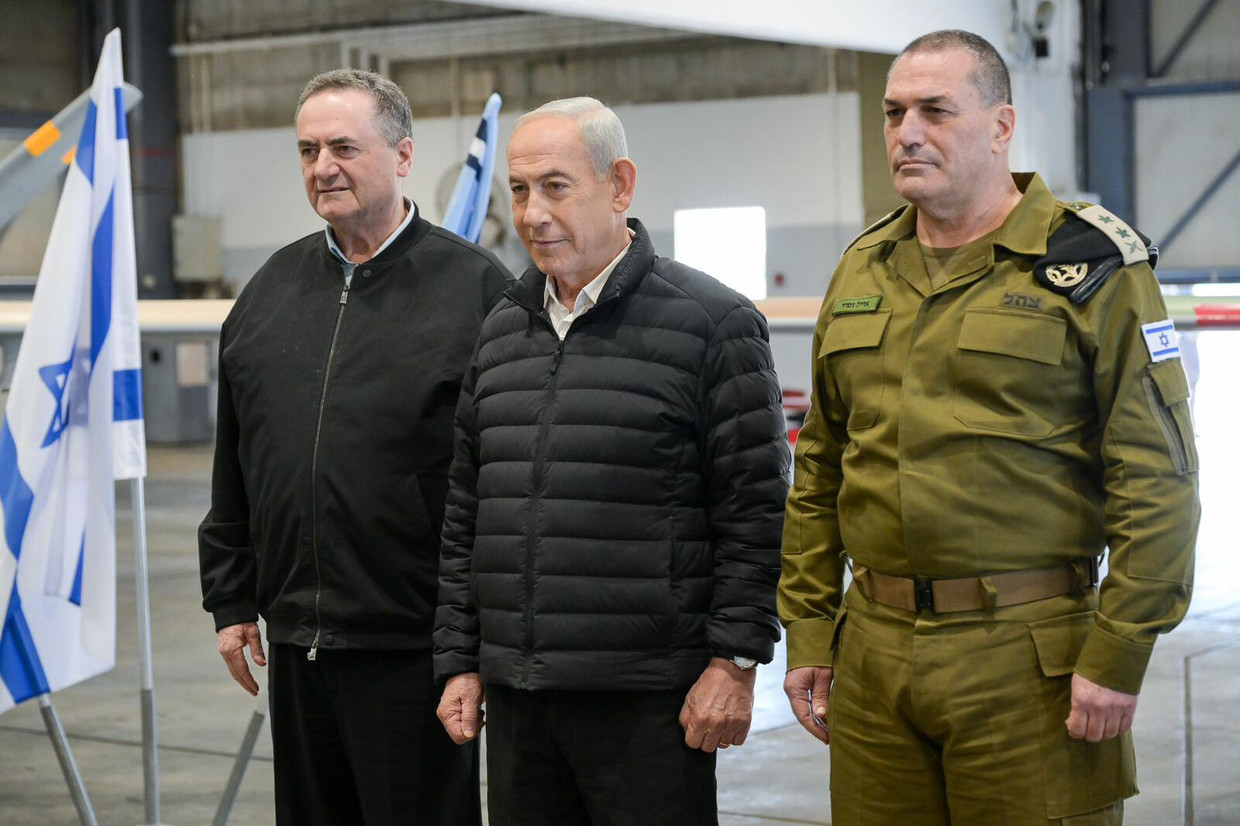
Israeli Prime Minister Benjamin Netanyahu (C) visits Palmachim Airbase accompanied by Defense Minister Israel Katz (L) and IDF Chief of Staff Lt. Gen. Eyal Zamir (R) on March 3, 2026. © Global Look Press / Keystone Press Agency / Maayan Toaf / Israel Gpo
RT: Another claim that Israeli politicians are now repeating is that Israel is leading a war against radical Islam for the sake of the free world. What is your position on this?
Cassif:
Netanyahu doesn’t care about Islam or radical Islam. He doesn’t care
about the Iranian regime, the well-being of the Iranian people, or even
the Israeli people. He cares only about himself. He’s terrified of
prison. He knows that once he loses political power, he may rapidly find
himself behind bars because of the trial pending against him.
That’s
the real reason for his rhetoric. He’s not saving the world from
radical Islam. And in any case, I don’t believe radical Islam is the
main problem the world faces today. Of course, fanatic Islam is a
problem, like any fanaticism. But I don’t think it’s worse than fanatic
evangelicals in the United States or so-called religious Zionist
fanaticism in Israel.
The main danger the world faces is capitalism, which is responsible
for these aggressions as well as the climate crisis, which is probably
the greatest long-term threat we all face. Unfortunately, leaders like
Netanyahu, Trump, and others make that problem more severe.
That is what we need to confront and deal with, not radical Islam.
RT: What about the timing of the attack? Why now?
Cassif:
The timing of the aggression serves the interests of both Netanyahu and
Trump, first and foremost personally. As I mentioned, there are midterm
elections in the United States, and elections here are supposed to be
in October but apparently may be moved to June. Unfortunately, both of
these leaders and their surrounding administrations believe that such
aggression will serve them electorally.
From marginalized to heard?
RT: You have been one of the very few voices who has spoken against the war. How are you perceived in Israel and how isolated do you feel?
Cassif:
It’s been quite systematic since the state was established: every time
there is a war, or any kind of conflict or crisis, unfortunately there
is a conformism among the vast majority of the people in Israel,
especially politicians. So we got used to being relatively isolated and
marginalized because we are actually the only political force that has
always been against any kind of aggression and war.
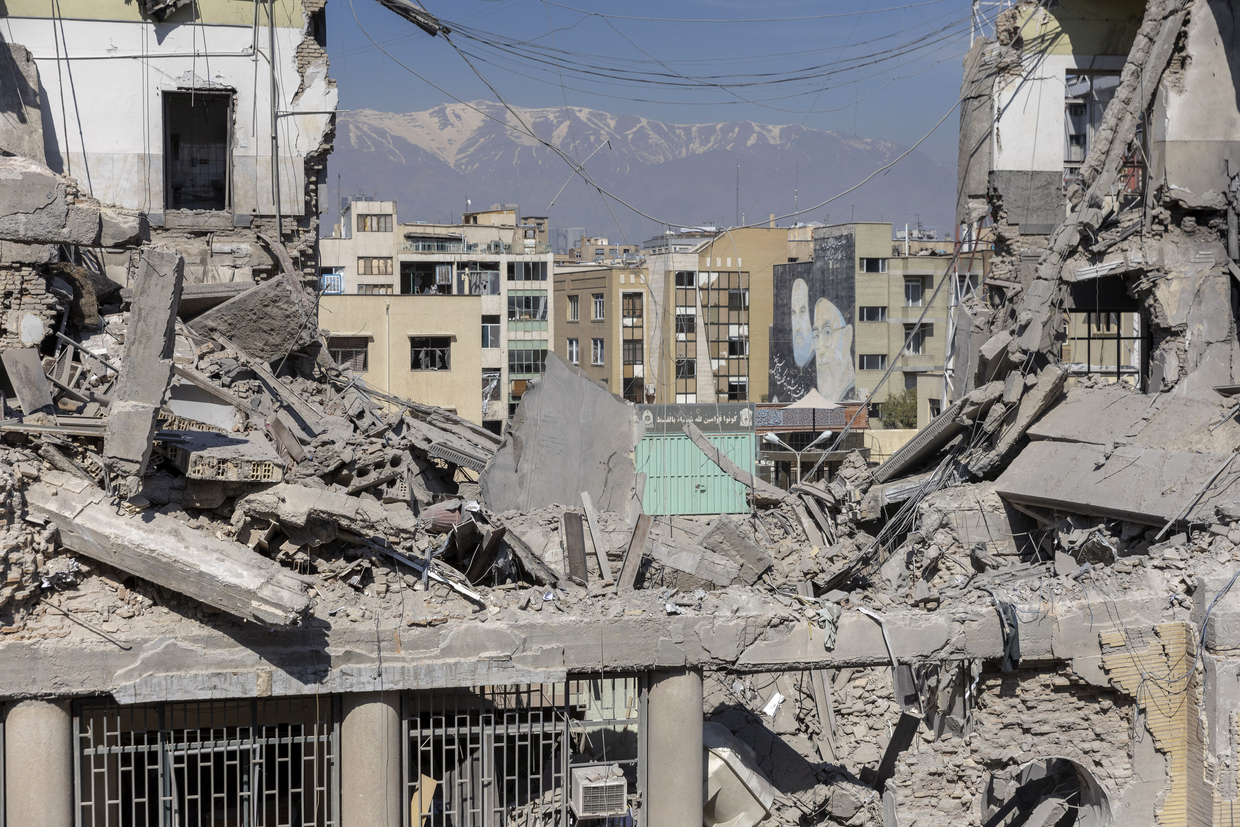
A view of a damaged building, struck days earlier,
during the US-Israeli military campaign on March 4, 2026 in Tehran, Iran. © Majid Saeedi / Getty Images
Up until now, we’ve
seen that, although we were always the first and only ones to oppose
wars like, for instance, the first Lebanon War or the attack on Gaza
before the genocide began almost three years ago. In the beginning we
were always marginalized and isolated. But after a while, more and more
people, including politicians and political groups, began to understand
that those wars or aggressions were a sham.
Nowadays, because of
the last two and a half years since the massacre of October [2023],
there are more people, not necessarily politically aligned with us, who
do not trust Netanyahu and the government and his coalition in general.
We are still a minority, still marginalized, but not as before.
RT: Although you are now a minority, with 81 percent of the Israeli public supporting the war, according to a recent poll, how realistic is it for you to influence the discourse and stop the war?
Cassif:
I believe that in the future, if the war doesn’t stop, as destruction
and death grow within Israel too, perish the thought, we may find
ourselves perhaps even in the majority. As I said before, the anti-war
camp in Israel is big, but not big enough. It’s definitely not the
majority.
It is realistic to influence, because there are also
objective circumstances. As this aggression evolves, I’m afraid we are
going to see such a toll that more and more people in Israel will align
with us against the war. I don’t think we will be able to stop the
aggression internally at the moment.
I think the only way to stop
the aggression now is if the American public, which, according to polls,
already has a majority against the war, takes to the streets.
Especially if within the Republican base, there is a very clear public
indication against the aggression. Trump, particularly as the midterm
elections approach, might stop the war for his own sake. Just like
Netanyahu, he also cares only about himself.
So the key is in the
hands of the American public. If they take to the streets or apply
sufficient pressure on Trump and his administration, I think the
aggression could stop.
A lone voice in a time of war
As
Israeli jets continue their operations and Washington signals its
unwavering backing, the political establishment in Jerusalem remains
largely united behind the campaign. Yet Cassif’s dissent underscores
that consensus is not absolute.
Whether his warnings will resonate
more broadly depends, as he suggests, on how the conflict unfolds, on
the battlefield, in the streets of Israeli cities, and perhaps most
decisively, in the political climate of the United States.
For
now, in a parliament of 120 members, his remains one of the few voices
openly arguing that the war marketed as a matter of survival may, in
fact, be a matter of political survival.
By Elizabeth Blade, RT Middle East correspondent