Alex Krainer
History
records many crisis periods where the ruling “elites” sought to avert
social uprisings by culling their own populations, especially the
military-age males. This usually involved fomenting fear of an external
enemy: barbarians at the gates! If we don’t stop them, they’ll surely
invade, ransack our towns, rape our women and enslave our children.
State
propaganda was there to induce an “intense and cohering fear” into the
hearts and minds of the people and all the fighting age males were
called to defend the homeland. Leaving their farms, businesses and
families behind was never an easy choice, but the patriotic call of duty
could not easily be disregarded. The state often incentivized men to do
the right thing by promising a share in the spoils of war or offering
them tax benefits.
Many avoidable wars then turned into needless,
protracted quagmires, resulting in large-scale slaughter of soldiers at
the front. Invariably, history tends to ascribe such episodes to errors
of incompetence, missed opportunities, issues of leader egos or other
plausible factors. For some reason, the possibility that a war was
deliberately orchestrated and that that the wholesale slaughter of
troops was its desired outcome is virtually never even entertained.
Who would ever do such incomprehensibly evil things? In fact, historians often invoke Robert Hanlon’s
quip, “never ascribe to malice what can be explained by stupidity.” But
why should we be so sure that our leaders are only stupid or that they
are incapable of deliberate malice. Take the history of World War I:
most books and documentary films present the massive casualties of its
many battles like those at Gallipoli, Loos or Somme as results of
military generals’ stupidity…
General Sir Douglas Haig’s two million
The
scene of the biggest British World War I offensive against the German
forces was at Loos in north-east France, some 100 kilometers south-east
of the city of Calais. In the morning of September 26, 1915, German
troops saw about 10,000 British troops walking towards them across more
than half a mile of no man’s land. The German machine guns were in
protected bunkers behind long intact rolls of barbed wire, in belts up
to 30 feet thick. The British moved forward in 10 columns, each about a
thousand men - dead easy targets for German machine guns.
In the
first two hours of the Battle of Loos more British soldiers died than
the total number of casualties in all three services on both sides on
D-Day 1944. Again and again they were called upon to attempt the
impossible, and in the end, nearly all of them were killed. Shocked and
nauseated by the sight of the massacre on what they called the
Leichenfeld – field of corpses – the Germans occasionally held their
fire to allow a few surviving British soldiers to retreat back to their
trenches.
British offensive at Loos, under the command of General Sir Douglas Haig
continued for another two weeks with more than 61,000 British
casualties. Subsequent accounts explained this disaster in terms of
incompetence, delusion, failure of intelligence and pig-headedness of
General Haig. Generals, they say, always fight the last war and General
Haig was no different. Supposedly, he didn’t appreciate that the
invention of machine guns made infantry advances an impossible and
obsolete tactic.
Except, Sir Douglas knew exactly
what machine guns coud do. While serving in the Queens’ Hussars
(Cavalry), he obtained a prestigious post at the Staff College in
Camberley where he studied the new weapons, including the water-cooled
Maxim machine guns that could fire 600 rounds per minute. In the Battle
of Omdurman (Sudan) in September 1898, Haig and Winston Churchill
saw first-hand the huge destructive power of the machine gun when tens
of thousands of Mahdist warriors were mowed down in a matter of hours.
Nevertheless, 17 years later he would send hundreds of thousands of
British soldiers to walk slowly out over open grounds facing superior
German machine guns.
If Haig’s performance was a failure of
stupidity, one might expect that he’d be promptly demoted or discharged
from service, but that’s not what happened. Sir Douglas was put in
charge of another major British offensive at the Somme. On 1 July 1916,
the very first day of the battle, British troops were ordered to walk
slowly across the no-man’s land against German machine guns. That same
days, 19,240 men were killed. The battle continued for 140 days during
which the British army suffered 419,654 casualties.
One year after
the Somme disaster, “Butcher Haig” came up with another plan for a
major offensive and “war-winning breakthrough.” The Third Battle of
Ypres was fought between July and November 1917. It is remembered for
its utter futility: British forces gained only several miles of muddy
terrain at a cost of over quarter of a million men killed, wounded or
missing. In all, General Haig is believed to be responsible for
approximately two million British (and Empire) casualties under his
command.
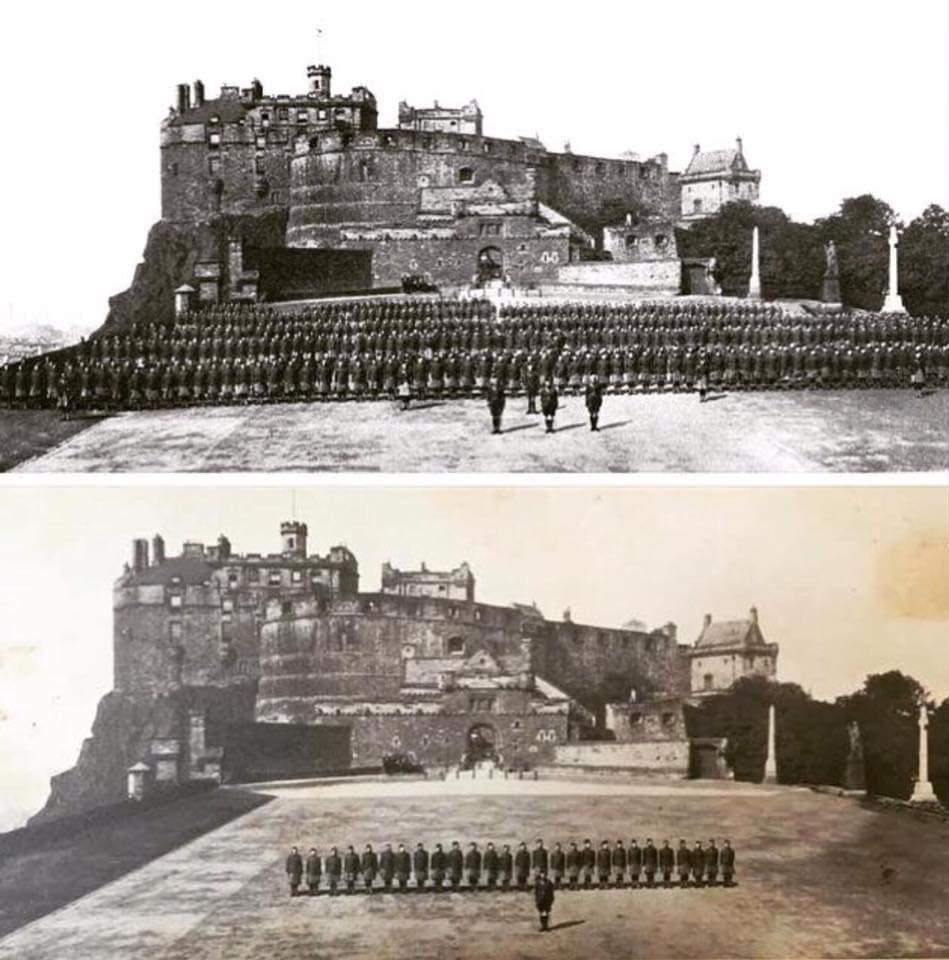
He’s a jolly good fellow, and so say all of us!
Did
the British high command investigate General Haig and punish him for
the massive and needless sacrifice of British soldiers? Of course, they
did not. After the war, General Haig was awarded 100,000 British pounds
in recognition of the “great service he had rendered the nation.” This
sum would be equivalent of about 4 million in today’s currency, but this
was not all: British government bought the old clan Haig family estate
at Bemersyde and presented the stately home with 1,400 acres of prime
land to him. He was also given the noble title of Earl.
Adding
insult to injury (and death) of ordinary soldiers, General Haig set up a
welfare organization that raised revenues through the sale of
artificial poppies commemorating the fallen soldiers. He lived out his
days playing golf and touring Britain and the Commonwealth, officially
unveiling war memorials to soldiers who died for “freedom and
civilization.”
Malice or stupidity?
It
may be that the story of General Haig is only a spectacular example of
stupidity at all levels of the British establishment. From today’s
perspective however, the episode is suspect. Today again, avoidable wars
appear to be escalating and multiplying with no end in sight and
Western political “elites” don’t seem phased in the slightest by the
mounting casualties. Western economies are in deep crises, social
uprisings and potentially even civil wars are looming, but state
propaganda has raised the spectre of barbarian hordes once more.
The
Russians are coming! If you live in the Americas, the Chinese are
coming! President Trump’s war of choice against Iran is still escalating
and its collateral damage could include a nuclear exchange and famine
for a large proportion of the global population. There can be no doubt
that stupidity is an important ingredient of the whole toxic brew. But
we can’t dismiss the possibility that malice is also at play.
How do we get rid of poor people?
In 2001, Hollywood producer Barry Josephson wrote to Jeffrey Epstein, stating the following email message:
“I’ve been thinking a lot about that question that you [Jeffrey Epstein] asked Bill Gates, ‘how do we get rid of poor people as a whole,’ and I have an answer/comment regarding that for you.”
Today
we know that Epstein and Bill Gates collaborated extensively. Their
collaboration included work on planning pandemics and developing
vaccines. Bill Gates even publicly mused about reducing the population
through vaccination programs and “reproductive health.”
A
whole long book could be written about these topics, and about Jeffrey
Epstein’s employers, the Rothschild banking family who have been active
in fomenting and funding many wars over the past two centuries. There is
much circumstantial evidence that they may have played a role in
instigating the current conflict in Ukraine, which is corroborated in
Epstein’s 2014 correspondence with Arianne de Rothschild.
In
light of all this, we must question the continued predictions about new
pandemics, climate alarmism, attacks on farmers and food production
systems, the “elites’” obsession with overpopulation, and other
seemingly contrived crises, all of which seem to undermine
life-sustaining systems humanity has created over decades and centuries,
and push humanity closer to cataclysmic crises that could materialize
in the future.
This may seem far fetched perhaps. But having
witnessed many instances of “stupidity” over the past few years alone,
we should be extra vigilant about the possibility of malice. Otherwise,
we all risk slow-walking across no-man’s land like General Haig’s two
million troops, resigned to the idea that complying and following orders
is the right thing to do, or that non-compliance could be risky.