The New Zealand Government has confirmed it will proceed with plans for a liquefied natural gas (LNG) import terminal, while abandoning an earlier proposal to fund the project through a levy on electricity bills.
By elocal Business Desk
Energy Minister Simeon Brown announced the decision during a speech to the Auckland Business Chamber, describing LNG as the most practical solution available to protect the country against electricity shortages during future dry years.
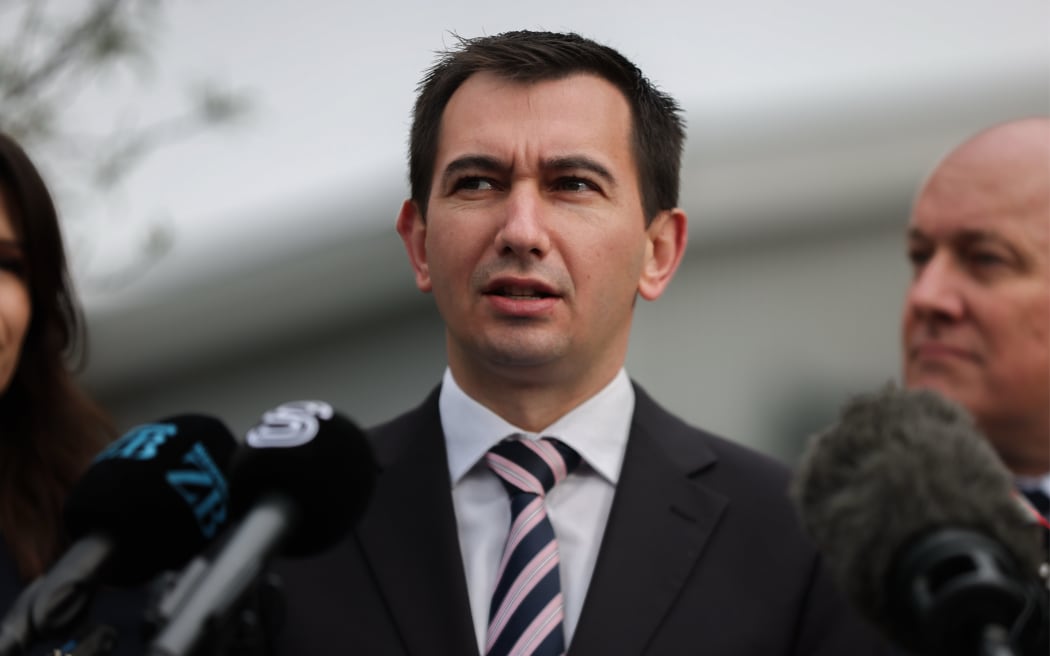
Energy Minister Simeon Brown. Photo: RNZ / Louis Dunham
The move comes amid growing concerns over New Zealand's long-term energy security, declining domestic gas supplies, and increasing dependence on weather-dependent renewable generation.
Power Bill Levy Dropped
The Government had previously proposed funding the estimated $1 billion LNG facility through a levy on electricity generation companies.
That proposal attracted criticism from opposition parties and consumer advocates, who argued the costs would ultimately be passed on to households and businesses through higher power prices.
Brown confirmed the levy proposal has now been abandoned.
"Kiwis can be certain of one thing - it will not be funded by a levy on power bills," Brown said.
"Responsibility for keeping the lights on sits squarely with the electricity sector, and that is the principle guiding our decisions on funding."
His predecessor Simon Watts first announced plans for the LNG facility in 2025 as part of a broader strategy to address growing dry-year risks.
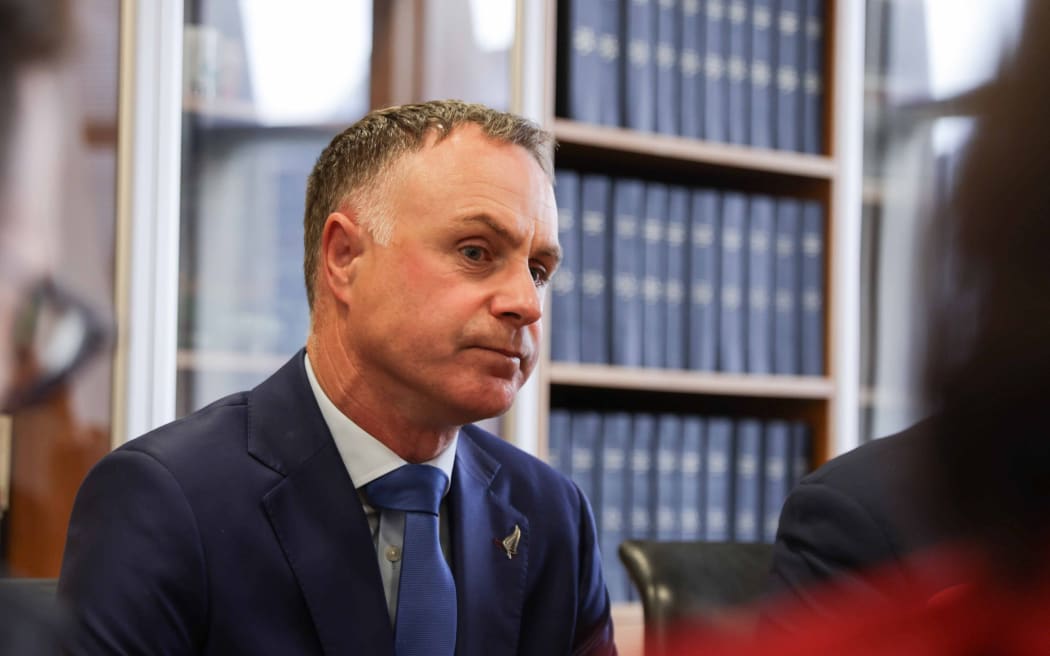
Former Energy Minister Simon Watts. Photo: RNZ / Samuel Rillstone
Why LNG Is Back On The Agenda
The LNG import terminal was first announced as part of a strategy to address New Zealand's growing exposure to dry-year electricity shortages.
Hydroelectric generation remains the backbone of New Zealand's electricity system, but prolonged periods of low rainfall can significantly reduce storage lake levels and create supply shortages.
At the same time, domestic natural gas production has continued to decline.
Brown argued that while renewable generation investment is accelerating, firm backup generation remains essential.
"Much of the new renewable energy being built is intermittent by nature and needs a backup for those winters when the lakes are low, the wind is not blowing, the sun's not shining, and geothermal cannot meet peak demand."
Lessons From The 2024 Energy Crunch
The Government continues to point to the winter of 2024 as evidence of the risks facing the electricity system.
During that period, low hydro storage levels and gas supply constraints contributed to sharp increases in wholesale electricity prices.
Coal-fired generation at Huntly was used extensively to maintain supply, but Brown says even that may not be sufficient in a more severe dry-year scenario.
"Coal cannot come close to covering the gap in serious dry years."
Tougher Rules For Power Companies
Alongside the LNG announcement, the Government is proposing significantly stronger penalties for electricity companies that fail to adequately prepare for supply shortages.
Current penalties of $2 million could increase dramatically under new proposals.
The revised framework would allow fines of up to:
- Three times any commercial gain achieved through non-compliance
- Ten percent of company turnover
- Up to $10 million
The highest applicable penalty would apply.
Brown said the objective was straightforward.
"Kiwis should not be paying more because the big power companies run the system on the edge - those days are over."
Renewables Still The Long-Term Goal
The Government insists the LNG terminal does not represent a retreat from renewable energy.
Instead, LNG is being positioned as a transition fuel designed to support a highly renewable electricity system.
"Importing LNG as a firming fuel is not a retreat from our commitment to renewable energy - it supports it."
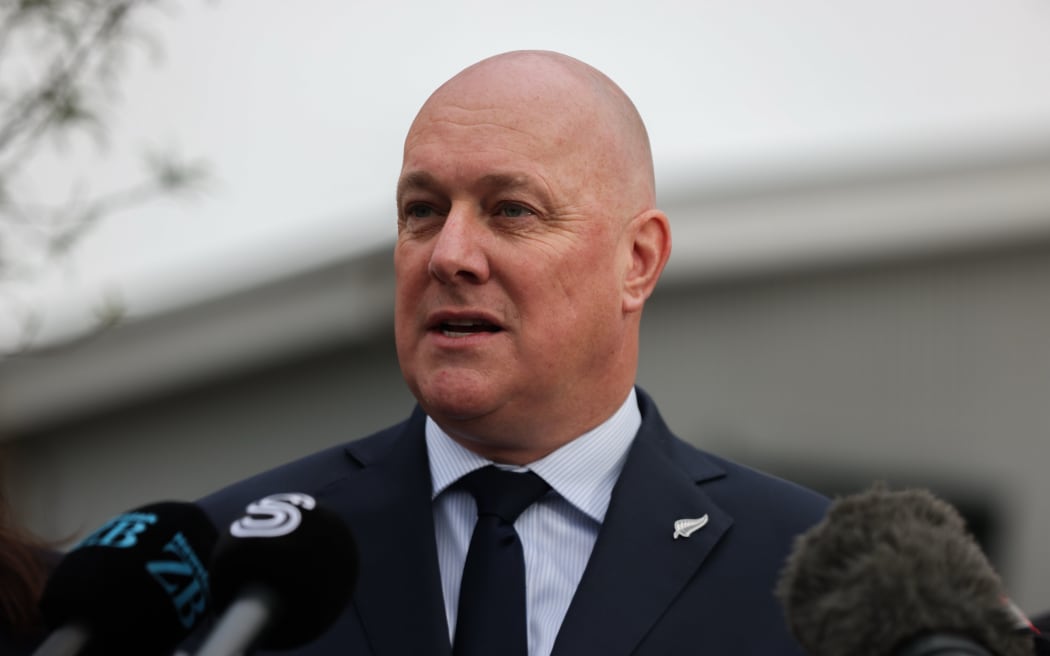
Prime Minister Christopher Luxon. Photo: RNZ / Louis Dunham
The Bigger Question For New Zealand
Perhaps the most significant aspect of the announcement is what it says about the Government's changing view of energy policy.
For years, debate has largely focused on decarbonisation targets and renewable generation expansion. Increasingly, however, policymakers are being forced to confront a different challenge: ensuring reliable energy remains available when renewable generation cannot meet demand.
Recent geopolitical tensions, declining domestic gas production, and the electricity shortages experienced in 2024 have all highlighted the importance of resilience alongside sustainability.
Brown described recent global events as a reminder that New Zealand requires secure and diversified fuel supplies.
"Despite the conflict, LNG remains the fastest, cheapest, and most flexible dry-year solution that can be put in place this decade."
Simeon Brown talks to the Auckland Business Chamber, 9 June 2026. Photo: RNZ
Whether LNG proves to be the long-term answer remains open to debate.
What is becoming increasingly clear, however, is that energy security has moved back to the centre of the national agenda.
For businesses, households and industry alike, keeping the lights on is no longer simply an infrastructure issue. It has become an economic imperative.
And after the lessons of recent years, the Government appears determined to ensure New Zealand has more options available before the next dry-year crisis arrives.
Source: RNZ reporting by Russell Palmer and RNZ Digital Reporters.