New Zealand's first person convicted of both human trafficking and slavery offences will be released from prison next month after the Parole Board granted parole following his third appearance before the board.
Joseph Matamata, also known as Viliamu Samu, was sentenced to 11 years imprisonment after becoming the first person convicted under New Zealand's modern human trafficking legislation.
The case shocked the country and exposed what authorities described as a long-running system of exploitation operating within Hawke's Bay's horticultural sector.
A Landmark Conviction
Matamata was convicted for trafficking and exploiting workers he had brought from Samoa over a period spanning more than two decades.
According to court findings, he brought workers to New Zealand on temporary visas and subjected them to conditions that ultimately resulted in convictions for slavery and human trafficking.
The case became a landmark in New Zealand legal history when Matamata became the country's first person convicted of both offences.
Further background on the original conviction can be found in RNZ's report on Matamata's sentencing for human trafficking and slavery.
Victims later spoke publicly about their experiences in a powerful RNZ investigation, First Interview: Man Kept As Slave In NZ Speaks Out.
Life Inside The Operation
Court evidence heard during the 2020 trial painted a disturbing picture of life for those under Matamata's control.
Victims worked long hours in orchards, often up to fourteen hours a day and seven days a week. Their movement was restricted, wages were withheld, and many were required to continue working around Matamata's property after returning from the fields.
Immigration New Zealand estimated more than $400,000 in earnings were retained by Matamata rather than paid to workers.
The youngest victim was just 12 years old.
The court also heard evidence involving physical violence, intimidation and threats.
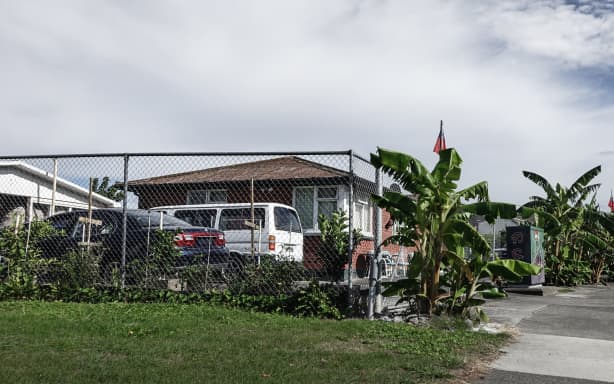
The Matamata family property where his 13 victims lived. Photo: RNZ / Anusha Bradley
Parole Board Concerns Remain
Despite granting parole, the board expressed ongoing concerns about Matamata's understanding of his offending.
Parole Board member Serina Bailey said the board believed he continued to minimise aspects of his conduct and did not fully appreciate the impact his actions had on victims.
During the hearing, Matamata told the board he now recognised that what occurred was wrong and said rehabilitation programmes had helped him understand the consequences of his behaviour.
At several points he became emotional when discussing his family and the time spent in prison.
However, board members repeatedly challenged explanations they believed downplayed his responsibility.
Rehabilitation And Reintegration
Matamata's lawyer argued he had demonstrated genuine progress through rehabilitation programmes and had shown remorse for his actions.
Prison staff reported that he had complied with prison rules and interacted positively with people from different backgrounds while incarcerated.
Plans have reportedly been put in place for community support and a guided reintegration process following his release.
The board also examined his safety plan and questioned him about potential future risks, including financial pressures and requests from family members seeking assistance to come to New Zealand.
A Case That Changed New Zealand
The Matamata case remains one of the most significant criminal prosecutions involving labour exploitation in New Zealand history.
It brought international attention to human trafficking risks within legitimate industries and prompted closer scrutiny of labour practices affecting migrant workers.
The case also established important legal precedents around New Zealand's anti-trafficking legislation and highlighted the vulnerability of temporary migrant workers who may be isolated from support networks and unfamiliar with their legal rights.
Although two trafficking convictions were later nullified following a procedural issue identified by the Court of Appeal, the broader findings of exploitation remained intact. Details of that appeal can be found in RNZ's report on Matamata's appeal against his trafficking and slavery convictions.
The Bigger Picture
The decision to grant parole closes one chapter of a case that exposed modern slavery practices operating in New Zealand for decades.
For victims, advocates and policymakers, the case remains a reminder that human trafficking is not solely an overseas issue but can occur within local communities and industries when vulnerable people are exploited for financial gain.
As Matamata prepares for release, questions around rehabilitation, accountability and the protection of migrant workers continue to resonate well beyond Hawke's Bay.
Lucy Xia
Radio New Zealand
Original reporting: