Fresh Congressional hearings have reopened long-standing questions surrounding the CIA's notorious MKULTRA program, with witnesses arguing that decades after secret human experiments officially ended, many victims remain unidentified, key records remain hidden, and critical questions about accountability have never been answered.
INR Report: Based on reporting by RT HERE.
For more than fifty years, the CIA's secret MKULTRA program has remained one of the most controversial intelligence operations ever undertaken by the United States government.
Originally established during the Cold War, the program explored whether drugs, hypnosis and psychological conditioning could be used to manipulate human behaviour, extract information and potentially control the human mind.
Now, a new Congressional inquiry is attempting to determine whether the full history of the program has ever truly been revealed.
The renewed investigation follows hearings held by the US Congressional Task Force on the Declassification of Federal Secrets, where lawmakers heard testimony from researchers, historians and investigative journalists who argue that significant portions of MKULTRA's history remain concealed.
A Cold Case Returns To Congress
Opening the hearing, Task Force Chair Anna Paulina Luna described the allegations surrounding MKULTRA as among the gravest abuses ever committed by a government against its own citizens.
"Administering drugs to people without their consent. Subjecting humans to psychological torture. Using prisoners and hospital patients as non-consenting research subjects. These are crimes against humanity."
Luna said many victims had never received recognition or compensation despite decades of public awareness surrounding the program.
"The American people deserve the complete record. The victims and their families deserve acknowledgement, accountability, and justice."
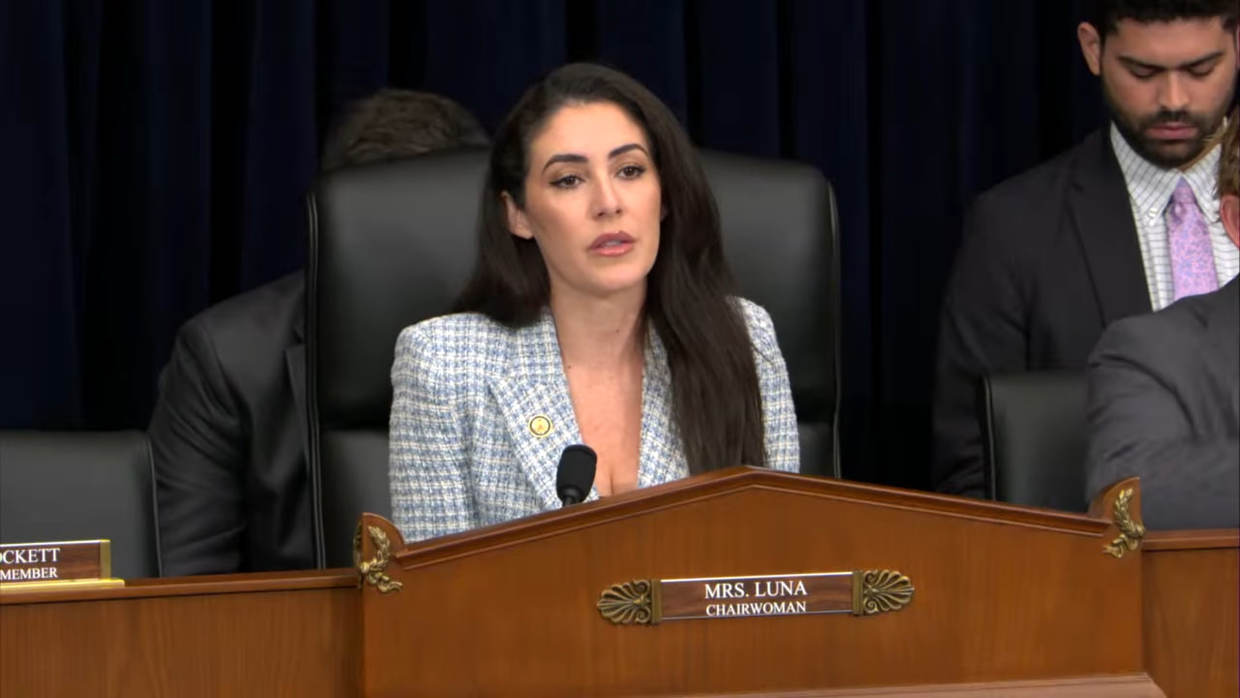
Congressional hearing examining MKULTRA.
Photo: © YouTube / GOP Oversight
Her comments reflected a recurring theme throughout the hearing—that previous Congressional investigations during the 1970s promised full disclosure but ultimately left many questions unresolved.
The Mystery Of Jimmy Shaver
Among the most striking examples presented to lawmakers was the case of Jimmy Shaver, a decorated US Air Force serviceman whose story has remained controversial for decades.
According to testimony presented during the hearing, Shaver had no documented history of violent behaviour before abducting, sexually assaulting and murdering a three-year-old girl in Texas during the 1950s.
Witnesses stated that when authorities located him, he appeared confused and unable to explain his actions. Following his arrest, he reportedly failed to recognise members of his own family and maintained until his execution that he had no memory of committing the crime.
Some researchers now believe Shaver's treatment at an Air Force hospital prior to the murder may warrant renewed examination because psychiatrist Louis Jolyon West—later linked to MKULTRA research proposals—was involved both in psychiatric treatment at the hospital and subsequently appeared as the court-appointed psychiatric expert during Shaver's trial.
No definitive evidence has established a direct connection between Shaver's case and MKULTRA. However, researchers told Congress the overlap deserves further investigation.
Revisiting Forgotten Evidence
Investigative author Tom O'Neill, whose work has examined the CIA's covert research programs, told lawmakers that Congress may have accepted official CIA explanations too readily during earlier investigations.
According to O'Neill, the agency consistently maintained that after more than two decades of experimentation, its attempts at mind control had ultimately failed.
O'Neill challenged that conclusion.
Instead, he argued that surviving correspondence between psychiatrist Louis Jolyon West and Sidney Gottlieb—the CIA chemist who directed MKULTRA—suggests a far more ambitious program than previously acknowledged.
A Blueprint For Psychological Manipulation
According to testimony presented during the hearing, correspondence dating back to 1953 outlined proposals to conduct experiments on individuals without their knowledge or consent.
O'Neill described the documents as revealing plans involving military personnel, psychiatric patients, prison inmates and other unwitting subjects.
The proposed techniques reportedly included combinations of LSD, hypnosis and other psychological methods intended to induce altered mental states, amnesia and behavioural modification.

Sidney Gottlieb, who directed the CIA's MKULTRA program.
Photo: © AP Photo
According to O'Neill, the correspondence outlined objectives extending well beyond scientific curiosity.
He told lawmakers the documents proposed methods aimed at extracting information from unwilling subjects, implanting false memories and altering beliefs or loyalties.
"It reads like a page torn from the research notebook of Josef Mengele," O'Neill said, referring to the Nazi physician whose medical experiments at Auschwitz became synonymous with wartime atrocities.
Experiments Hidden From Public View
Witnesses argued that the proposals also demonstrated extensive efforts to conceal the program itself.
Funding mechanisms, institutional relationships and operational oversight were reportedly structured to ensure much of the research remained invisible both to the public and, in some cases, even to scientific colleagues working alongside those conducting the experiments.
According to O'Neill, Sidney Gottlieb responded positively to many of West's proposals, suggesting the CIA viewed the research as having practical intelligence applications.

Psychiatrist Louis Jolyon West.
Photo: © AP Photo / Ferd Kaufman
O'Neill told Congress that the surviving documentation suggests MKULTRA should not be viewed simply as a collection of unusual experiments but as a coordinated effort to explore techniques capable of influencing perception, memory and behaviour while remaining shielded from public scrutiny.
Files Destroyed, But Not Forgotten
Journalist and historian Stephen Kinzer, author of Poisoner in Chief, shifted the hearing's focus from what MKULTRA attempted to achieve to why so much of the program remains hidden.
Kinzer told lawmakers that despite years of research, he believes historians have uncovered only a fraction of what actually occurred.
"I am painfully aware that I have discovered only a small portion of what Gottlieb did and what MKULTRA was."
According to Kinzer, MKULTRA was never simply about improving interrogation techniques. Rather, he argued, its ultimate objective was to dismantle an individual's existing personality in order to replace it with something entirely new.
He described experiments that allegedly extended across prisons, psychiatric hospitals, universities, brothels and CIA-operated safe houses, involving individuals who often had no knowledge they were participating.
Witnesses told the committee that many of those selected were considered expendable because they occupied the margins of society.
"They were called expendables — human beings who would not be missed if they disappeared," Kinzer testified.

Congressional witnesses discuss the scope of MKULTRA during recent hearings.
Photo: © YouTube / GOP Oversight
The Vanishing Paper Trail
One of the greatest obstacles facing investigators remains the destruction of official records.
During the early 1970s, then CIA Director Richard Helms ordered the destruction of virtually all MKULTRA operational files before leaving office.
That decision has shaped every investigation since.
Without original documentation, many aspects of the program have relied upon testimony, surviving financial records and a relatively small number of documents that escaped destruction.
Kinzer argued that history may still contain significant gaps.
Thousands of previously overlooked documents were later discovered among archived CIA financial records, suggesting additional material may still exist elsewhere inside government archives.
"That same diligence could bring results today," Kinzer told lawmakers.
The Frank Olson Mystery
Another case receiving renewed attention was the death of Army scientist Frank Olson.
Officially, Olson died after falling from a New York hotel window in 1953, with his death initially ruled a suicide.
Subsequent investigations revealed Olson had been working on highly classified CIA projects connected with biological warfare and had unknowingly been administered LSD shortly before his death.
His family has long disputed the official explanation.

Frank Olson.
Photo: © Wikimedia Commons / Public Domain
Kinzer told lawmakers evidence continues to raise questions about whether Olson's death was genuinely self-inflicted or whether it may have been connected to concerns over his knowledge of classified programs.
He argued that additional classified records, if released, could finally clarify one of the Cold War's most enduring intelligence mysteries.
Did MKULTRA Ever Really End?
Officially, MKULTRA was terminated in 1963 after failing to produce the reliable methods of mind control its architects had sought.
Sidney Gottlieb himself ultimately concluded that true mind control was unattainable.
Kinzer, however, suggested that conclusion reflected the technological limitations of the era rather than the permanent failure of the concept.
Since MKULTRA's closure, neuroscience, biotechnology, computing power, artificial intelligence and neurotechnology have advanced dramatically.
Rather than asking only what MKULTRA achieved during the Cold War, Kinzer urged lawmakers to consider whether today's intelligence agencies possess capabilities unimaginable sixty years ago.
"Covert agencies may have access to tools for mind control that Sidney Gottlieb could not have imagined."
He challenged Congress to examine whether modern technologies could have revived ambitions that earlier generations lacked the scientific means to accomplish.
Lawmakers have indicated additional CIA records may be prepared for declassification.
Photo: © Mark Wilson / Getty Images
A New Push For Declassification
The hearing concluded with Task Force Chair Anna Paulina Luna saying members of Congress have a constitutional responsibility to ensure similar abuses never occur again.
She revealed that during a recent visit to CIA headquarters, officials informed her that additional MKULTRA records are currently being prepared for declassification.
Whether those documents will answer decades-old questions remains uncertain.
Previous Congressional investigations also promised full transparency, yet many victims were never identified, no comprehensive accounting of the program was produced, and many questions surrounding its true scope remain unresolved.
The latest inquiry seeks to determine whether surviving records can finally provide a more complete historical account.
What Does This Mean?
MKULTRA occupies a unique place in modern intelligence history because, unlike many alleged covert operations, the program itself is no longer disputed. Declassified CIA documents, the 1975 Church Committee investigation and later Congressional inquiries established that the agency conducted secret experiments involving drugs, hypnosis and other behavioural research, often without informed consent.
The renewed hearings are therefore less about proving the program existed than about determining how extensive it became, whether all relevant records have been disclosed, and whether previous investigations left important questions unanswered. Witnesses appearing before Congress argued that destroyed files, surviving correspondence and newly emerging documents justify another examination of the historical record.
The hearings also raise broader questions about oversight of intelligence agencies as technologies continue to evolve. Advances in neuroscience, artificial intelligence, brain-computer interfaces and behavioural science have renewed public debate over privacy, ethics and the limits of government research. While there is no public evidence that a modern equivalent to MKULTRA exists, witnesses argued that transparency and independent oversight remain essential safeguards as governments acquire increasingly sophisticated technological capabilities.
Source
RT — "Crimes against humanity": The CIA's sickest secret may finally be exposed (Published 5 July 2026).