The Strait of Hormuz has again become the focal point of the conflict between the United States and Iran after renewed military action disrupted commercial shipping. With around one-fifth of the world's oil and liquefied natural gas passing through the narrow waterway, any prolonged closure has the potential to affect economies far beyond the Middle East.
Strait Of Hormuz Crisis Deepens As Shipping Route Closes Again
Renewed US-Iran hostilities have once again disrupted one of the world's most important energy corridors, sending shockwaves through global energy markets.
The Strait of Hormuz has again become the focal point of the conflict between the United States and Iran after renewed military action disrupted commercial shipping. With around one-fifth of the world's oil and liquefied natural gas passing through the narrow waterway, any prolonged closure has the potential to affect economies far beyond the Middle East.
INR Report: Based on reporting by RT HERE.
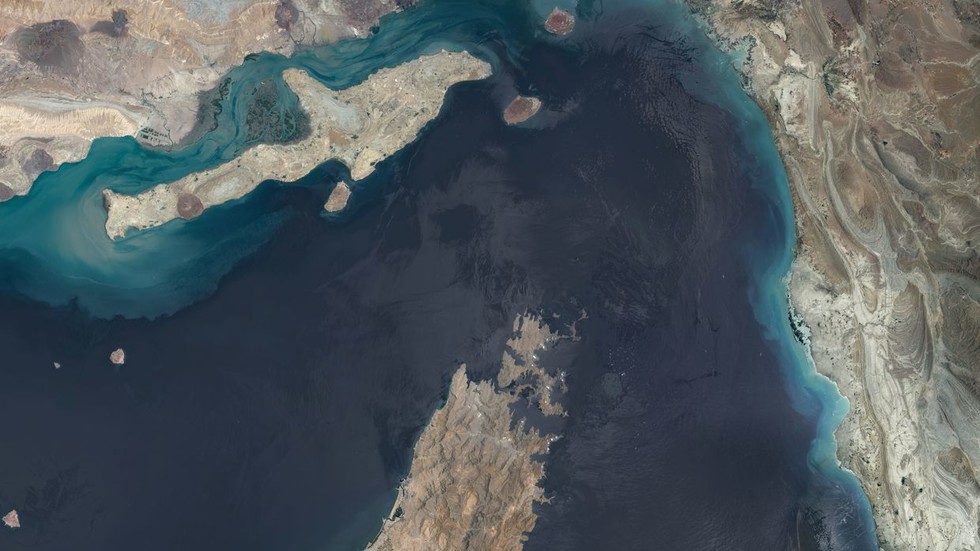
Strait of Hormuz. Photo: Getty Images / maps4media.
Hostilities Resume
The Strait of Hormuz has once again been disrupted following renewed military confrontation between the United States and Iran.
According to RT, Washington launched several waves of strikes against Iranian military targets, stating the operations were intended to protect commercial shipping after accusing Tehran of threatening vessels transiting the waterway.
Iran responded with strikes on US military facilities across the Gulf region and subsequently declared the Strait of Hormuz closed.
The renewed fighting follows the collapse of a fragile understanding reached the previous month, under which the United States had agreed to lift its naval blockade while Iran was expected to facilitate safe passage for commercial shipping pending further negotiations.
Both governments now accuse the other of violating that agreement.
Why The Strait Matters
The Strait of Hormuz is one of the world's most strategically important maritime chokepoints.
The narrow waterway links the Persian Gulf with the Gulf of Oman and the Arabian Sea, providing the principal export route for oil and liquefied natural gas produced by Gulf nations.
According to the report, approximately 20 percent of global oil and LNG supplies pass through the strait, making it one of the most critical energy corridors in the world economy.
Any prolonged disruption has the potential to affect shipping costs, insurance premiums, energy markets and inflation worldwide.
Current Situation
Iran's Islamic Revolutionary Guard Corps (IRGC) has declared the Strait of Hormuz closed following the latest round of US air strikes.
US Central Command (CENTCOM) says American operations are designed to reduce Iran's ability to threaten commercial shipping.
According to CENTCOM, strikes have targeted:
- Air defence systems
- Coastal radar installations
- Missile facilities
- Drone infrastructure
- Small naval craft
- Other military positions around the Strait of Hormuz
Iran has responded by launching strikes against US military facilities in Bahrain, Kuwait, Qatar, Jordan and Oman, describing the attacks as a lawful response to military action against Iranian territory.
Tehran's Position
According to RT, Iranian officials maintain they have the sovereign right to regulate maritime traffic through the Strait of Hormuz.
Tehran says vessels entering the waterway must comply with designated security procedures and has warned that ships ignoring official instructions could be regarded as hostile.
Iran has declared that the Strait will remain closed until the United States ends what it describes as its "illegal" military intervention in the region.
Military spokesman Brigadier General Mohammad Akraminia said Iranian forces would defend the country's rights in the waterway "until their last breath."
Iran has also warned neighbouring states hosting US military bases that allowing their territory to be used for attacks could expose them to retaliation.
Washington's Position
US Central Command (CENTCOM) says its military operations are intended to ensure the Strait of Hormuz remains open to international shipping and to protect what it describes as "freedom of navigation."
According to RT, President Donald Trump has stated that the United States is now "in control" of the Strait and will act as its "guardian."
Trump has also proposed introducing a 20 percent fee on cargo transiting the waterway, arguing that the United States should be reimbursed for providing security.
At the time of publication, the White House had not outlined how such a fee would be calculated, collected or enforced.
Shipping Disrupted
Commercial shipping through the Strait has already been affected by the renewed conflict.
According to RT, several merchant vessels have reportedly been struck or threatened since hostilities resumed.
The United Arab Emirates said two oil tankers travelling through Omani territorial waters were hit by Iranian cruise missiles. Reports cited by RT stated that one Indian crew member was killed and eight others were injured.
Shipping data also indicates tanker traffic has fallen to its lowest level in two months as operators reassess the risks of using the route.
Marine insurers are expected to significantly increase premiums for vessels entering the region, adding further costs to international trade.
Oil Prices Climb
Energy markets reacted quickly to the renewed escalation.
Following the collapse of last month's understanding between Washington and Tehran:
- Brent crude rose nearly 10 percent in a single trading session.
- West Texas Intermediate (WTI) gained more than 9 percent.
- Brent climbed to around US$86 per barrel.
- WTI traded above US$80 per barrel.
Although prices remain below the highs reached during the earlier phase of the conflict, analysts cited in the report warned that a prolonged disruption to shipping through the Strait of Hormuz could push oil prices back above US$100 per barrel.
International Reaction
Governments around the world have responded cautiously as the crisis develops.
According to RT:
- China called for the restoration of safe navigation through the Strait and said it would remain engaged diplomatically with affected countries.
- India lodged a formal protest after one of its nationals was killed aboard a tanker caught in the conflict.
- Brazilian President Luiz Inácio Lula da Silva criticised the proposed US protection fee, describing it as comparable to "piracy."
- Russia warned that the renewed fighting had undermined prospects for a negotiated settlement and argued that recent military actions had reversed progress made under last month's memorandum of understanding.
Does This Affect New Zealand?
Although New Zealand imports relatively little crude oil directly from the Persian Gulf, global oil markets are interconnected.
Any sustained disruption to shipping through the Strait of Hormuz could increase international oil prices, raising domestic fuel costs, freight charges and transport expenses. Higher shipping insurance premiums may also contribute to increased prices for imported goods.
As an export-dependent trading nation, New Zealand could also feel the effects of longer shipping times, higher logistics costs and broader global inflation if instability in the region continues.
Source
Original Reporting: RT
Publication: RT
Independent reporting. Original context. Credited sources.