The Fairphone 6+ has launched in the United States with an unusually simple proposition: when something wears out or breaks, replace the part rather than the entire phone. With a removable battery, replaceable components, expandable storage and long-term software support, Fairphone is betting some consumers would rather own their smartphone for longer than continually replace it.
eLocal Report: Based on reporting by Monica J. White for New Atlas HERE.
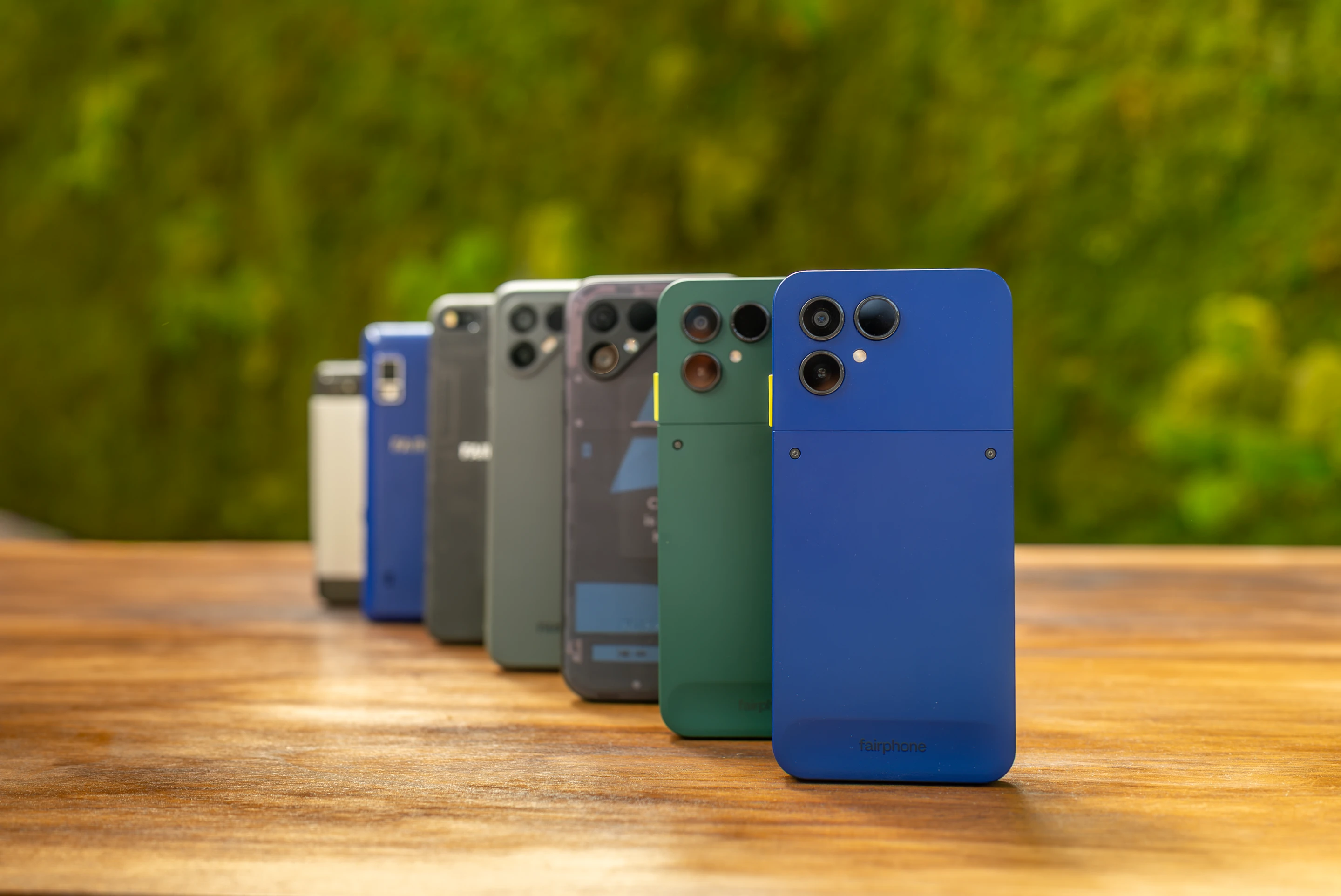
The Fairphone 6+ – shown here with previous generations – keeps the modular, screw-together design of the Gen 6 while adding more RAM, a faster chip, and, for the first time, an official US release. Photo: Fairphone.
For years, smartphones have moved in almost exactly the opposite direction to most other consumer technology.
They have become enormously more powerful, but increasingly difficult for their owners to repair.
Batteries are commonly sealed inside. Screens can be expensive and difficult to replace. Storage is often fixed. Individual components that fail can turn an otherwise functional device into something uneconomic to repair.
Fairphone is challenging that model.
Its new Fairphone 6+ is designed around the idea that a smartphone should be something its owner can maintain rather than something eventually thrown away because one component has failed.
And that makes this phone considerably more interesting than its specifications alone suggest.
Twelve Components — One Screwdriver
The central feature of the Fairphone is repairability.
Twelve components — including the battery, display and cameras — can be removed using a single Torx screwdriver. Fairphone sells official replacement parts directly, with New Atlas reporting prices ranging from about US$8 to US$90.
That changes the economics of owning a smartphone.
A battery inevitably loses capacity as it ages. On many modern phones, replacing it means opening a glued or sealed enclosure and potentially paying a specialist to undertake the work.
On the Fairphone, the 4,415-mAh battery is removable.
Crack the display?
Replace the display.
Camera fails?
Replace the camera.
Battery becomes tired?
Replace the battery.
The objective is not to make the phone indestructible. It is to prevent the failure of one component determining the lifespan of the entire device.
A Serious Mid-Range Smartphone
Fairphone has not attempted to compete with the most expensive flagship phones purely on processing power.
The 6+ uses Qualcomm's Snapdragon 7s Gen 4, paired with 12 GB of RAM and 256 GB of storage.
Importantly, that storage can be expanded using a microSD card — another feature that has disappeared from many premium smartphones.
The phone has a 6.31-inch OLED display operating at up to 120 Hz.
The camera system consists of a 50-megapixel main camera with optical image stabilisation, a 13-megapixel ultrawide camera and a 32-megapixel front-facing camera.
Charging is rated at 30 W, while the handset carries an IP55 rating and uses Gorilla Glass 7i on the front.
Those are respectable specifications.
But they aren't really the reason the Fairphone exists.
What You're Buying Is Longevity
The Fairphone 6+ launches in the US at US$649.99, with a European price of €649.
It is available in Cobalt Blue, Forest Green and Horizon Black. The US model ships with Android 16 and Google services, with New Atlas reporting support for T-Mobile and AT&T.
There are undoubtedly phones offering more raw performance for the same money.
Fairphone's value proposition is different.
The company backs the 6+ with a five-year warranty and years of software updates.
That potentially changes the calculation consumers make when purchasing a phone.
Instead of asking:
What is the best phone I can buy today?
Fairphone is effectively asking:
What phone can I still reasonably expect to be using years from now?
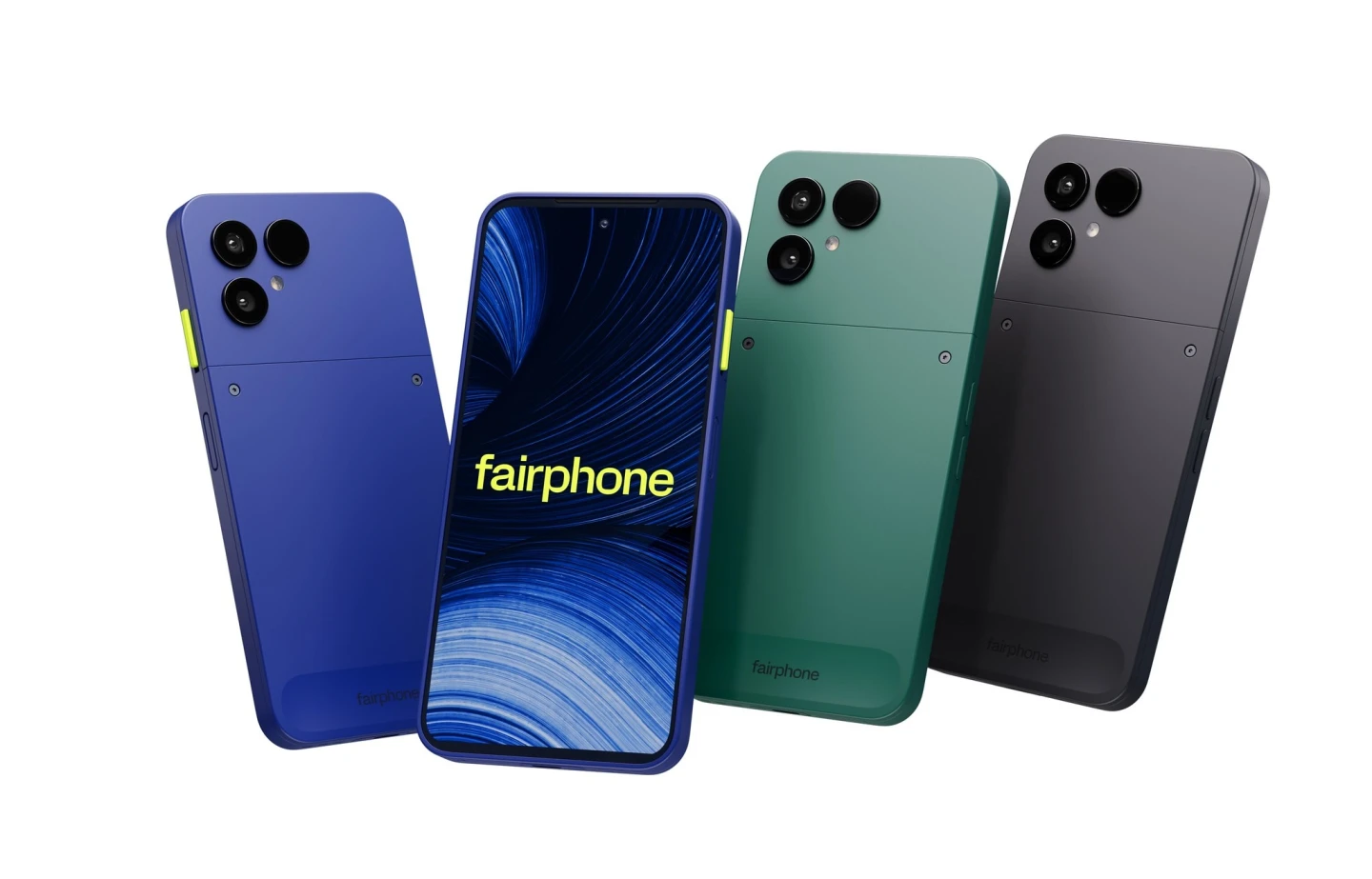
One configuration, three colours: the Fairphone 6+ comes in a new Cobalt Blue alongside Forest Green and Horizon Black. Photo: Fairphone.
The Smartphone Industry's Replacement Cycle
That raises a much larger question about modern consumer electronics.
Smartphones have reached a level of maturity where the differences between successive generations are often incremental.
Processors become faster. Cameras improve. Displays become brighter.
But for many ordinary users, a three- or four-year-old smartphone can still perform the basic functions they need perfectly well.
The problem is increasingly not whether the device remains computationally capable.
It is whether the battery, screen, charging system or software support lasts as long as the rest of the phone.
Repairability directly attacks that problem.
If the battery reaches the end of its useful life while the processor remains perfectly adequate, there is little technical reason to replace the entire device.
The same principle applies to a damaged screen or failed camera.
There's Also an Environmental Argument
Fairphone's approach also challenges one of the contradictions surrounding supposedly sustainable consumer technology.
Manufacturers can reduce packaging, use recycled materials and lower operational energy consumption.
But replacing an entire electronic device because one component has failed still carries an environmental cost.
Fairphone says the 6+ has a carbon footprint of approximately 30 kg of CO₂ per device and incorporates Fairtrade materials.
Yet perhaps the strongest environmental argument is much simpler.
If a smartphone remains in service for considerably longer, fewer replacement devices need to be manufactured.
In that sense, the most sustainable smartphone may not necessarily be the one containing the greatest percentage of recycled material.
It may simply be the phone you don't have to replace.
A Hardware Switch for Switching Off
Fairphone has also retained an unusual physical feature called the Switch.
Moving the lime-green switch activates Fairphone Moments, a simplified mode that restricts unwanted notifications and presents only a limited selection of essential applications.
It is an interesting addition because it addresses another growing criticism of smartphones: they are deliberately designed to demand attention.
Rather than relying solely on software menus and digital wellbeing settings, Fairphone provides a physical control for deliberately reducing the device's distractions.
It is a small feature, but philosophically it fits the rest of the phone.
The owner — rather than the manufacturer or app ecosystem — is supposed to have greater control over the device.
Available New Zealand?
There is no New Zealand launch detailed in the New Atlas report, so eLocal cannot presently say the Fairphone 6+ will be officially sold here.
But the principle behind it is highly relevant.
New Zealand is geographically distant from the world's major electronics manufacturing centres. Virtually every smartphone used here has been manufactured overseas and imported.
Extending the working life of those devices therefore has obvious implications for household expenditure and electronic waste.
The more interesting question is whether consumers would actually choose longevity over the conventional upgrade cycle.
Would a New Zealander pay a little more for a phone knowing the battery, display and cameras could be replaced at home and the manufacturer intended to support the device for years?
For consumers tired of expensive devices becoming difficult to repair, Fairphone's proposition is refreshingly straightforward:
You bought the phone. Why shouldn't you be able to open it and fix it?
Source: Monica J. White, New Atlas — USA finally gets the modular smartphone owners can repair themselves, published 23 August 2026. Original report.
Independent reporting. Original context. Credited sources.