OceanaGold wants to extend the life of its Macraes gold mine for another decade, targeting around one million additional ounces of gold. The proposal promises hundreds of jobs and billions of dollars of economic activity, but it also raises a bigger question: when a finite New Zealand resource is extracted, how much of that wealth should be preserved for future generations?
eLocal Report: Based on reporting by Tess Brunton for RNZ HERE.
OceanaGold is seeking fast-track approval to extend the life of its Macraes gold mine in Otago for approximately another decade, with the multinational mining company targeting around one million ounces of additional gold.
The proposal would expand existing open-pit and underground operations, return to previously mined areas and process stockpiled lower-grade ore. OceanaGold says the extension would support hundreds of jobs and generate an estimated $3.1 billion in spending within New Zealand over the life of the project.
Those are significant numbers. Macraes has operated for more than three decades and is deeply connected to the economy of East Otago, supporting employees, contractors and businesses well beyond the mine itself.
But $3.1 billion spent in New Zealand is not the same thing as $3.1 billion of mineral wealth being retained by New Zealand.
And that distinction raises a question that receives considerably less attention whenever major mining projects are discussed.
What permanent asset does New Zealand receive when a finite national resource is removed from the ground?
Jobs Matter, But So Does Ownership
The economic case for extending Macraes is straightforward in several respects.
Local publican Danny Clarkson told RNZ his business might not remain viable without the mine. Macraes provides employment, supports contractors and injects money into surrounding communities. Extending its operating life provides those workers and businesses with greater certainty.
OceanaGold describes the proposed Macraes Phase Four expansion as an investment not only in the mine, but in its employees, the community, the environment and the wider New Zealand economy.
Those benefits should not be dismissed.
But neither should they be confused with ownership of the resource itself.
Gold is a non-renewable asset. An ounce extracted today cannot be extracted again by another generation. Once it has been mined and sold, the question becomes what New Zealand has received in exchange for surrendering that portion of its mineral wealth.
New Zealand Already Charges Mining Royalties
New Zealand does have a Crown minerals royalty system. New Zealand Petroleum & Minerals says royalties are intended to ensure the Crown receives a fair financial return from development of its mineral estate.
The precise royalty regime applying to an individual operation can depend on when its permit was granted because older permits can remain subject to earlier minerals programmes.
That distinction is important. The issue is therefore not simply whether mining companies pay royalties.
The bigger question is whether the royalty system captures an appropriate share of the value of increasingly valuable minerals and what New Zealand does with that money after receiving it.
The Government is asking the first of those questions right now.
MBIE announced in August 2026 that it is reviewing New Zealand's minerals royalty regime. The current system was last comprehensively reviewed in 2012, with regulations introduced in 2013. Since then, mineral prices, market conditions and mining activity have changed substantially.
The review is examining whether current settings continue to deliver a fair financial return to the Crown while supporting mineral development. Advice on possible changes is expected in 2027.
The timing makes Macraes particularly relevant.
Turning Gold Into Another National Asset
There is another policy option that deserves serious consideration.
Rather than allowing mineral royalties simply to become part of government revenue available for expenditure, New Zealand could direct some or all royalties from finite resources into a dedicated sovereign investment fund.
The principle is relatively simple.
When Crown-owned gold is removed from the ground, New Zealand exchanges a physical asset for money. Instead of consuming all that money, the Crown could convert part of it into another asset, a diversified investment portfolio owned on behalf of present and future New Zealanders.
The gold disappears.
The capital does not.
Investment earnings could compound long after the mine itself had closed.
Such a policy would not require New Zealand to invent the institutional concept from scratch. The country already operates the NZ Super Fund, which invests Crown capital over a long horizon and is intended to improve intergenerational equity by helping future governments meet superannuation costs.
The NZ Super Fund's mandate is specifically tied to future superannuation, so directing mining royalties into it, or establishing a broader national resource fund, would require deliberate government policy and potentially legislative change.
But the machinery for professional, independent, long-term Crown investment already exists.
A Sovereign Resource Fund?
Imagine a different approach to New Zealand's mineral estate.
A defined proportion of Crown royalties from gold and other non-renewable resources could be deposited into a ring-fenced national investment fund. Governments could be prevented from routinely spending the principal, while investment returns could eventually support infrastructure, superannuation or other long-term national priorities.
The objective would not necessarily be to impose such a heavy royalty burden that mining became uneconomic.
Mining companies provide capital and expertise, and accept substantial exploration, development and commodity-price risk. New Zealand needs a regime capable of attracting investment if it wants resources developed.
A fair financial return therefore requires a balance. The Crown owns the minerals and those minerals are non-renewable, but the commercial risks and capital requirements involved in finding and extracting them are also real.
The question is where that balance should sit in 2026.
One Million Ounces Changes the Equation
Commodity prices matter enormously to this discussion.
A royalty regime designed during one period of mineral prices may produce very different outcomes when the value of the underlying commodity rises substantially.
That is one reason the Government has launched its current review. Rising gold and other mineral prices create an obvious reason to reconsider whether New Zealand continues to receive an appropriate return from its mineral estate.
Macraes provides a real-world test of that principle.
If another million ounces can economically be recovered, New Zealand should know not merely how much the company expects to spend here, but the estimated value of the mineral resource, the royalties expected to accrue to the Crown, the company tax expected to be paid in New Zealand and the proportion of economic value ultimately retained domestically.
Those figures are not interchangeable.
Wages paid to miners are one benefit. Purchases from New Zealand contractors are another. Company tax is another. Mineral royalties are another. Profits available for distribution to shareholders are another again.
A meaningful assessment of the national benefit requires looking at the entire ledger.
Environmental Costs Are Also Part of the Ledger
The economic argument cannot be separated from environmental consequences.
Forest & Bird regional conservation manager Chelsea McGaw told RNZ there were 128 indigenous plant species and 10 threatened or at-risk indigenous bird species within the mine's zone of influence. She also raised concerns about wetlands and Macraes' previous compliance record.
RNZ reported that the Otago Regional Council identified repeated non-compliance across several environmental monitoring conditions between 2019 and 2024.
OceanaGold says it has addressed the issues raised, pointing to a subsequent audit that found no breaches during 2024-25. The company says its latest proposal includes a new approach to water management and an expanded ecological compensation package.
That package includes a 91-hectare predator-controlled area intended to accommodate rescued rare plants, displaced birds and salvaged lizards, along with the creation of new ephemeral wetlands.
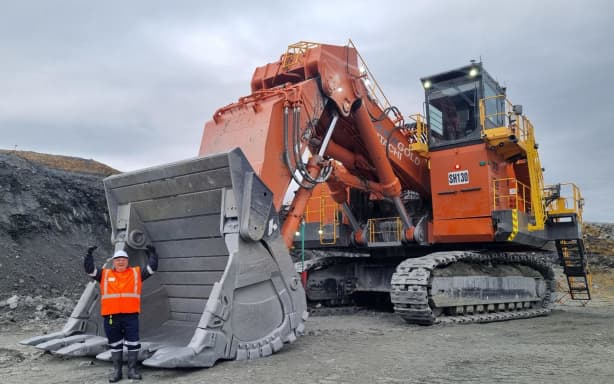
Shane Jones at OceanaGold's Macraes mine. Credit: RNZ / Tess Brunton
Fast-Track Approval Should Not Mean Fast-Track Economics
The Macraes application is proceeding through New Zealand's fast-track system.
That process will inevitably focus attention on environmental approvals, jobs, regional development and whether the project should proceed.
But approving resource extraction and deciding how New Zealand captures the value of those resources are different questions.
A country can support mining while simultaneously demanding an appropriate return from mining. It can welcome international investment while protecting national economic interests. It can recognise the importance of hundreds of jobs while asking what remains after the last truck leaves the mine.
These positions are not mutually exclusive.
The Sovereign Wealth Question
New Zealand's existing Super Fund demonstrates the principle of governments investing for decades rather than thinking only in annual budgets.
The Fund's purpose includes adding to Crown wealth and improving future governments' ability to meet the cost of New Zealand Superannuation. Government contributions and investment returns can therefore create an asset whose benefits extend well beyond the year in which the money was originally contributed.
That principle could be applied more broadly to finite natural resources.
If a portion of mining royalties were invested rather than spent, one generation could extract the mineral while subsequent generations continued receiving an economic benefit from it.
It would effectively convert underground national wealth into financial national wealth.
That leads to a question worth putting directly to whichever government ultimately determines the future royalty regime:
Should New Zealand establish a sovereign resource investment fund into which royalties from finite Crown minerals are deposited and invested for future generations?
What Does New Zealand Get?
Macraes has operated for 36 years. Its contribution to Otago employment and regional businesses is real, and extending the mine could preserve those benefits for another decade.
But gold can only be mined once.
Once an ounce leaves the ground, that portion of New Zealand's natural capital is permanently gone. Jobs, wages, contractors, taxes and regional economic activity are legitimate benefits and deserve to be counted. So do environmental consequences and the capital and commercial risk carried by the mining company.
There is, however, another ledger that deserves equal scrutiny.
If New Zealand permits another million ounces of gold to be extracted during a period of high mineral values, what permanent asset will New Zealanders own in exchange?
A royalty system that ultimately allows resource revenue to disappear into annual government expenditure may satisfy today's fiscal requirements. A sovereign investment model would ask a different question: how can wealth created by exhausting a finite resource continue benefiting New Zealanders long after the mine has closed?
Macraes may have another decade of gold beneath the ground.
The real test for government is whether New Zealand has a plan to ensure some of that wealth is still working for New Zealanders a century from now.
Sources
Tess Brunton, RNZ, OceanaGold bids to extend life of Macraes mine under fast-track, 10 September 2026.
https://www.rnz.co.nz/news/business/1326547/oceanagold-bids-to-extend-life-of-macraes-mine-under-fast-track
New Zealand Petroleum & Minerals, Minerals permit fees and royalties.
https://www.nzpam.govt.nz/permits/minerals/fees-royalties
New Zealand Petroleum & Minerals, New Zealand minerals royalty regime review.
https://www.nzpam.govt.nz/about/news/new-zealand-minerals-royalty-regime-review
NZ Super Fund, Purpose and mandate.
https://www.nzsuperfund.nz/about-the-guardians/purpose-and-mandate/
Independent reporting. Original context. Credited sources.