Beneficiaries were left with an average $251 a week after housing costs, according to a Ministry of Social Development report. Budgeting advisers say some households are increasingly turning to KiwiSaver hardship withdrawals, food support and buy-now-pay-later services simply to cover everyday essentials.
eLocal Report: Based on reporting by Lauren Crimp for RNZ HERE
New Zealand beneficiaries were left with an average of just $251 a week after paying their housing costs, according to the Ministry of Social Development's latest total incomes report. Inflation-adjusted average income after housing costs fell from $263 in 2023 to $262 in 2024 and $251 in 2025.
The amount varied considerably according to household circumstances, ranging from an average $216 for single beneficiaries to $824 for larger families. While real incomes after housing costs remained higher in 2025 than at the end of 2019, the MSD report said they had been "relatively flat" since 2022.
Housing remains the largest pressure on beneficiary budgets. Rent or mortgage payments consumed an average 48 percent of beneficiary income, according to the report. Before housing costs, beneficiaries received an average $486 a week, down from $492 the previous year.
For comparison, RNZ reported that a full-time employee earning the minimum wage and making minimum KiwiSaver contributions would have received $750.96 a week after tax over the same period.

Work and Income offices. RNZ / Rebekah Parsons-King
KiwiSaver Becoming an Emergency Fund
Porirua Whānau Centre budgeting adviser Christine Tawhara told RNZ she had never completed a beneficiary's budget and found money left over. Asked how her clients were managing, her answer was blunt: "They're not."
"There's real stress, and their anxiety levels are quite high," Tawhara said.
She said clients were seeking assistance every day to make KiwiSaver hardship withdrawals, using their retirement savings to catch up on debts, rent and electricity bills or simply buy groceries.
Tawhara described the withdrawals as a temporary solution rather than an answer to the underlying problem. "That'll give them some money to catch up on debts, catch up on rent, catch up on their power bill, buy a... shopping trolley full of food, but that's only a temporary fix, it's almost like a sticking plaster," she said.
Some clients returned two or three times a year seeking another KiwiSaver withdrawal. Others were using buy-now-pay-later services such as Afterpay for essentials including petrol, spreading immediate expenses across future payments.
Even after every possible expense had been cut, Tawhara said there was sometimes little more the Whānau Centre could do. Its Tuesday food-box programme could provide temporary assistance, but families running out of food later in the week could still find themselves with no money and few options.
"We do the kai box on a Tuesday, but if they've run out of kai on, say, Thursday and they've got no money, because normally their paydays are Tuesday and Wednesday, there's just nothing," she said.
Tawhara also questioned whether simply increasing benefits would solve the problem while living costs continued to rise.
Government Points to Employment and Economic Growth
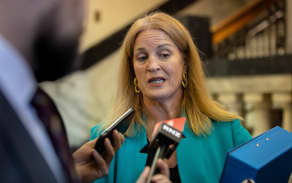
Social Development Minister Louise Upston. RNZ / Mark Papalii
Social Development Minister Louise Upston told RNZ the Government was focused on economic growth as the pathway towards higher employment and incomes.
"Work in paid employment is the best opportunity for people to achieve social and economic well-being," Upston said. She acknowledged the employment market remained challenging and said the welfare system provided support for people who had not yet found work.
Upston said the Government had made progress despite difficult international and fiscal conditions, while acknowledging more work remained. Changes to housing support were intended to reduce the difference between private and social housing costs, she said.
The Government's forthcoming social housing changes are expected to increase assistance for some families while leaving others worse off.
The MSD figures nevertheless expose the immediate arithmetic confronting beneficiaries. An average $486 a week before housing costs becomes $251 after accommodation is paid, leaving food, electricity, transport, clothing, communications and every unexpected expense to be met from what remains.
When households are repeatedly drawing down retirement savings or borrowing to pay for petrol and groceries, the issue extends beyond the headline benefit rate. The figures point to the continuing collision between welfare incomes and the cost of maintaining even a basic household in New Zealand.
Source
Lauren Crimp, RNZ, How much beneficiaries are left with after paying the rent.
Read the original RNZ report
Independent reporting. Original context. Credited sources.
Source material supplied for this report: