John Mearsheimer argues that the positions of Russia and Ukraine have become so far apart that diplomacy cannot end their war under present conditions. His assessment draws attention to territorial control and security guarantees, while raising a further question: can the two sides negotiate arrangements that neither currently considers acceptable?
INR Report: Based on an interview with political scientist John Mearsheimer by Fyodor Lukyanov for RT HERE
The Disagreement at the Centre of the War
American political scientist John Mearsheimer has told Russian foreign policy commentator Fyodor Lukyanov that he sees no diplomatic settlement to the Ukraine war under the positions currently held by Moscow and Kyiv.
Speaking during a visit to Moscow in an interview published by RT on 16 September 2026, Mearsheimer identified two principal obstacles: the territory Russia occupies and claims to have annexed, and the security arrangements Ukraine wants after the fighting ends.
Ukraine seeks the restoration of its territorial integrity and guarantees against another Russian attack. Russia rejects the return of the territories it claims and opposes Ukraine joining NATO.
Mearsheimer’s argument is that neither side presently accepts the conditions the other considers essential. He therefore expects the conflict to be determined primarily by military developments rather than by a negotiated compromise.
That is his assessment of the available diplomatic options, not an established outcome. The positions of the parties can change, and negotiations can address narrower questions even when a comprehensive settlement remains out of reach.
Territory: Control Is Not the Same as Sovereignty
Russia annexed Crimea in 2014 and declared the annexation of Ukraine’s Donetsk, Luhansk, Zaporizhzhia and Kherson regions in 2022. Ukraine and most UN member states do not recognise those annexations.
Russia’s territorial claims also extend beyond some of the areas its forces physically control. Any settlement would therefore have to distinguish between the location of military front lines, the territory Moscow claims and the borders recognised under international law.
Mearsheimer says Ukraine regards the occupied regions as part of its sovereign territory and cannot readily accept their permanent loss. He also argues that Russia is unwilling to relinquish its claims.
These positions create more than a disagreement over a map. They affect the people living in contested areas, the operation of public institutions, access to ports and infrastructure, and the terms under which displaced Ukrainians could return.
A ceasefire could halt fighting along an agreed line without resolving sovereignty. A permanent territorial settlement would require decisions of a different legal and political character.
Mearsheimer’s interview places particular emphasis on the difficulty of obtaining agreement on the latter.
Security Guarantees: Protection for Ukraine, Opposition from Russia
The second obstacle is Ukraine’s security after the war.
Ukraine has sought commitments from Western partners intended to deter another Russian attack. NATO membership is one possible form of protection, although Ukraine is not a NATO member and does not receive the alliance’s collective-defence guarantee.
Russia has opposed Ukrainian NATO membership for years. Mearsheimer regards that opposition as central to Moscow’s strategic calculations and argues that it makes the security guarantees Kyiv wants unacceptable to Russia.
The competing concerns are not identical. Ukraine seeks protection following Russia’s invasion and occupation of its territory. Russia objects to the possible presence of an opposing military alliance in a neighbouring country.
Explaining Russia’s stated security concerns does not establish a right to determine Ukraine’s alliances or justify its invasion. Equally, recognising Ukraine’s right to choose its security arrangements does not remove the practical difficulty of negotiating a settlement with a state that opposes those arrangements.
The unresolved question is whether a different set of guarantees could provide Ukraine with credible protection while forming part of an agreement Russia would accept. Mearsheimer doubts that such a compromise is available under present conditions.
The NATO Question Did Not Begin in 2022
The security dispute has a documented history.
At its April 2008 Bucharest Summit, NATO declared that Ukraine and Georgia would become members of the alliance. Neither received immediate membership, but the declaration established NATO’s stated long-term position.
For Ukraine and other countries that sought NATO membership, the alliance offered protection against perceived threats. Moscow regarded NATO’s movement towards its borders, and the prospect of Ukrainian membership in particular, as a security concern.
The earlier eLocal INR investigation, “RFK Jr, NATO and Ukraine: Following the Money Behind the War”, examined the Bucharest declaration alongside the diplomatic record of NATO enlargement, the 2014 Maidan crisis and the negotiations that followed Russia’s full-scale invasion in 2022.
That report distinguished between Western political assurances discussed at the end of the Cold War and a binding treaty permanently prohibiting NATO enlargement. It also examined the involvement of US officials in Ukraine’s 2014 political crisis without treating that involvement as proof that Washington controlled the Maidan movement.
Those distinctions remain relevant to Mearsheimer’s analysis. NATO enlargement is part of the history of the security dispute, but it does not, on its own, explain every decision made by Russia, Ukraine or Western governments.
Russia chose to launch its full-scale invasion on 24 February 2022. Ukraine’s subsequent demands for security guarantees must also be understood in light of that invasion and the earlier seizure of Crimea.
What the 2022 Negotiations Show
The earlier eLocal report also examined the negotiations held in Istanbul in March 2022, when Ukrainian representatives proposed permanent neutrality in exchange for international security guarantees.
Those talks demonstrate that alternatives to Ukrainian NATO membership were discussed after the full-scale invasion began.
They do not establish that the parties had reached a completed peace agreement. Questions involving territory, the size and capabilities of Ukraine’s armed forces, the terms of security guarantees and their enforcement remained unresolved.
The significance for Mearsheimer’s present argument is that neutrality alone did not settle the conflict in 2022. Any renewed proposal would still need to address the conditions under which Ukraine could remain secure and the competing territorial demands.
The history of the talks supports examining specific negotiating terms rather than treating either a diplomatic settlement or its impossibility as a foregone conclusion.
Diplomacy Has Not Entirely Stopped
Mearsheimer’s conclusion is broader than the available evidence about current diplomatic activity.
As of September 2026, US-mediated efforts to end the war have stalled over territorial concessions and security guarantees. Yet Russia has not ruled out renewed talks, and Ukraine has indicated conditional support for narrower arrangements to halt attacks on critical infrastructure.
On 14 September, President Volodymyr Zelenskyy said Ukraine was prepared to stop strikes on Russian targets if its partners could establish that Moscow would refrain from attacking Ukrainian energy facilities, infrastructure and food supply routes. He stressed that no reliable agreement had yet been secured.
A limited arrangement of that kind would not resolve the war’s underlying territorial and security disputes. It would, however, be a diplomatic outcome with potential consequences for civilians.
This is an important qualification to Mearsheimer’s argument. The absence of an agreed comprehensive settlement does not mean negotiations are incapable of producing ceasefires, exchanges, humanitarian arrangements or other limited measures.
A Frozen Conflict Is One Possible Scenario, Not a Settled Future
Mearsheimer also discusses the possibility of a prolonged conflict in which major fighting eventually subsides but the underlying political dispute remains unresolved.
He compares that prospect with Korea, where an armistice halted large-scale fighting in 1953 without producing a peace treaty.
In the interview, Mearsheimer goes further, suggesting that Russia could seek additional Ukrainian territory, including the Black Sea coast, and would have an interest in preventing Ukraine from developing into a strong Western-aligned state.
Those statements are his interpretation of Russian strategic incentives and his expectations about the conflict. They are not confirmed Russian operational plans or established future events.
Other outcomes remain possible, including a negotiated ceasefire, a wider settlement, changes in the parties’ demands or continued fighting without an agreed armistice.
The interview is most useful as an explanation of why a settlement is difficult under present conditions, rather than as a definitive account of how the war will end.
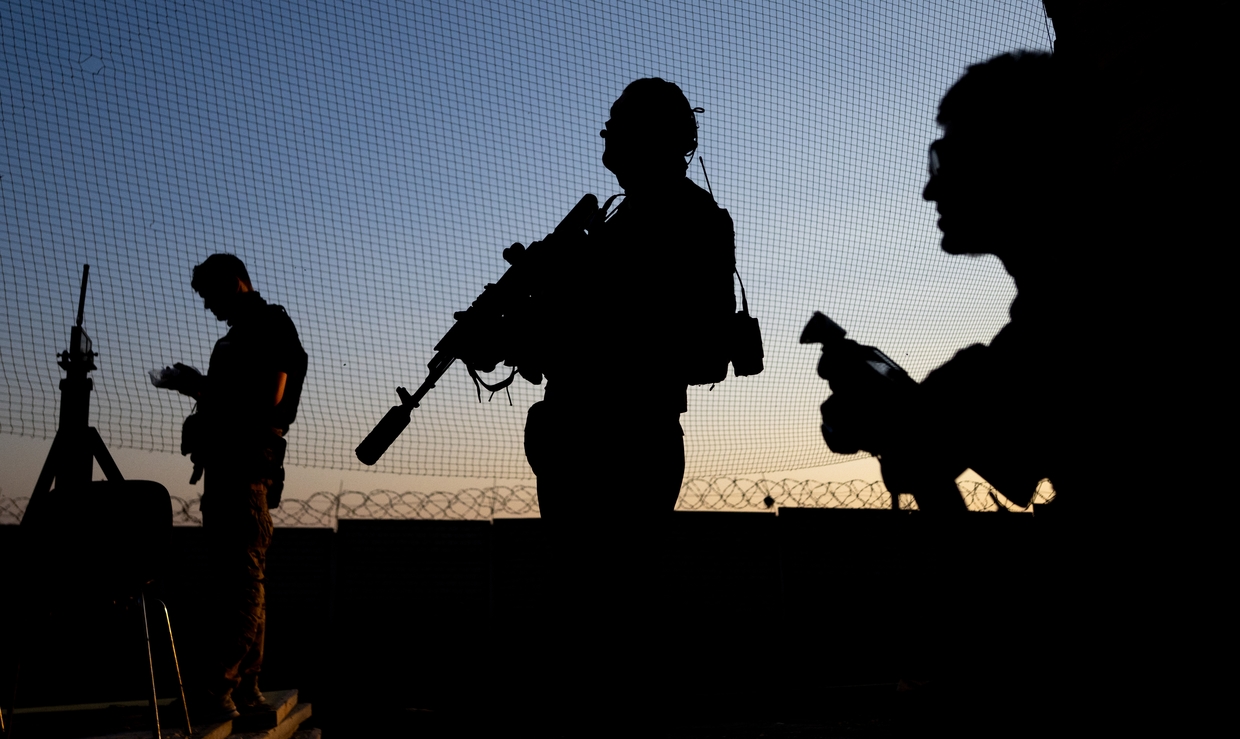
Russian servicemen at a mobile anti-aircraft position in the Kharkiv sector. Photo: Sputnik / Sergey Bobylev, via RT.
Trump’s Negotiations and the Limits of Personal Diplomacy
Asked about the Trump administration’s attempts to negotiate an end to the war, Mearsheimer separates the conflict’s underlying disputes from his criticism of the administration’s negotiating approach.
He argues that the territorial and security disagreements would confront any mediator, regardless of personal relationships or negotiating style.
Mearsheimer also criticises President Donald Trump’s diplomatic performance. That criticism is Mearsheimer’s opinion and does not establish why particular negotiations have failed.
The more concrete issue is whether a proposed agreement can satisfy the parties’ minimum requirements and contain provisions they believe can be enforced.
An agreement that leaves Ukraine exposed to renewed attack may be unacceptable to Kyiv. An arrangement that Moscow regards as permitting Ukraine’s military integration with NATO may be unacceptable to Russia.
A mediator can propose alternatives, sequencing and verification arrangements. The parties would still have to accept the resulting obligations.
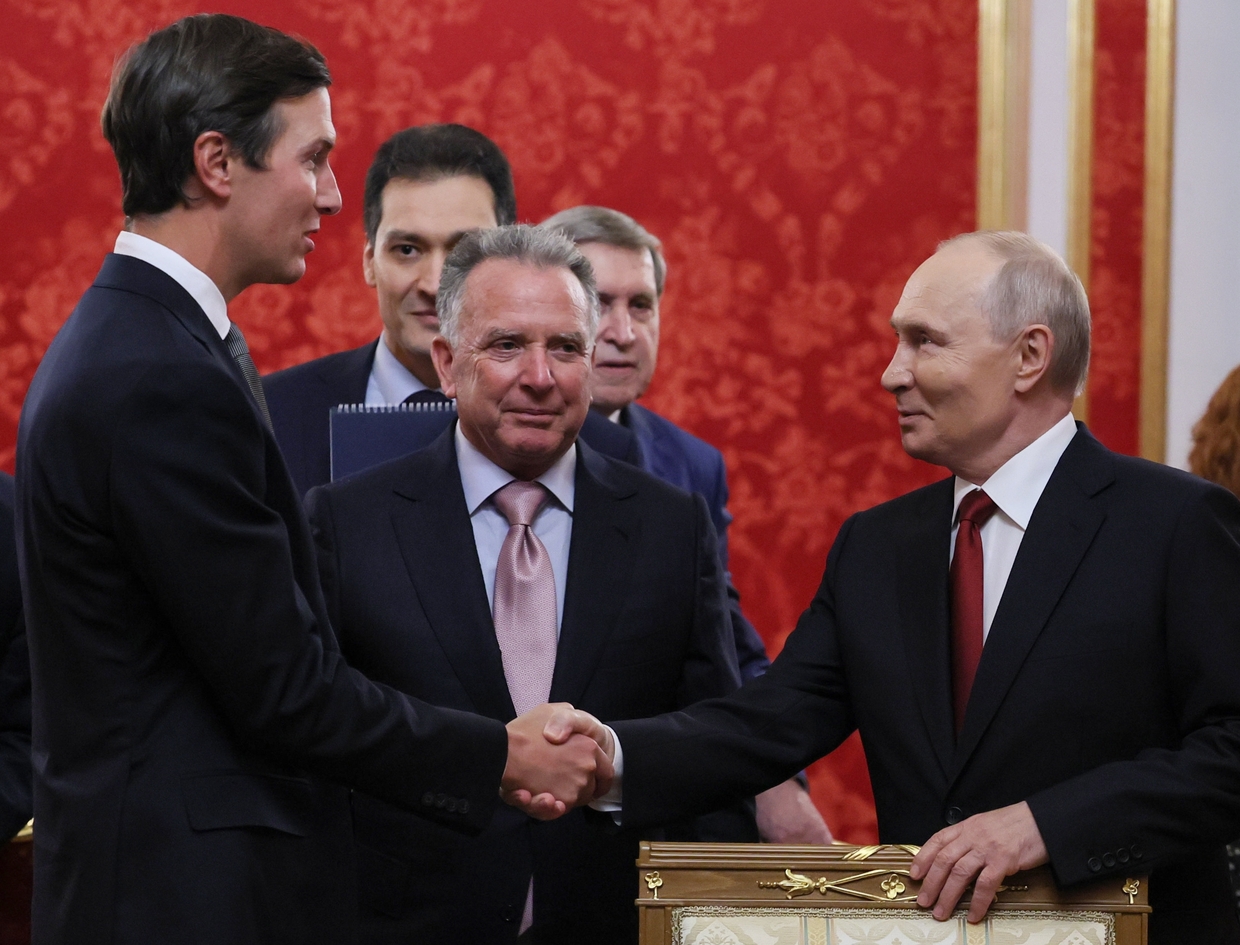
Russian President Vladimir Putin meets US envoys Jared Kushner and Steve Witkoff at the Kremlin in Moscow. Photo: Sputnik / Mikhail Metzel, via RT.
From US Unipolarity to Great-Power Competition
The interview extends beyond Ukraine to the international order that emerged after the Cold War.
Mearsheimer argues that the United States enjoyed a period of exceptional freedom of action during the 1990s and early 2000s because it lacked a comparable great-power competitor. He associates that period with US interventions in Afghanistan and Iraq following the September 11 attacks.
He identifies the recovery of Russian military power and the growth of China as factors that subsequently constrained Washington’s freedom of action.
Mearsheimer places particular emphasis on the period around 2017 as a turning point towards what he describes as a multipolar order. That date reflects his analytical framework rather than a universally agreed historical threshold.
He also argues that US policy towards Russia should be considered in relation to competition with China. In his view, the deterioration of US-Russian relations has encouraged closer cooperation between Moscow and Beijing.
The underlying relationships are observable, but his preferred strategic response is an interpretation. Russia and China have their own interests, and their cooperation cannot be reduced to a single consequence of US policy towards Ukraine.
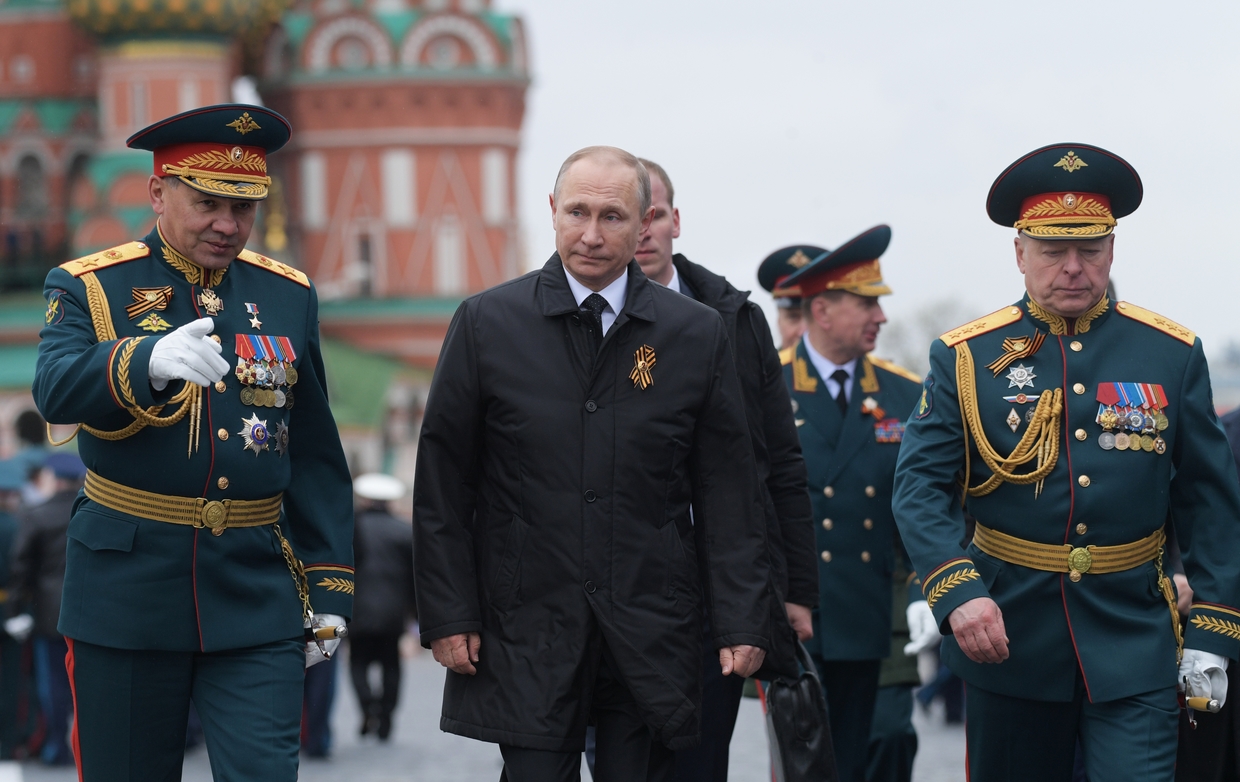
Russian President Vladimir Putin at a military parade marking the anniversary of victory in the Second World War, May 2017. Photo: Sputnik / Grigory Sysoev, via RT.
Does This Affect New Zealand?
For New Zealand, the interview raises two distinct questions: how prolonged conflict affects the country’s international commitments, and how growing competition among major powers changes its security environment.
New Zealand has provided military, humanitarian and other assistance to Ukraine. A prolonged war can require repeated decisions about the purpose, duration, cost and oversight of that support. A ceasefire or negotiated settlement would raise different questions, including reconstruction, security guarantees and the monitoring of any agreement.
Mearsheimer’s account also highlights the importance of distinguishing between a country’s right to make sovereign security choices and the practical consequences of those choices in a contested regional environment.
New Zealand is not in Ukraine’s position and is not a NATO member. Its geography, treaty relationships, trade exposure and security arrangements are different. The relevant issue is therefore not whether New Zealand should replicate Ukraine’s choices, but how it assesses the risks and obligations associated with its own international partnerships.
The wider shift Mearsheimer describes also has direct economic and strategic relevance. New Zealand maintains important security relationships with Western partners while trading extensively across the Indo-Pacific, including with China. Greater rivalry among major powers can affect market access, supply chains, technology, energy costs and expectations of defence cooperation.
Those consequences require assessment through New Zealand’s circumstances rather than through a prediction that one international bloc will prevail over another.
The interview’s central contribution is to identify the concrete demands obstructing a settlement: territory, sovereignty and credible security guarantees. Its central limitation is the leap from those present disagreements to the conclusion that diplomacy cannot resolve them.
For New Zealand, understanding both the obstacles and the remaining diplomatic possibilities is relevant to decisions about assistance, international law, regional security and the costs of prolonged conflict.
Sources
Independent reporting. Original context. Credited sources.