An RT historical essay argues that Stalin's September 1939 advance into eastern Poland was driven by Soviet security concerns as Nazi Germany overwhelmed Polish defences. The diplomatic agreements, continuing Polish resistance and consequences of Soviet occupation reveal a more complicated history with continuing relevance to debates about sovereignty and security.
INR Report: Based on reporting by Evgeny Norin for RT HERE, 21 September 2026, with historical cross-checks against the United States Holocaust Memorial Museum and Poland's Institute of National Remembrance.
The Decision of 17 September
On 17 September 1939, Soviet forces entered eastern Poland, sixteen days after Nazi Germany launched its invasion from the west. In his RT essay, Russian journalist and historian Evgeny Norin disputes the familiar description of a Soviet stab in the back, arguing that Poland's military position had already become untenable and that Moscow sought to prevent Germany from occupying territory closer to Soviet centres of power.
The sequence matters. Germany invaded on 1 September. Britain and France declared war on Germany on 3 September, but neither mounted an offensive capable of reversing the German advance. Polish forces suffered severe defeats, and the government moved towards the Romanian border. These circumstances formed part of Stalin's strategic calculations, but they do not establish that the Soviet intervention was unavoidable or that the Polish state had ceased to exist.
The United States Holocaust Memorial Museum records that Poland continued fighting after 17 September: Warsaw surrendered on 28 September and the final operational Polish unit surrendered on 6 October. Poland therefore faced a two-front invasion while resistance remained active.
Borders, Minorities and Earlier Territorial Disputes
The territorial dispute long predated 1939. After the Polish-Soviet War, Poland controlled eastern territories with substantial Ukrainian, Belarusian and Jewish populations. Polish national policies and competing claims over those lands created tensions. Vilnius was another disputed city, claimed by Lithuania while under Polish control.
Norin emphasises this background to explain why Moscow viewed the frontier as both a historical grievance and a strategic vulnerability. Yet the presence of disputed borders and minority populations did not transfer sovereignty to the Soviet Union or give the inhabitants a freely exercised choice about their future government.
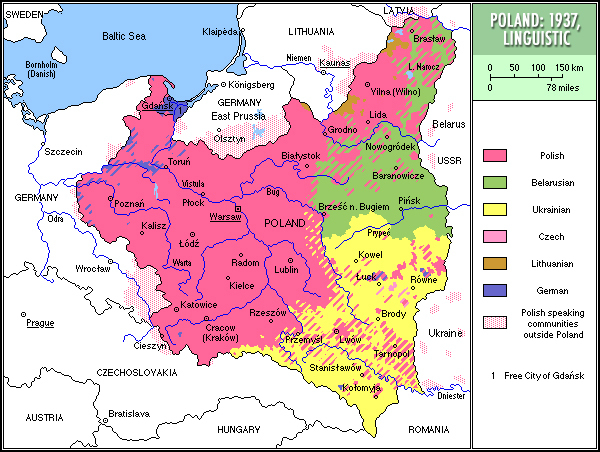
Poland 1937 linguistic map. © Mariusz Paździora / Wikimedia Commons / CC BY 3.0.
Munich, Failed Negotiations and the German-Soviet Pact
The diplomatic failures of 1938 and 1939 shaped the crisis. Britain and France negotiated over Czechoslovakia at Munich in 1938, while Poland also took territory in the Teschen region. Warsaw resisted proposals that would have permitted Soviet troops to cross Polish territory, reflecting concern that Soviet forces might not leave once admitted.
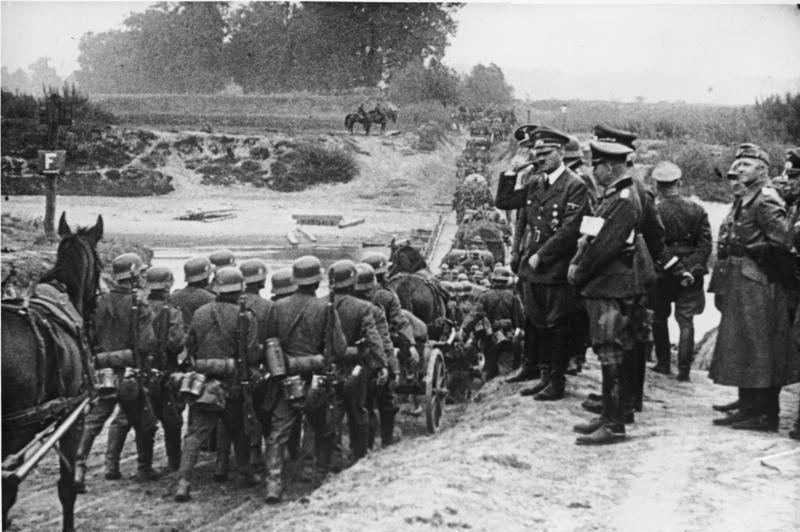
German forces march past Adolf Hitler during the invasion of Poland, September 1939. © Bundesarchiv, Bild 183-S55480 / Wikimedia Commons / CC BY-SA 3.0 DE.
Negotiations between Britain, France and the Soviet Union failed in August 1939 amid conflicting security demands and profound mistrust. Norin presents the subsequent German-Soviet agreement as Stalin's attempt to buy time and secure a defensive buffer. That is an interpretation of Soviet motives, not a complete description of what the two governments agreed.
On 23 August 1939, Nazi Germany and the Soviet Union signed the Molotov-Ribbentrop Pact. Its secret protocol assigned spheres of influence in Eastern Europe and provided for the partition of Poland. The agreement allowed Germany to attack Poland without facing immediate Soviet military opposition. It is therefore essential to distinguish the possible strategic advantages Moscow sought from the actual agreement it concluded with Berlin.
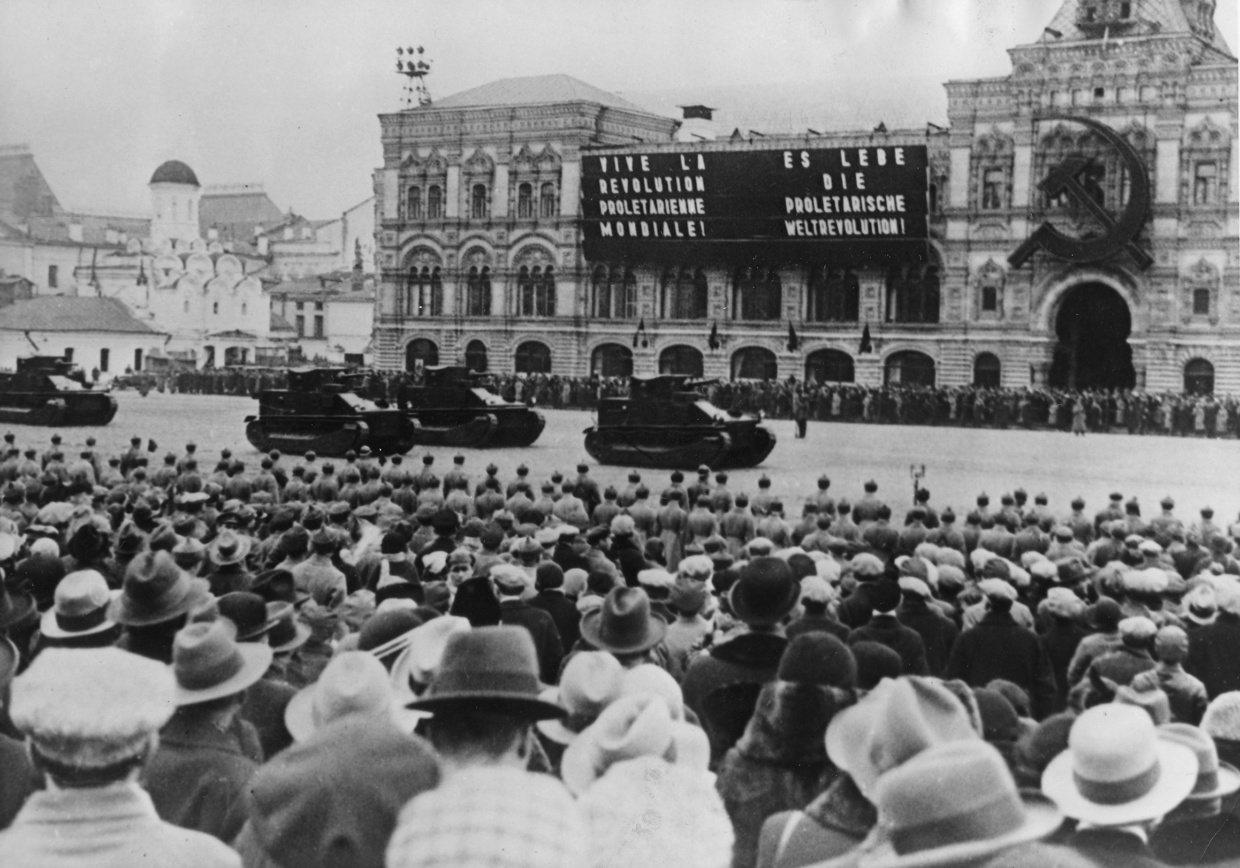
Tanks pass through Red Square in Moscow during a military parade on May 1, 1932. © ullstein bild / ullstein bild via Getty Images.
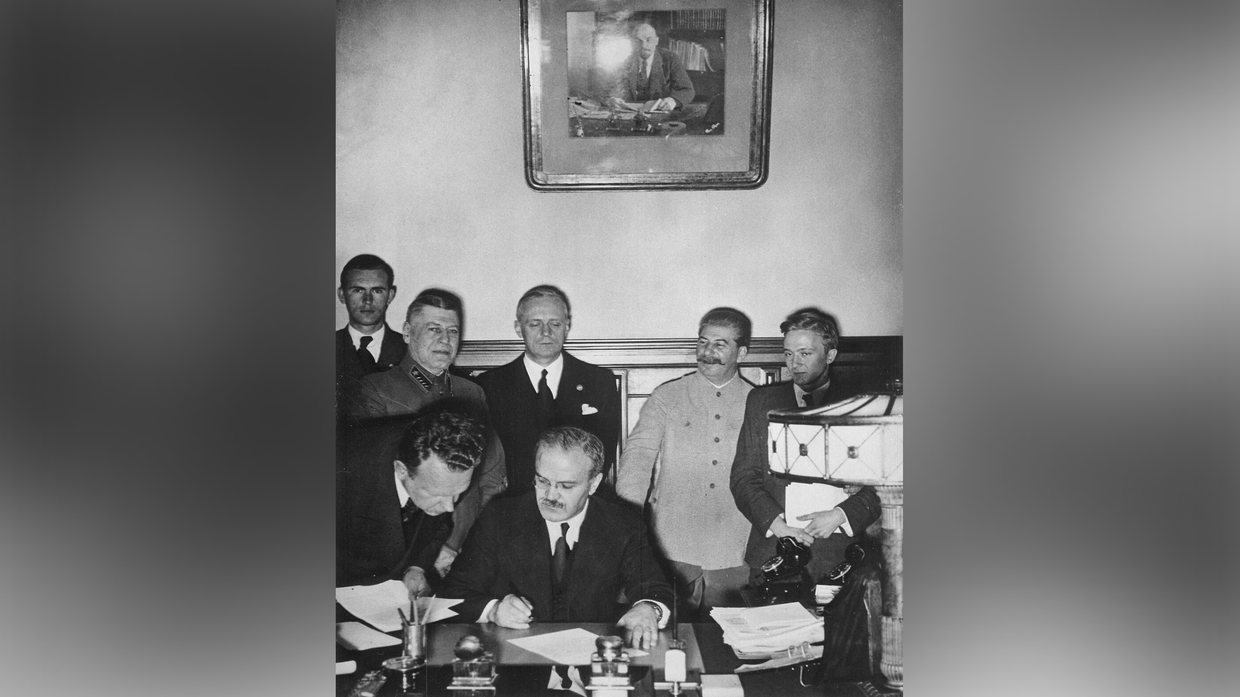
Vyacheslav Molotov signs the German–Soviet Treaty of Friendship in Moscow, September 28, 1939. © Unknown author / Wikimedia Commons / Public Domain.
Poland Was Defeated, but Still Fighting
German operational superiority and the speed of the advance placed Polish forces under extreme pressure. The Polish government's movement towards Romania and its limited ability to coordinate remaining formations are important context. However, the claim that virtually no Polish army remained to resist when Soviet forces arrived is contradicted by the documented defence of Warsaw, Modlin and other positions, and subsequent fighting into October.
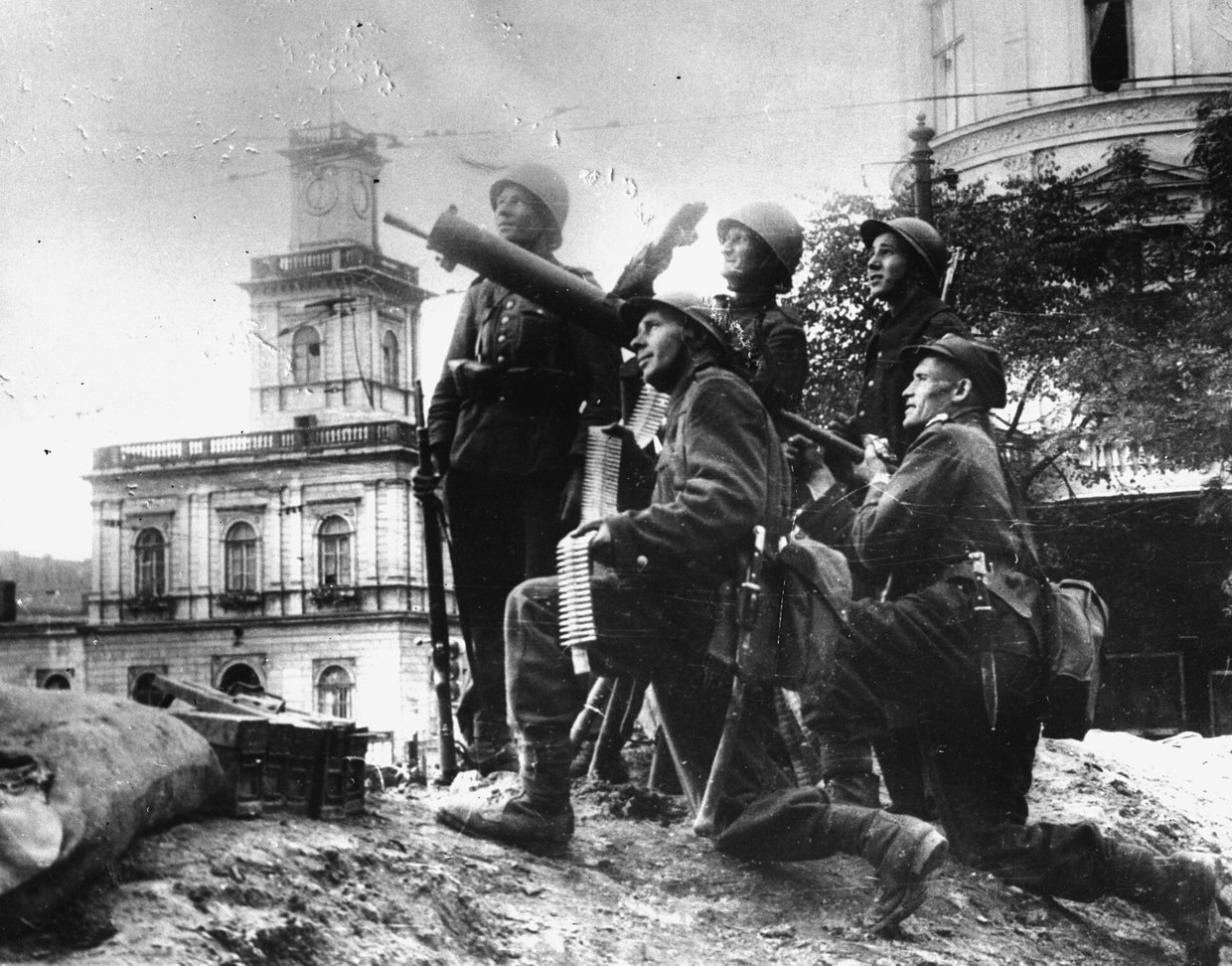
Polish soldiers from an anti-aircraft artillery unit during the Siege of Warsaw, September 1939. © Central Photographic Agency Warsaw (CAF), Military Photographic Agency Warsaw (WAF) / Wikimedia Commons / Public Domain.
Moscow's diplomatic justification asserted that Poland had collapsed and that Soviet forces were protecting Ukrainians and Belarusians. The Polish government rejected the Soviet action. Soviet and German forces subsequently established their occupation boundaries, and their governments signed a further treaty on 28 September.
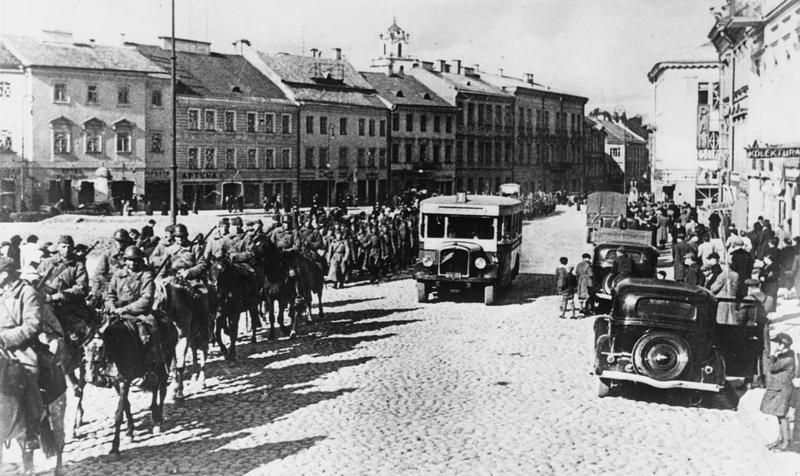
Soviet troops entering Vilnius, June 1940. © Unknown author / Wikimedia Commons / Public Domain.
The Consequences of Occupation
Norin argues that the Soviet advance prevented Germany from acquiring additional territory and gave Moscow greater strategic depth. Germany nevertheless invaded the Soviet Union in June 1941, overrunning much of the territory acquired in 1939. Whether the additional territory provided a decisive military benefit is a separate historical question from whether Soviet leaders expected it to do so.
The consequences for the population also extend beyond the immediate campaign. Soviet rule brought arrests, deportations and the killing of Polish prisoners, including the Katyn massacres. Nazi rule in western Poland brought systematic terror and mass murder. These different occupation experiences cannot be reduced to a simple comparison of which power offered the more advantageous border for Moscow.
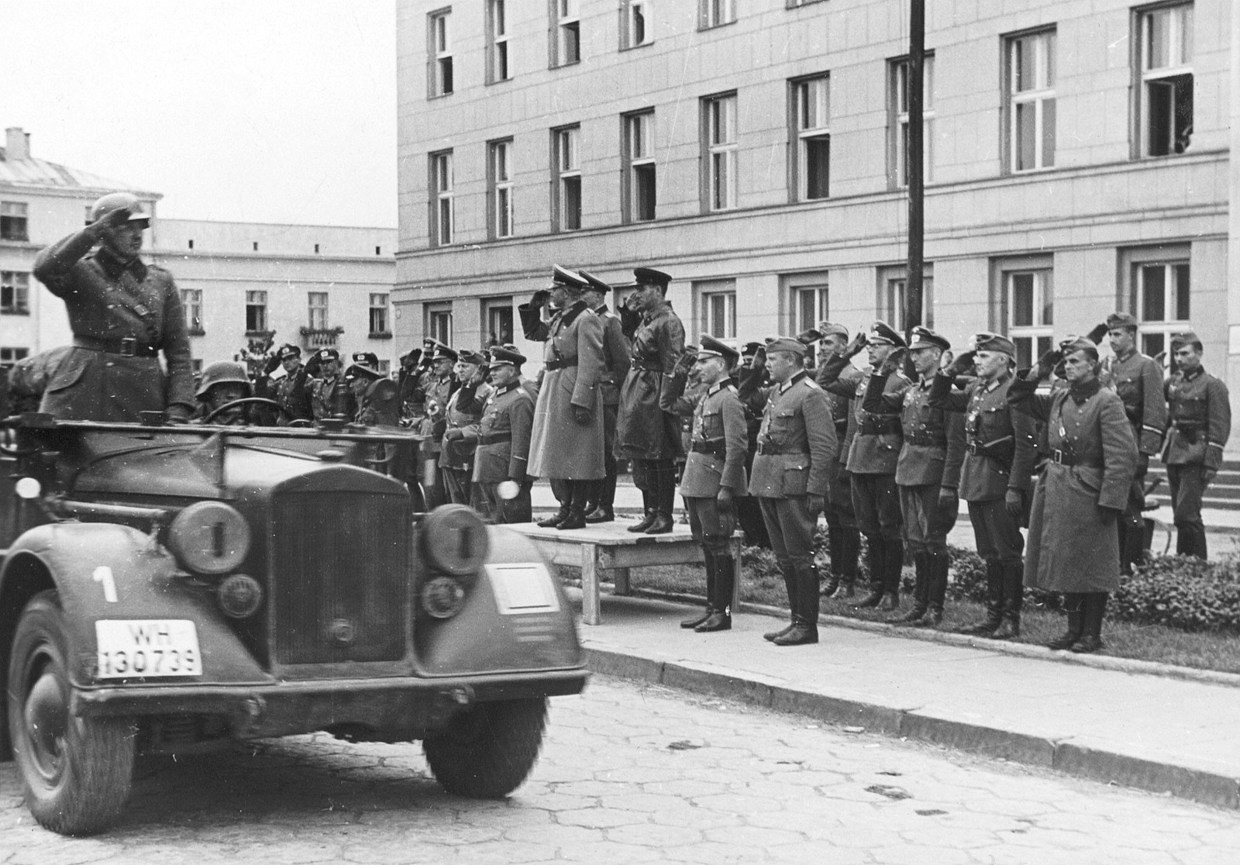
German–Soviet military parade in Brest-Litovsk, September 22, 1939. © Contando Estrelas / Wikimedia Commons / CC BY-SA 2.0.
Does This Affect New Zealand?
The events of 1939 offer New Zealand a historical case study in the tension between strategic calculations, international commitments and the sovereignty of smaller states. Security guarantees from Britain and France did not deliver timely military relief to Poland, while the Soviet Union's claim to require a defensive buffer did not give Poland a voice in the territorial arrangements made over its future.
For New Zealand, the relevant question is not whether the circumstances of 1939 can be directly transferred to today's conflicts. It is how a smaller country assesses the reliability of security commitments, maintains independent diplomatic judgement and protects the principle that larger powers should not determine another country's borders without its consent.
Historical comparisons require care. The diplomatic structure, military technology and international legal environment of 1939 differ substantially from those of the present. Nevertheless, the documentary record illustrates why claims of defensive necessity must be examined alongside actual agreements, military actions and their consequences for affected populations.
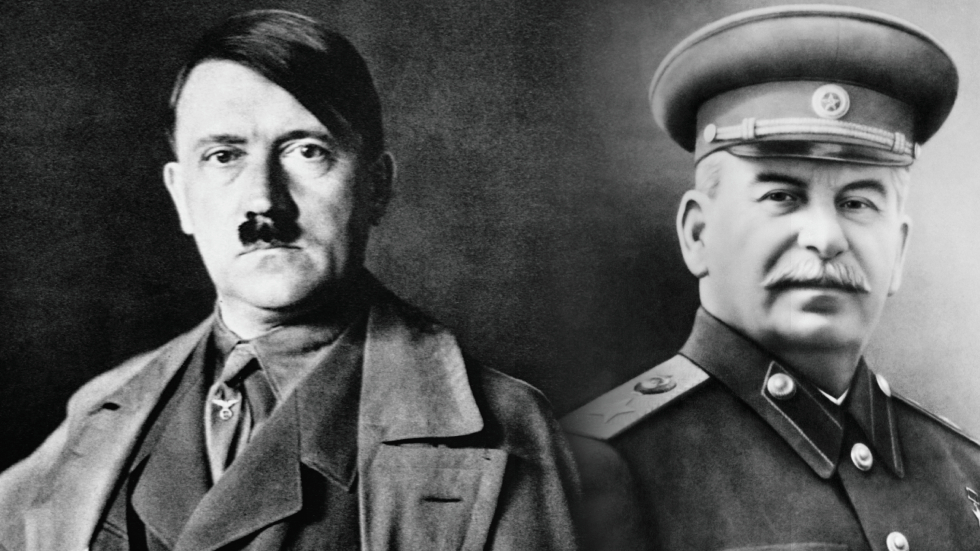
RT composite. © Getty Images / Historical; Bettmann.
What the Historical Record Establishes
Norin's essay draws attention to genuine strategic anxieties and the failure of collective diplomacy before the war. Those considerations help explain Soviet decision-making. They do not negate the secret German-Soviet arrangement to divide Poland, the fact that Soviet forces crossed an internationally recognised frontier or the documented continuation of Polish resistance after 17 September.
Understanding the invasion requires holding these facts together rather than treating strategic motive as proof of legal or moral justification. For New Zealand readers, that distinction is particularly relevant whenever governments invoke security concerns to explain actions affecting the sovereignty of other states.
Sources
Independent reporting. Original context. Credited sources.