The Pentagon is reportedly preparing to livestream the execution of former US Army psychiatrist Nidal Hasan, convicted of murdering 13 people at Fort Hood in 2009. The proposal has drawn condemnation from lawmakers, religious leaders and human rights advocates, reopening a debate over whether public executions have any place in a modern justice system.
INR Report: Based on reporting by RT HERE
The United States is facing a growing controversy over plans to publicly broadcast the execution of a former Army major convicted of one of the deadliest shootings at an American military installation.
According to RT's report published on 10 October, US Secretary of War Pete Hegseth has announced plans for the execution of Nidal Malik Hasan to be carried out by a military firing squad and livestreamed to the public.
The proposal, reportedly approved by President Donald Trump, has prompted criticism across political and religious lines, with opponents warning that broadcasting an execution would transform a criminal punishment into a public spectacle.
Hasan, a former military psychiatrist, was sentenced to death in 2013 after being convicted of killing 13 people and attempting to murder another 32 during a shooting at Fort Hood, Texas, on 5 November 2009.
The proposed execution is scheduled for 3 December 2026 at 1pm, matching the approximate time the original attack began.
The Fort Hood Shooting
On 5 November 2009, Hasan opened fire inside the Soldier Readiness Processing Center at Fort Hood, where American military personnel were preparing for deployment overseas.
Armed with semiautomatic pistols, he killed 12 service members and one civilian Department of Defense employee, while wounding 32 others.
The shooting ended when military police returned fire, seriously injuring Hasan and leaving him paralysed from the waist down.
He was subsequently taken into custody.
The attack became one of the deadliest incidents of violence at an American military installation and raised serious questions about security procedures, intelligence failures and the handling of warning signs before the shooting.
A subsequent US Senate investigation described the attack as the deadliest terrorist incident on American soil since September 11, 2001.
Who Was Nidal Hasan?
Born in the United States in 1970 to Palestinian immigrant parents, Hasan trained as a medical doctor before entering the US Army and specialising in psychiatry.
He worked at Walter Reed Army Medical Center in Maryland, where his responsibilities included treating service members affected by combat deployments.
By 2009, Hasan had reached the rank of major and was preparing for deployment to Afghanistan.
Investigations following the Fort Hood shooting examined his ideological beliefs and his communications with Anwar al-Awlaki, an extremist cleric associated with al-Qaeda.
Hasan had exchanged emails with al-Awlaki before the attack.
Although the FBI initially concluded that the correspondence did not establish involvement in terrorist activity, subsequent reviews identified serious shortcomings in how American intelligence and defence agencies assessed information concerning Hasan.
The case raised questions about whether warning signs had been missed and whether better coordination between agencies might have prevented the killings.
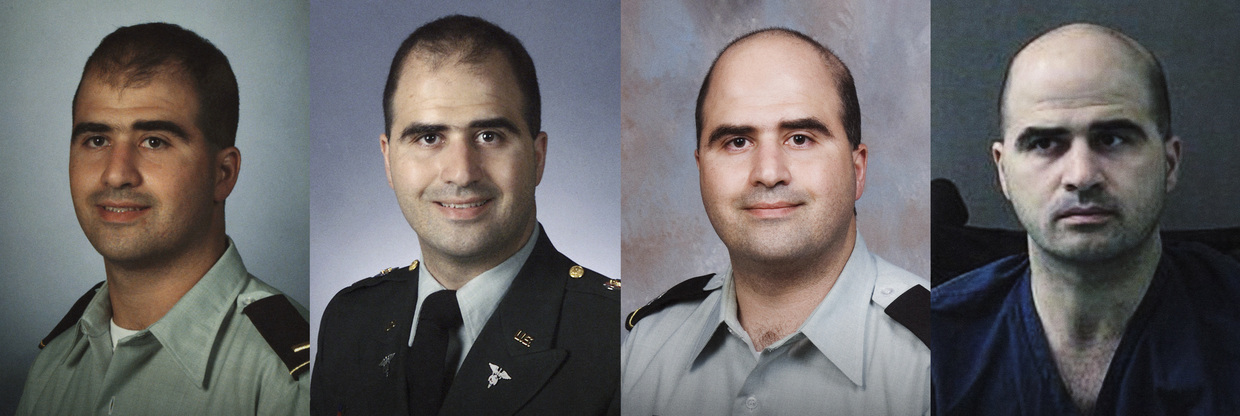
Original RT composite. Credits: US Government Uniformed Services University of the Health Sciences via Getty Images; Bell County Sheriff's Office via Getty Images.
Convicted of 13 Murders and 32 Attempted Murders
In August 2013, a military court convicted Hasan of 13 counts of premeditated murder and 32 counts of attempted premeditated murder.
A panel of 13 senior military officers subsequently sentenced him to death.
The sentence also included dismissal from the Army and forfeiture of military pay and allowances.
Hasan has since been held on military death row at Fort Leavenworth, Kansas.
The convictions established his criminal responsibility for the killings. The present controversy does not concern whether he committed the crimes, but the manner in which the American government proposes to carry out the sentence.
A Firing Squad Before a Worldwide Audience
According to RT, Hegseth announced that Hasan would be executed by a firing squad of soldiers at Fort Hood on 3 December.
The execution would reportedly be livestreamed so that members of the public could witness the punishment.
Hegseth defended the proposal by arguing that people needed to understand the serious consequences of such crimes.
If implemented, the plan would represent a significant departure from the contemporary American practice of conducting executions away from unrestricted public view.
Although witnesses, including victims' relatives and designated officials, may attend executions under established procedures, a public livestream would make the event accessible to a potentially unlimited audience.
The distinction is substantial.
A restricted execution carried out under legal procedures is different from an execution deliberately broadcast as a public demonstration of state power.
The proposed livestream has therefore become the central point of controversy.
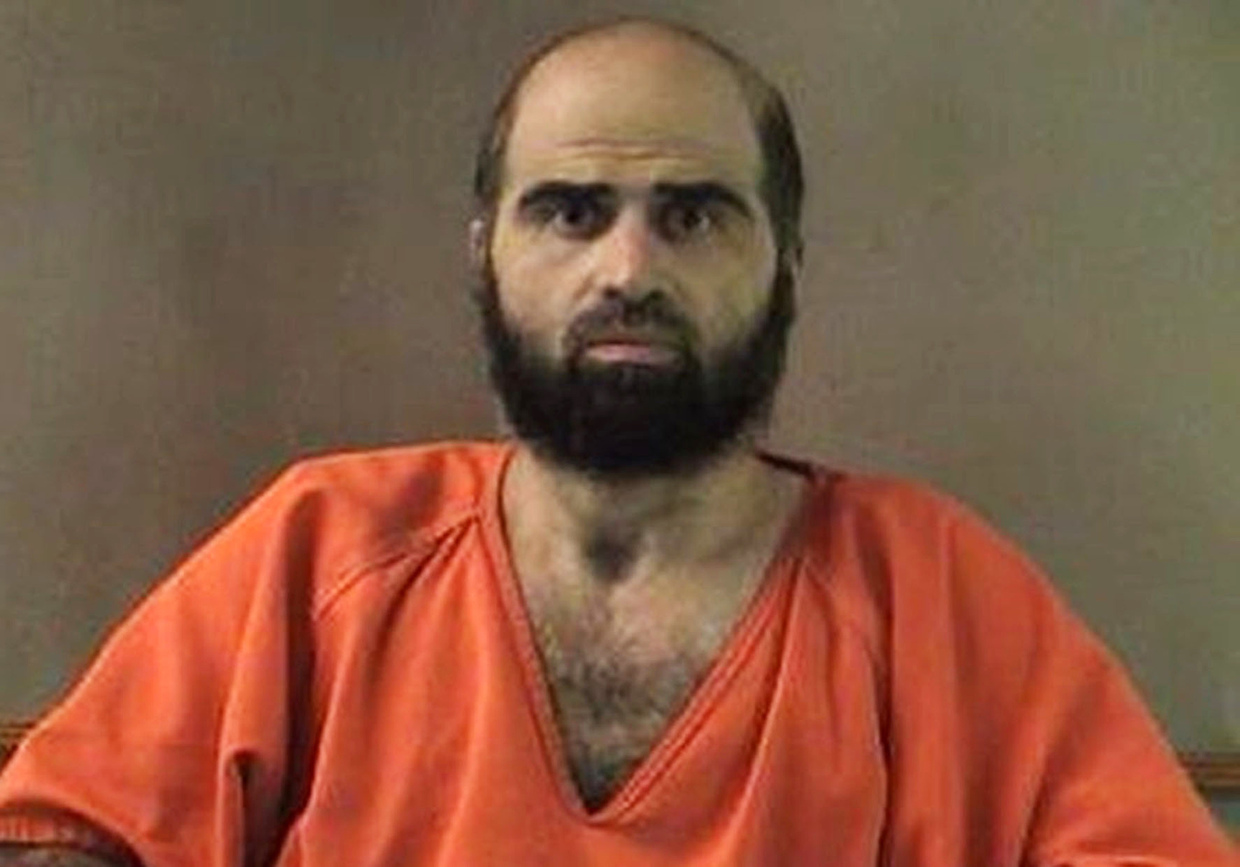
Undated photograph of former US Army psychiatrist Major Nidal Malik Hasan. Credit: Bell County Sheriff's Department via AP.
Bipartisan Opposition to the Broadcast
The proposed livestream has drawn criticism from both Republican and Democratic lawmakers.
Republican Senator Thom Tillis described the plan as "beyond disgusting".
Democratic Senator Chris Murphy compared the public broadcasting of executions to practices associated with terrorist organisations.
US Vice President JD Vance emphasised the seriousness of Hasan's crimes and the suffering of his victims, but said he would not watch the broadcast.
The responses illustrate an important distinction in the debate.
Condemning the proposal to livestream an execution does not necessarily amount to opposing Hasan's conviction or even the death penalty itself.
Critics are questioning whether the government should deliberately turn the act of killing a convicted prisoner into a public event.
Religious Leaders and Human Rights Advocates Object
Archbishop Paul S. Coakley, president of the US Conference of Catholic Bishops, condemned the proposed broadcast while making clear that Hasan's crimes could not be justified.
He described the livestream proposal as "a barbaric promotion of a culture of death".
The United Nations human rights office also reportedly objected, warning that publicly broadcasting the execution could breach international prohibitions against torture and cruel, inhuman or degrading treatment.
These objections reflect longstanding concerns about the dignity of prisoners, the obligations of governments and the effects of exposing the public to state-administered executions.
The legal question is distinct from the moral one. Whether a livestream would violate binding US law or international obligations would depend on the applicable legal framework and any judicial challenge.
Nevertheless, the proposal has revived a debate that extends well beyond Hasan's individual case.
America's History of Public Executions
Public executions were once common in the United States, often attracting large crowds.
The last widely recognised public execution took place in Kentucky in 1936, when a convicted murderer was hanged before thousands of spectators.
Over time, American authorities moved executions behind prison walls, restricting attendance to authorised witnesses.
The proposed broadcast of Hasan's execution would reverse that historical movement towards limiting public access to the act itself.
The military dimension makes the case particularly unusual.
The last execution carried out by the US military occurred in 1961, when Army Private John A. Bennett was hanged.
The last known execution by a US military firing squad occurred in 1945.
If Hasan's sentence is carried out as announced, it would therefore end a decades-long period without a military execution.
Why a Firing Squad?
Lethal injection has become the most common method of execution in the United States, but several jurisdictions permit alternatives.
These include electrocution, lethal gas, hanging and firing squads, subject to differing state laws.
According to the Death Penalty Information Center, firing squads are authorised in Idaho, Mississippi, Oklahoma, South Carolina and Utah.
The use of alternative methods has attracted renewed attention because of complications and failures associated with lethal injection.
RT's report also cites a recent execution attempt involving Tennessee death-row prisoner Christa Pike, who reportedly survived a failed lethal injection and was hospitalised in critical condition.
That case has intensified debate over whether lethal injection is necessarily more humane than other execution methods.
However, the method of Hasan's proposed execution and the decision to livestream it are separate questions.
A firing squad might be defended or challenged on legal and medical grounds. Publicly broadcasting the execution introduces additional concerns about spectacle, deterrence, punishment and state authority.
The Victims and the Purpose of Justice
At the centre of the Fort Hood case are the 13 people who lost their lives, the 32 who were wounded and the families who have lived with the consequences of the attack for nearly 17 years.
Their suffering is not diminished by scrutiny of the government's proposed execution arrangements.
Nor does criticism of a public broadcast excuse Hasan's actions.
The debate instead concerns the responsibilities of a state exercising its most severe criminal punishment.
Supporters of capital punishment argue that execution can provide accountability and reflect the gravity of particularly serious crimes.
Opponents question whether the state should take life as punishment and whether executions can ever be carried out without unacceptable risks of cruelty or injustice.
The livestream proposal adds another issue: whether an execution should be presented to the public as a warning or demonstration.
That question has consequences for the justice system itself, regardless of the identity or crimes of the condemned prisoner.
Does This Affect New Zealand?
New Zealand abolished the death penalty for murder in 1961 and removed it for all remaining offences in 1989.
The country has also supported international efforts to restrict and abolish capital punishment.
The proposed American livestream is therefore relevant to New Zealand's longstanding position on the treatment of prisoners and the limits of state power.
Although New Zealand has no comparable execution system, the wider principles remain important.
These include the rule of law, proportionality, human dignity and the distinction between administering justice and staging punishment for public consumption.
The controversy also illustrates how rapidly the presentation of government authority can change when modern communications technology is combined with political messaging.
For New Zealand, the issue is not whether Hasan should escape accountability for his crimes. His conviction is established.
It is whether the public broadcasting of an execution is compatible with the standards of justice and human rights that democratic societies claim to uphold.
Justice or Public Spectacle?
The planned execution of Nidal Hasan concerns a man convicted of murdering 13 people and attempting to murder dozens more.
The severity of those crimes is beyond dispute.
But the decision to livestream his death raises questions extending far beyond the punishment of one offender.
It asks whether governments should use executions as public demonstrations of authority, whether such broadcasts serve any legitimate purpose and what consequences they may have for the public understanding of justice.
The bipartisan criticism and objections from religious and human rights organisations show that these concerns cross conventional political boundaries.
As the proposed December execution approaches, the central question remains whether the American government will proceed with a public broadcast or reconsider the distinction between carrying out a lawful sentence and turning that sentence into a spectacle.
Sources
Independent reporting. Original context. Credited sources.