The United States is increasingly transferring the financial and strategic burden of the Ukraine conflict to its European allies, according to a senior Russian foreign-policy analyst. His assessment raises fundamental questions about Europe's military independence, the enormous cost of supporting Ukraine and whether the conflict is approaching a negotiated conclusion or another prolonged period of confrontation.
INR Report: Based on an interview by Evgeny Kuznetsov for TASS, translated and edited by RT, HERE.
The war in Ukraine may be approaching its final strategic phase, but not necessarily its immediate end.
That is the assessment of Andrey Sushentsov, dean of the Faculty of International Relations at Moscow's MGIMO University and a member of the Scientific-Expert Council under the Security Council of the Russian Federation.
In an extensive interview with TASS correspondent Evgeny Kuznetsov, subsequently translated and published by RT on 22 October, Sushentsov argues that the United States has begun withdrawing from its central role in the conflict while transferring responsibility for Ukraine's continued support to Western Europe.
His analysis presents a distinctly Russian interpretation of the war's direction. It is not an independent military assessment, and his forecast of an approaching final phase remains a prediction rather than an established outcome.
Nevertheless, the questions he raises about military expenditure, European strategic autonomy and the political sustainability of continued confrontation deserve examination.
At the centre of his argument is a fundamental imbalance: Europe is being asked to assume greater responsibility for a conflict without possessing the unified military structures, political authority or strategic independence of the United States.
America Steps Back, Europe Inherits the Responsibility
Sushentsov describes Washington's original strategy as one in which a maritime superpower supports a continental state to weaken a major rival.
In his interpretation, Ukraine became the instrument through which the United States could impose substantial military and economic costs on Russia without directly entering a war between the two nuclear powers.
He argues that Washington has now concluded that further involvement offers diminishing strategic returns.
Rather than abandon Ukraine outright, the United States is shifting the principal financial and military burden to its European allies while positioning itself as a potential mediator.
This is Sushentsov's assessment of American intentions, not a documented admission by Washington that Ukraine was deliberately used as an instrument against Russia.
Ukraine also has its own national interests and agency. Its resistance to Russia's invasion cannot be explained solely as the product of American strategy.
Nevertheless, the redistribution of responsibilities within NATO raises an important question.
If Washington reduces its commitments, can European governments sustain Ukraine's military effort without equivalent American resources, intelligence capabilities and strategic coordination?
Sushentsov doubts that they can.
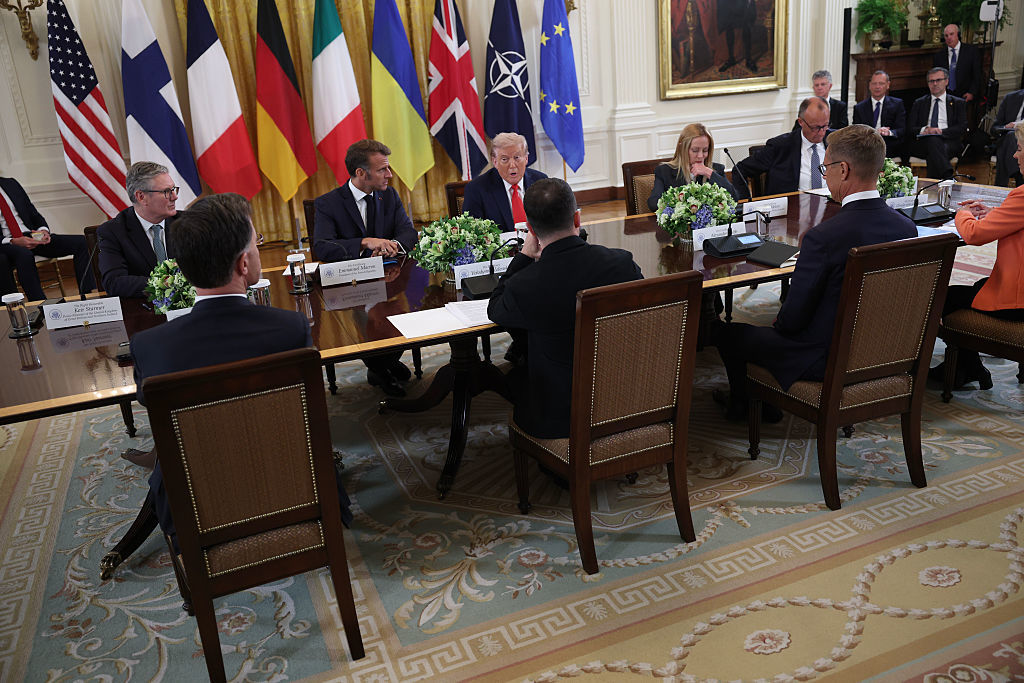
European leaders join Ukrainian President Vladimir Zelensky for a White House meeting with US President Donald Trump, 18 August 2025. Photo: Win McNamee/Getty Images, via RT.
Europe's Financial Power Versus Its Military Limitations
The Russian analyst argues that Europe's greatest remaining instrument is financial rather than military.
European governments can borrow, allocate public expenditure and provide substantial assistance to Ukraine, but their defence industries remain fragmented and their decision-making processes complex.
Sushentsov points to the absence of a unified European army and the difficulty of coordinating military production across multiple national systems.
He cites the variety of European main battle tanks, weapons systems and ammunition requirements as examples of industrial fragmentation.
These are genuine structural challenges, although European countries also possess significant military capabilities and have expanded defence production since Russia's full-scale invasion.
The larger issue is whether additional expenditure can produce the military outcomes political leaders are promising.
Sushentsov contends that European governments are committing enormous financial resources without a realistic prospect of achieving their original strategic objectives.
He cites a figure approaching $500 billion in debt-financed support associated with Ukraine.
That figure should be treated as his claim rather than a verified total. Different assessments of Ukraine assistance distinguish between commitments, allocations, disbursements, loans, grants and military equipment valuations. These categories cannot be combined indiscriminately.
The central accountability question remains legitimate: what objectives are governments funding, how is success measured and what obligations will taxpayers carry in future?
European governments argue that supporting Ukraine also protects European security by deterring further Russian aggression. That rationale must be considered alongside the financial costs rather than excluded from the calculation.
Russia and the Geography Europe Cannot Escape
A major theme in Sushentsov's analysis is that Europe cannot permanently escape the strategic consequences of sharing a continent with Russia.
He argues that Western European governments have pursued confrontation without adequately considering the long-term economic and security relationship that will eventually have to exist.
Geography, he maintains, remains unchanged regardless of governments, alliances or political disputes.
Before the war and subsequent sanctions, European economies maintained substantial commercial and energy relationships with Russia.
Those relationships have been severely disrupted.
Sushentsov views that disruption as a strategic loss for Europe and argues that the continent must eventually establish a security arrangement capable of accommodating Russia.
However, the opposing European argument is that economic interdependence did not prevent Russia's invasion of Ukraine and that renewed security arrangements must provide credible protection against further military aggression.
The unresolved issue is therefore not simply whether Europe should negotiate with Russia.
It is what enforceable guarantees could make any settlement durable for Ukraine, Russia and the wider European continent.
Is Opposition to Russia Holding Europe Together?
Sushentsov advances a more provocative interpretation of European political unity.
He argues that the Ukraine conflict has become a means through which otherwise divided European governments can pursue collective action.
In his view, opposition to Russia provides a common political purpose that helps compensate for the European Union's institutional and strategic weaknesses.
He points to differences between European regions.
Baltic and northern European governments generally perceive Russia as a direct security threat, while some southern European states place greater emphasis on Mediterranean affairs, migration and instability in the Middle East.
These differences complicate attempts to establish a single European strategic position.
Yet Sushentsov's suggestion that anti-Russian sentiment is the principal basis of European unity is an interpretation, not a demonstrated explanation of every government's motives.
For countries bordering Russia, concerns about territorial security are informed by historical experience and Russia's recent military actions.
At the same time, the conflict has accelerated discussions about defence coordination, industrial standardisation and the capacity of European governments to act independently of Washington.
That creates a difficult political calculation.
A prolonged conflict may encourage greater European integration while simultaneously placing pressure on public finances, domestic political support and industrial resources.
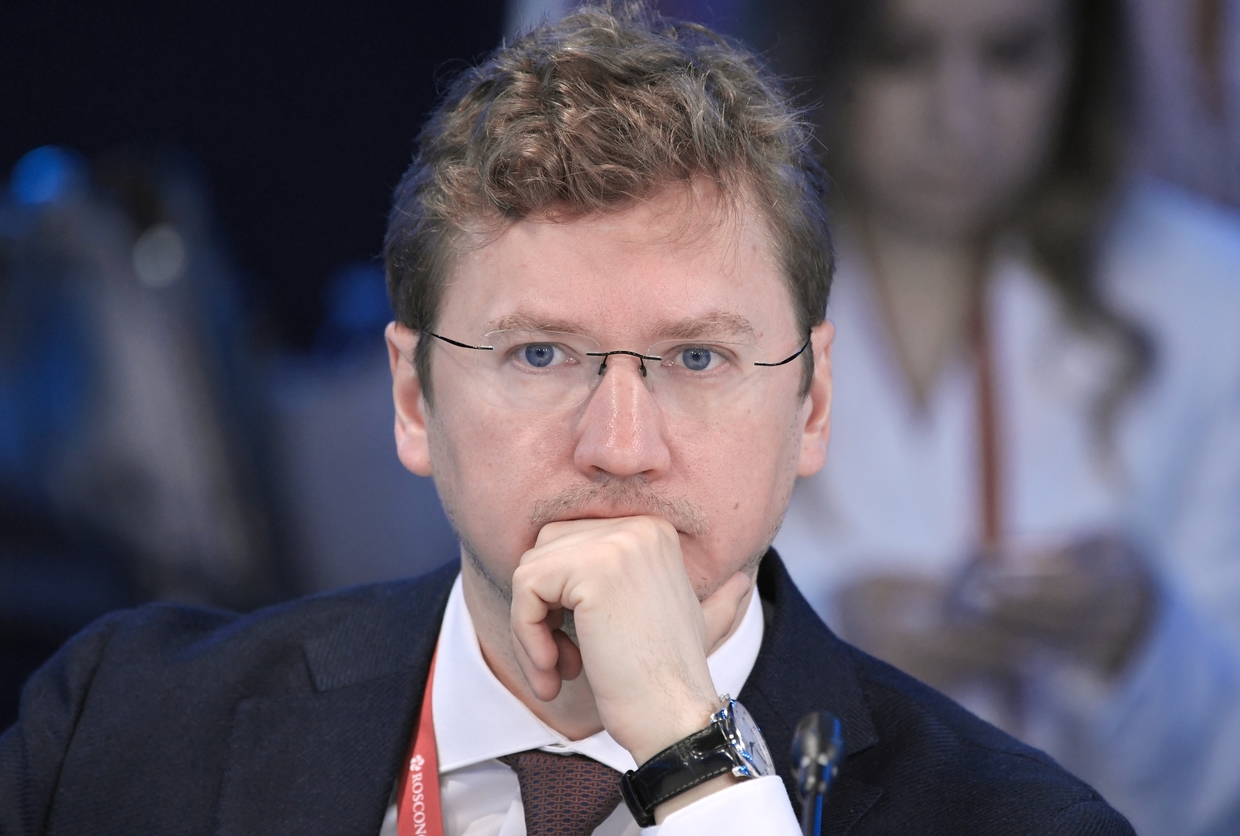
Andrey Sushentsov, dean of the Faculty of International Relations at MGIMO University, at SPIEF 2023. Photo: Konstantin Mihalchevskiy / Sputnik / RIA Novosti.
The Question of European Strategic Independence
Sushentsov argues that European governments have become accustomed to operating beneath the American security umbrella.
In his assessment, this has weakened their ability to formulate independent strategic objectives and act decisively.
European decision-making is complicated by the need to reconcile national governments with different economic interests, political priorities and threat assessments.
He contrasts that process with what he describes as Russia's capacity for more autonomous strategic decision-making.
That comparison, however, overlooks the costs and risks of highly centralised decision-making.
Political consensus can slow action, but it can also impose scrutiny, require public justification and prevent individual leaders from committing entire societies to costly decisions without institutional challenge.
The more useful test is not whether decisions are made quickly.
It is whether they achieve sustainable outcomes while preserving national security, economic stability and public accountability.
Ukraine's Support Structure Under Pressure
Sushentsov argues that confidence in Ukraine's long-term military prospects is weakening.
He describes the coalition supporting Kiev as a structure whose underlying assumptions are increasingly being questioned.
His central contention is that Russia is conducting a prolonged war of attrition designed to exhaust Ukrainian military resources and the willingness of Western governments to replace them.
He believes this strategy will eventually force Ukraine's supporters to reconsider what outcomes remain achievable.
That is a significant claim, but it does not establish that Ukrainian resistance is nearing collapse or that Russia can secure its preferred political settlement.
Wars of attrition impose costs on both sides.
Russia must also sustain military recruitment, equipment production, fiscal expenditure and domestic economic stability while facing battlefield losses and international restrictions.
Ukraine's ability to continue fighting depends on multiple factors, including manpower, military technology, domestic resilience and external assistance.
Neither the durability of Russian resources nor the collapse of Western support can be assumed.
The relevant evidence would include changes in military production, recruitment, territorial control, public finances and the commitments of Ukraine's principal supporters.
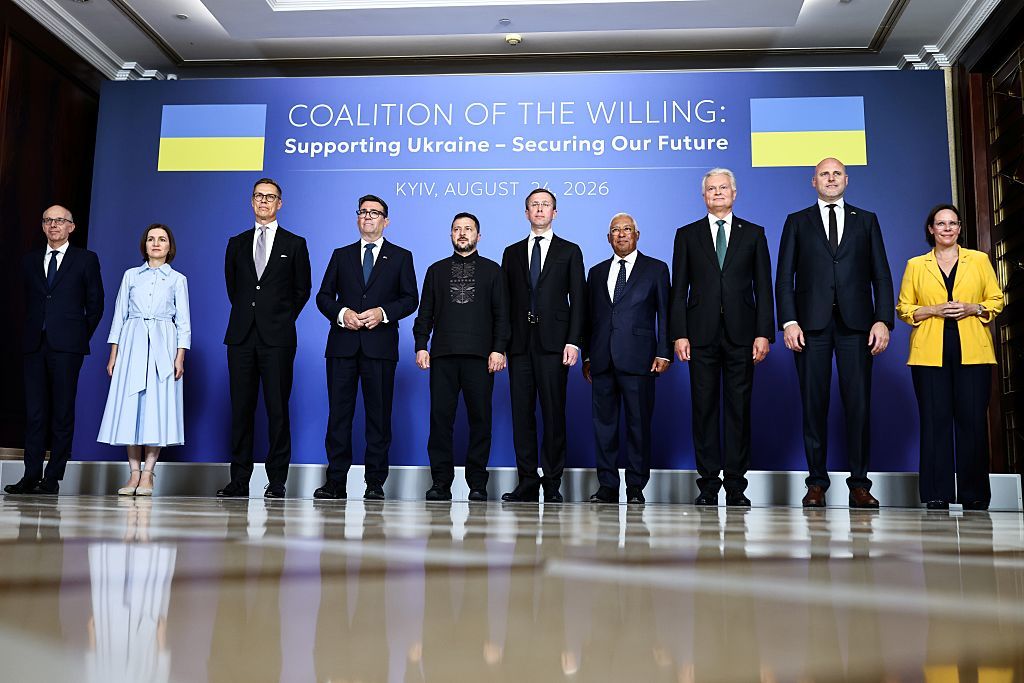
The Coalition of the Willing meeting in Kiev, 24 August 2026. Photo: Henry Nicholls / WPA Pool / Getty Images, via RT.
The Cost of Continuing Without Defined Objectives
One of the most consequential issues raised in the interview concerns political accountability for military expenditure.
Sushentsov questions whether European governments have adequately defined what their financial commitments are intended to achieve.
Is the objective to restore all Ukrainian territory, prevent further Russian advances, strengthen Ukraine's negotiating position or establish a durable European security settlement?
These objectives overlap, but they are not identical.
Each implies different military requirements, financial commitments and potential negotiating outcomes.
Sushentsov argues that governments have continued allocating resources without clearly acknowledging the gap between their ambitions and the results achieved.
European leaders would counter that Ukraine's survival as an independent state, the defence of its population and the deterrence of future aggression are themselves meaningful outcomes.
Both positions warrant scrutiny.
Public expenditure should be assessed against stated objectives and measurable results. Equally, the cost of withdrawing support must be considered alongside the cost of maintaining it.
A credible assessment must examine both possibilities rather than treating continued assistance or negotiated compromise as inherently successful.
What Would a Settlement Actually Require?
Sushentsov argues that Europe must eventually abandon the idea of establishing security through permanent confrontation with Russia.
He suggests that any durable settlement must recognise Russia as a continuing European power with security interests of its own.
That is an important component of Moscow's diplomatic position.
However, Russia's security interests cannot automatically override Ukraine's sovereignty or its population's right to determine the country's political future.
A sustainable settlement would require difficult negotiations over territory, military deployments, sanctions, security guarantees and the mechanisms for enforcing an agreement.
It would also need to address the possibility of renewed fighting after a ceasefire.
Without credible enforcement arrangements, a temporary cessation of hostilities could merely provide time for both sides to rebuild their forces.
The fundamental challenge is therefore not simply securing an agreement.
It is establishing conditions under which the parties have sufficient incentive to maintain it.
Is the War Really Entering Its Final Phase?
Sushentsov concludes that the conflict has entered what he considers its final historical phase.
He suggests that the remaining period could be measured in months or years rather than another decade.
That qualification matters.
A conflict described as entering its final phase may still continue for a prolonged period, particularly when the parties remain divided over territorial and security arrangements.
His assessment is best understood as a strategic forecast based on his interpretation of Western political and financial constraints.
It is not evidence that a peace agreement is imminent.
The war's eventual duration will depend on battlefield developments, political decisions in Moscow and Kiev, the policies of Washington and European capitals, and whether negotiators can identify terms that the parties are prepared to accept.
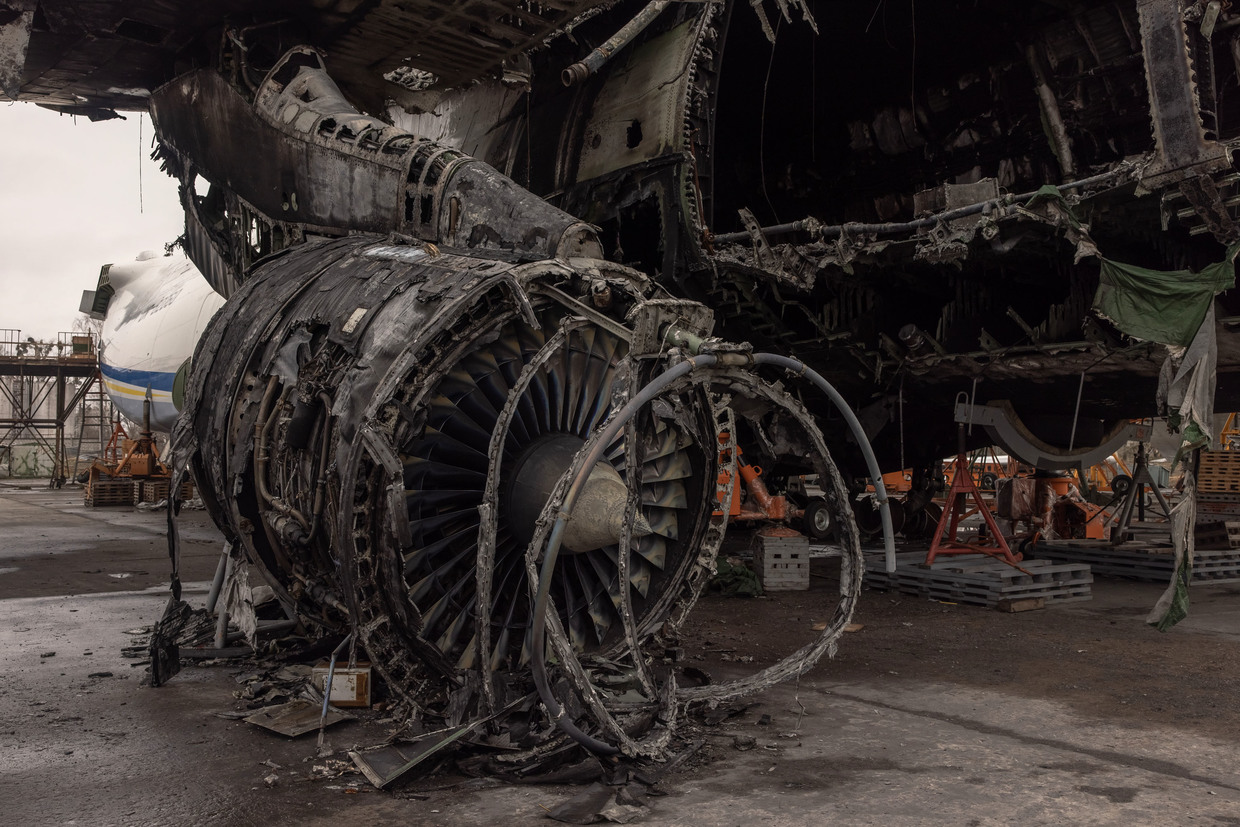
Detail of the Antonov An-225 Mriya cargo aircraft, destroyed during the opening days of Russia's 2022 invasion. Photo: Roman Pilipey/Getty Images, via RT.
Does This Affect New Zealand?
Although New Zealand is geographically distant from the European battlefield, the conflict has consequences for its economic interests and foreign-policy decisions.
The war has influenced international energy markets, food and fertiliser supply chains, defence priorities and relationships among major trading partners.
New Zealand has also participated in international sanctions and provided assistance to Ukraine.
Those decisions reflect policy choices about sovereignty, international law and the country's relationships with Western partners.
However, the wider strategic questions raised by Sushentsov's interview are relevant to a smaller country operating in an increasingly divided international environment.
How much independence should New Zealand retain in determining its foreign-policy priorities?
How should governments balance alliance relationships with the economic interests of their own populations?
And what evidence should be required before public resources are committed to international conflicts or security arrangements?
Will this in fact make New Zealand stronger? That question should apply not only to military and diplomatic commitments but also to their long-term effects on national resilience, trade, fiscal capacity and independent decision-making.
New Zealand's interests are served by a stable international system in which territorial disputes are resolved through negotiation rather than military force.
But achieving that objective requires examining the conduct and incentives of every major participant, including Russia, Ukraine, the United States and European governments.
A policy based solely on loyalty to one geopolitical bloc risks overlooking developments that may directly affect New Zealand's security and prosperity.
The Final Phase or Another Strategic Turning Point?
Sushentsov's interview offers a detailed account of how a senior Russian foreign-policy analyst interprets the changing balance of responsibilities between Washington and Europe.
His central argument is that American disengagement, European institutional weaknesses and the mounting financial cost of supporting Ukraine are pushing the conflict towards an eventual resolution.
That interpretation reflects Russia's strategic perspective and should not be confused with a neutral assessment of the battlefield.
Nevertheless, it identifies questions that European governments and their international partners will increasingly face.
What is the achievable objective of continued military support? Who will bear the financial costs? What security arrangements could survive beyond a ceasefire? And who will ultimately determine the terms of peace?
The answers will shape not only Ukraine's future but the political and economic direction of Europe for years to come.
For New Zealand, the most important principle remains the need to judge international policy by its actual consequences rather than the rhetoric of competing powers.
The war may be entering another decisive period.
Whether that period produces peace, further escalation or a prolonged confrontation remains unresolved.
Independent reporting. Original context. Credited sources.
Sources