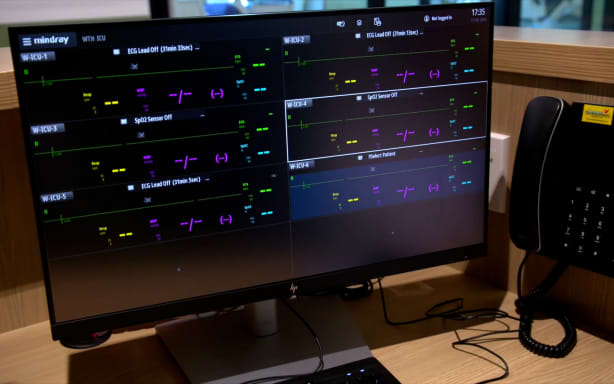
A brand-new intensive care unit at Waitākere Hospital has no patients, no dedicated staff, no operating budget and no confirmed opening date. The facility was intended to bring critical care closer to West Auckland residents. Instead, its delayed opening has exposed serious questions about workforce planning, hospital funding and whether expensive new buildings are actually delivering additional healthcare capacity.
eLocal Report: Based on reporting by Rowan Quinn for RNZ HERE.
A Hospital Expansion Without an Operating Plan
West Auckland has a newly constructed, fully equipped intensive care unit that cannot yet treat patients. The six-bed facility forms part of the Manaaki Hōhonu development at Waitākere Hospital, announced in 2021 as a $96 million project incorporating a 30-bed urgent care ward and the area's first intensive care unit.
The building officially opened in September 2026, but the ICU remains empty. According to RNZ, no dedicated staff have been recruited, no operating budget has been allocated and no opening date has been scheduled. The unit had previously been expected to become operational by the end of 2026.
The immediate question is why the physical infrastructure was completed without the workforce and operational funding needed to put it into service. A hospital building does not deliver healthcare simply because its construction is finished. It requires doctors, nurses, clinical leadership, equipment maintenance, operating expenditure and an agreed model of care.
That distinction is central to understanding what has happened at Waitākere.
Five Years to Prepare — So Why the Delay?
Health New Zealand has advertised for a clinical lead for the ICU, but the position is a one-year, part-time contract equivalent to 0.4 of a full-time role.
Waitākere Hospital operations director Brad Healey told RNZ that additional staff would be recruited once the model of care was confirmed. He said intensive care required a highly specialised workforce and detailed clinical and operational planning before services could safely begin.
That explanation identifies a genuine clinical requirement. Intensive care units cannot safely operate without appropriately trained staff, and opening beds prematurely would create unacceptable risks for patients.
However, it does not explain why essential workforce and service planning had not been completed before the building became available.
Association of Salaried Medical Specialists executive director Sarah Dalton questioned the timing. The project had been in development for more than five years, she observed, and the need for critical care services in West Auckland had been recognised well before the 2021 announcement.
Her criticism goes beyond the frustration of an empty building. It raises the possibility that capital construction and operational workforce planning have been managed as separate processes, without ensuring they would be ready at the same time.
New Beds — Or Simply Moving Existing Capacity?
Manaaki Hōhonu opened with only part of its planned ward capacity in use. Photo: Supplied/Health NZ, via RNZ.
An important detail in RNZ's reporting concerns a Ministry of Health audit conducted in July.
The audit indicated that when the new Waitākere ICU eventually opened, two intensive care beds at North Shore Hospital would have to close.
This raises a significant distinction between new facilities and additional healthcare capacity.
If six intensive care beds open at Waitākere while two beds close elsewhere, the net increase across those two hospitals would be four beds, assuming all six new beds were fully staffed and operational. That would still be an improvement, but it would not represent six additional beds across the district.
The same issue applies to the development's 30-bed ward. The audit indicated that opening all the beds would require staff to be transferred from other wards, a practice described as lift and shift.
Moving staff and patients between wards may improve facilities, clinical arrangements or access to particular services. But it does not necessarily increase the total number of patients the hospital system can treat.
Health NZ reported that 15 beds were in use in the new ward and that the number was expected to increase to 25 by 3 November.
Whether that expansion represents genuinely additional capacity depends on how many new staff are recruited and whether other wards lose resources as a result.
The Cost of Building Without Staffing
The $96 million figure relates to the wider Manaaki Hōhonu development, not exclusively to the six-bed ICU. It would therefore be misleading to divide that entire sum by six and present the result as the cost of each intensive care bed.
Nevertheless, the scale of the investment makes the operational delay a legitimate matter of public accountability.
Capital expenditure and operating expenditure serve different purposes. Capital funding pays for infrastructure, while operating funding pays for the ongoing delivery of healthcare, including salaries, consumables, clinical services and maintenance.
A government can approve construction funding without guaranteeing the future operating expenditure required to use the completed facility.
That creates a predictable risk: buildings may be delivered on schedule while clinical services remain unavailable.
The evidence reported by RNZ establishes that this problem has occurred at Waitākere. It does not, by itself, establish which individual decision-makers were responsible or whether specific funds were diverted elsewhere.
Those questions require further disclosure of the project's budgets, workforce plans, approvals and implementation timetable.
West Auckland's Growing Healthcare Needs
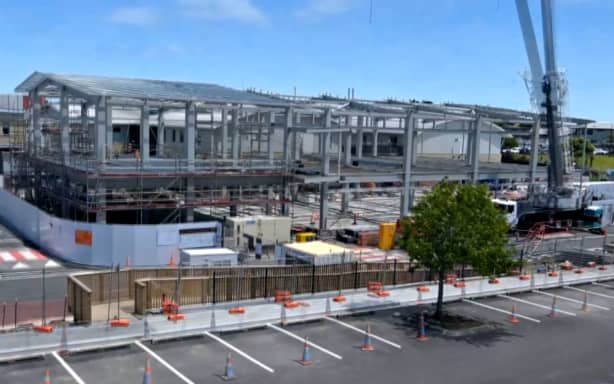
The Manaaki Hōhonu project was announced in 2021 as part of a major expansion of Waitākere Hospital. Photo: Supplied/Health NZ, via RNZ.
Waitākere serves a substantial and growing population. RNZ cited a Health NZ document estimating approximately 240,000 residents in the area, with growth of 25 percent expected over the following 15 years.
Patients requiring intensive care have generally been transferred to North Shore Hospital or Auckland City Hospital.
That arrangement can mean additional travel for families and places pressure on intensive care services elsewhere in Auckland. The planned Waitākere ICU was intended to bring treatment closer to patients while improving regional capacity.
When the development was announced in 2021, then-health minister Andrew Little promoted the intensive care facility as an important improvement for West Auckland residents and the wider Auckland hospital network.
Five years later, the building exists, but the promised local ICU service has yet to materialise.
The central accountability issue is not simply whether a hospital construction project has been completed. It is whether the public is receiving the healthcare service that justified the investment.
A Wider Pattern of Underused Infrastructure?
Sarah Dalton pointed to the Totara Haumaru surgical centre at North Shore Hospital as another example of a new facility affected by staffing shortages.
RNZ previously reported that the surgical building could not fully open because the necessary staff were unavailable.
The comparison raises a broader concern about how New Zealand plans major healthcare infrastructure.
Hospital construction is typically visible, politically significant and relatively easy to announce. Workforce development is less visible and requires sustained investment over many years.
Training an intensive care nurse or specialist doctor cannot begin when the keys to a new building are handed over. Recruitment, training, clinical leadership and service design must be coordinated well before construction is completed.
Two reported examples do not establish the full national scale of the problem. They do, however, justify examining whether Health NZ consistently integrates infrastructure development with workforce and operational planning.
Who Should Be Held Accountable?
Responsibility for the Waitākere ICU delay cannot be determined from the existence of an empty ward alone.
The development was announced under a previous government, while its completion and operational planning have extended into the current administration. Health NZ and its predecessor organisations have also been responsible for important aspects of healthcare delivery and workforce management during that period.
A credible investigation should therefore examine the decision-making record across the entire project rather than assign blame solely according to which government happens to be in office when the building opens.
The questions requiring answers include when the operating budget was expected to be approved, when recruitment was originally scheduled to begin, who authorised the staffing model and when officials first knew the ICU would not open as planned.
The July audit also warrants scrutiny. If new services depend on transferring staff and closing beds elsewhere, the public should be told clearly whether the investment increases capacity or principally redistributes it.
Will This Make New Zealand Stronger?
Will this make New Zealand stronger? A modern intensive care unit in West Auckland has the potential to improve patient access, reduce pressure on neighbouring hospitals and support a growing community. But those benefits remain largely theoretical while the unit cannot operate.
The Waitākere case illustrates why healthcare performance should be measured by services delivered, not simply buildings completed or money allocated.
The public interest requires more than an eventual opening ceremony. It requires a credible opening date, a funded workforce plan and a transparent account of how many genuinely additional intensive care beds will become available across Auckland.
Until those details are established, the empty ICU stands as a visible reminder that infrastructure investment and healthcare delivery are not the same thing.
Sources