We report the longest documented persistence of mRNA vaccine components to
date, independently confirmed across multiple laboratories,
biospecimens, and time points using diverse analytical methods.
by Nicolas Hulscher, MPH
For
years, the public was told that mRNA vaccine materials would degrade
within days to weeks — rapidly broken down, biologically transient, and
incapable of long-term persistence. That assumption shaped regulatory
assurances, public messaging, and safety expectations worldwide.
Billions across the globe received these injections based on the claim
that the genetic material would quickly disappear from the body.
Today,
that narrative collapses — following a coordinated, multi-country
investigative effort involving the McCullough Foundation, the INMODIA
laboratory (Germany), the Municipal Hospital Dresden-Friedrichstadt
(Germany), Neo7Bioscience, and collaborating independent laboratories.
The resulting paper, titled “Unprecedented Persistence of Vaccine mRNA, Plasmid DNA, Spike Protein, and Genomic Dysregulation Over 3.5 Years Post–COVID-19 mRNA Vaccination,”
presents what is, to our knowledge, the most comprehensive COVID-19
vaccine injury case report to date — involving >40 emergency
department visits, >200 specialist encounters across 18 medical
disciplines, >100 laboratory investigations, >100 imaging studies,
and serial blood and tissue sampling performed at multiple timepoints
over more than 3.5 years.
The findings reveal longitudinal
molecular evidence that vaccine-derived mRNA, plasmid DNA fragments, and
spike protein can persist in human blood and tissue more than 3.5 years
after vaccination — independently confirmed across multiple
laboratories using diverse analytical methods.
SARS-CoV-2
infection was effectively excluded: nucleocapsid antibodies remained
negative across five separate timepoints and three independent
laboratories, and nucleocapsid protein was absent in tissue specimens
despite the presence of spike protein deposition.
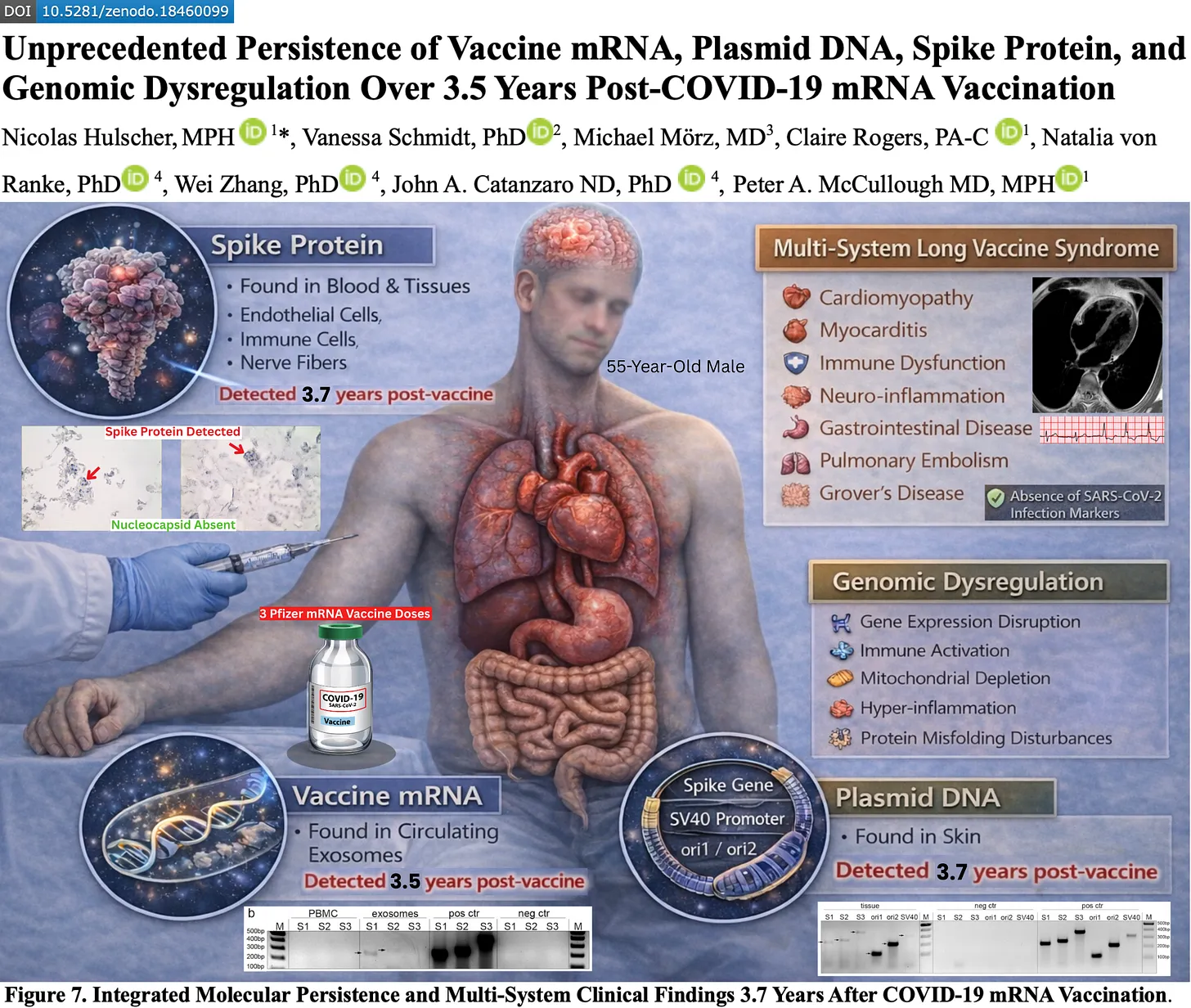
Case Presentation
We report a 55-year-old male who received three doses of the
Pfizer–BioNTech COVID-19 mRNA vaccine and subsequently developed
progressive multi-organ dysfunction consistent with post-COVID-19
vaccine syndrome (PCVS), involving cardiopulmonary, neurologic,
musculoskeletal, gastrointestinal, autonomic, otolaryngologic,
audiovestibular, immune, ophthalmic, dermatologic, and psychiatric
domains. Clinical manifestations included: pulmonary emboli; delayed
MRI-confirmed myocarditis; neurocognitive impairment; small fiber
neuropathy; autonomic dysfunction; myalgia; chronic pancreatic and
gastrointestinal involvement; worsened tinnitus with sensorineural
hearing loss; voice dysphagia and dysphonia; ophthalmic disturbances;
chronic dermatologic inflammation; and anxiety/depression. The case was
evaluated through a uniquely extensive longitudinal, multi-domain
clinical investigation spanning molecular, immunologic, genetic,
proteomic, transcriptomic, and tissue-based analyses, undertaken to
characterize disease mechanisms and exclude alternative etiologies.
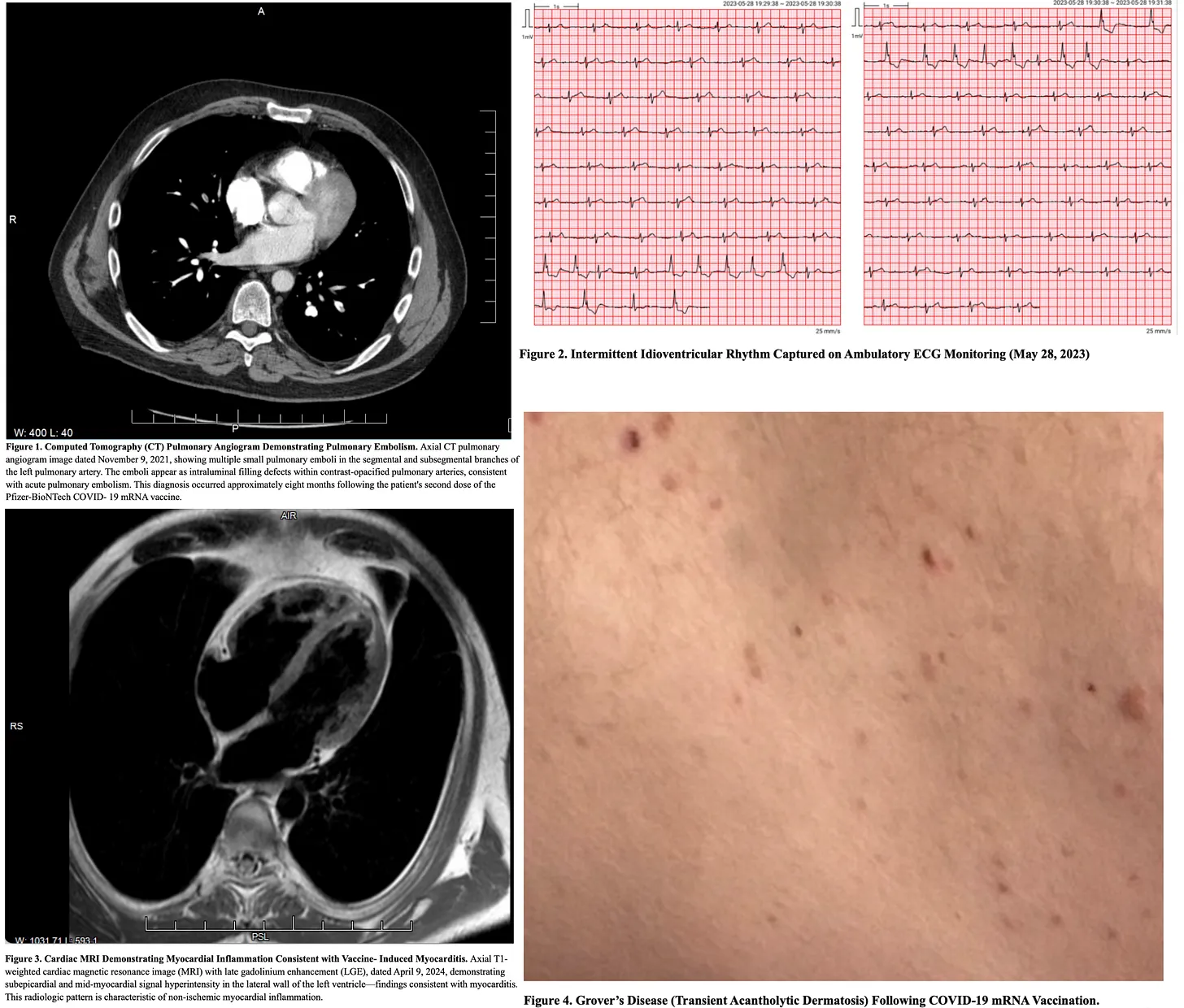
Extensive Diagnostic Evaluation
After
40 emergency department visits and 200 outpatient specialty
encounters, the patient underwent 100 non-routine laboratory
investigations and 100 imaging/functional studies. This evaluation
systematically excluded underlying etiologic mechanisms across
infectious, autoimmune, rheumatologic, endocrine, genetic, hematologic,
malignant, toxic/medication-related, cardiovascular/vascular, metabolic,
and primary neurologic domains. Testing remained largely nondiagnostic.
A possible undocumented/undiagnosed asymptomatic infection manifesting
as Long COVID was suspected after myocarditis diagnosis, and serology
was pursued; unexpected results prompted expanded immune and
tissue-based testing for spike- and vaccine-derived components.
SARS-CoV-2 nucleocapsid antibodies were negative across five separate
time points spanning 809–1,433 days post-vaccination, confirmed by three
independent laboratories. The patient remains nucleocapsid negative
with persistently elevated spike antibody levels (4,553 U/mL) 1,433 days
after the final vaccination.
Specimen Collection and Analytical Methods
Blood
and skin tissue specimens were obtained at multiple time points between
852–1,364 days after the final Pfizer–BioNTech COVID-19 mRNA
vaccination. Biological compartments analyzed included plasma,
circulating exosomes, peripheral blood mononuclear cells (PBMCs), and
skin tissue. Specimens were evaluated across multiple independent
laboratories using diverse analytical methodologies, including ELISA,
automated immunohistochemistry, RT-PCR, standard PCR with Sanger
sequencing confirmation, whole-genome sequencing, transcriptomic
profiling, and quantitative mass spectrometry.
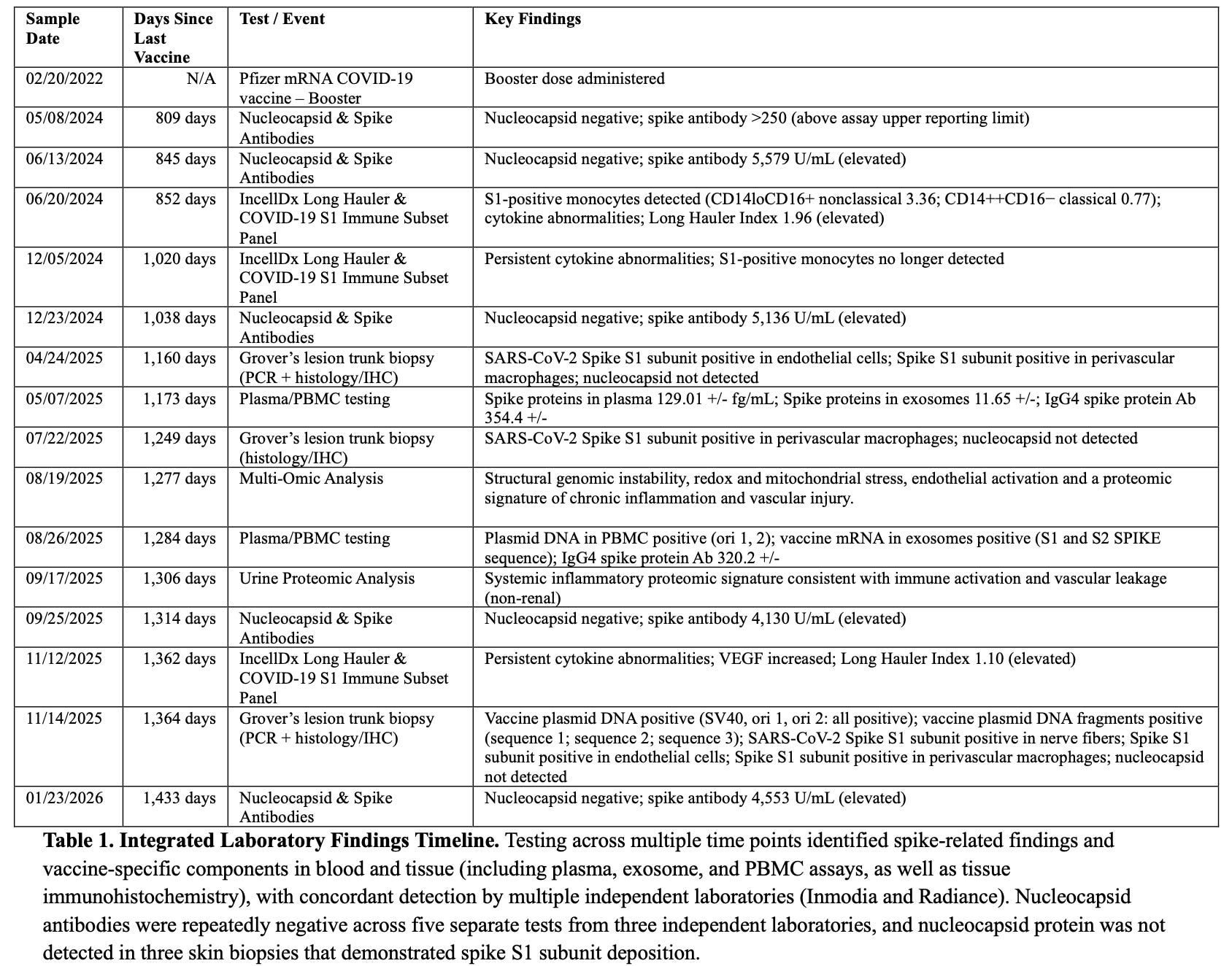
Persistent Circulating Spike Protein and Vaccine-Derived mRNA
At
852 days post-vaccination, blood-based immune testing identified
detectable SARS-CoV-2 S1 protein within classical and non-classical
monocyte subsets with associated cytokine and immune marker
abnormalities.
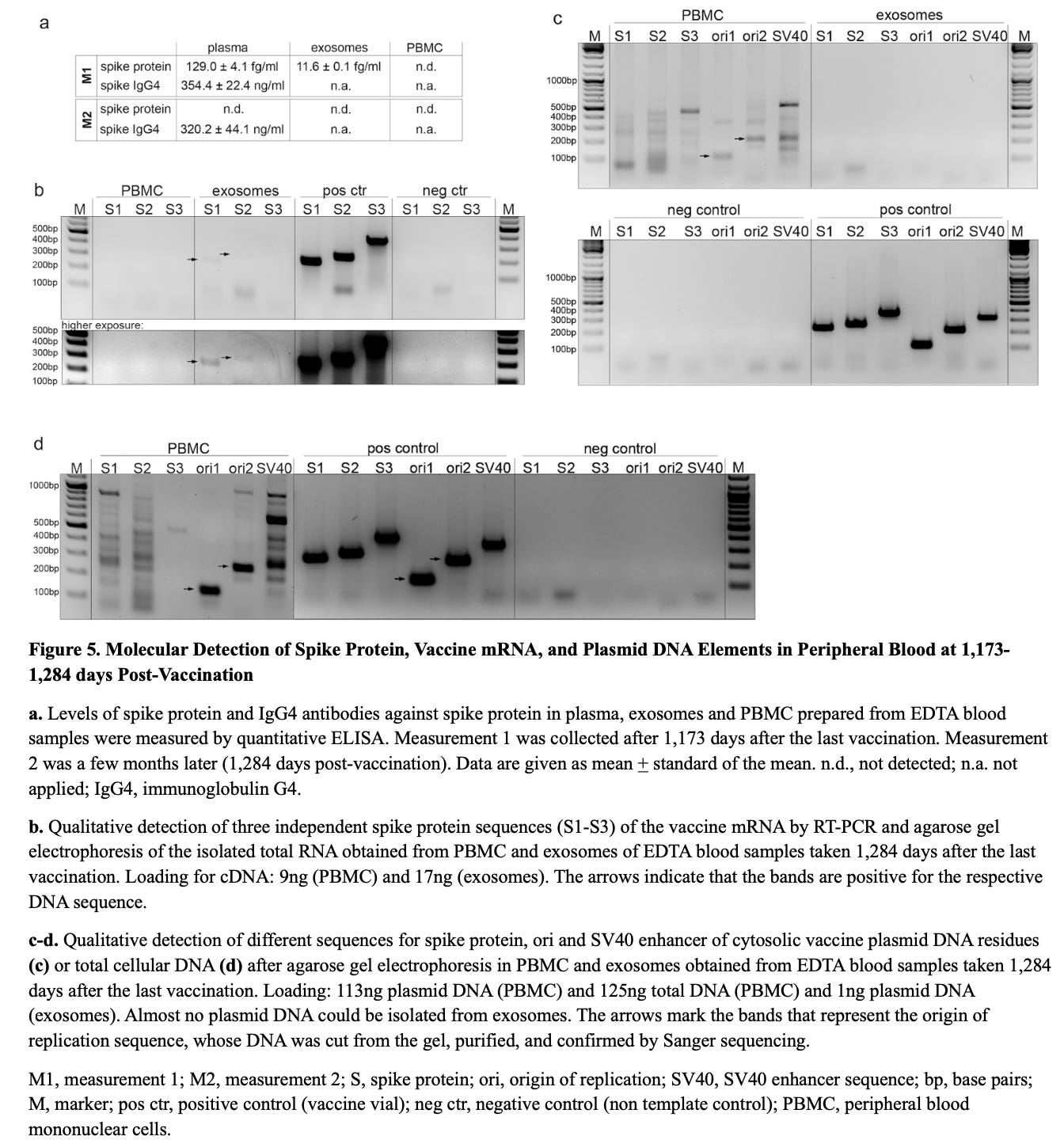
At 1,173 days post-vaccination, high-sensitivity
ELISA detected free Wuhan spike protein in plasma (129.0 ± 4.1 fg/mL)
and in circulating exosomes (11.6 ± 0.1 fg/mL).
At 1,284 days,
RT-PCR identified vaccine-derived spike mRNA within circulating
exosomes, whereas PBMC RNA remained negative following DNase-treated
extraction and amplicon-specific PCR targeting three spike ORF regions
(S1–S3).
Serologic profiling at 1,173 and 1,284 days
post-vaccination demonstrated persistently elevated spike-specific IgG4
concentrations (354.4 ± 22.4 ng/mL and 320.2 ± 4.4 ng/mL, respectively),
consistent with ongoing antigenic stimulation and an
immune-tolerance–skewed response.
Persistent Spike Protein and Plasmid DNA in Skin Tissue
Serial
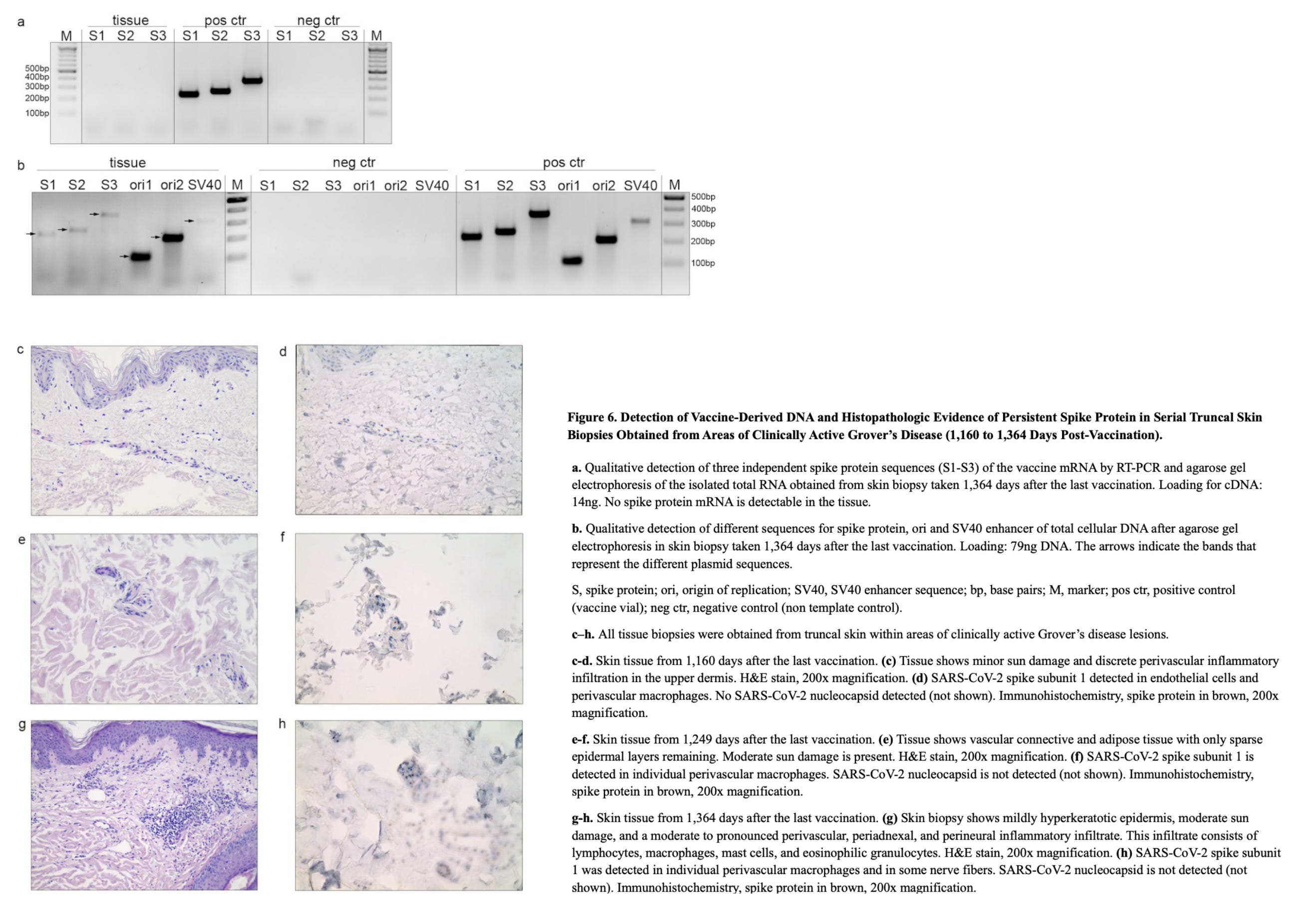
skin biopsies at 1,160, 1,249, and 1,364 days post-vaccination, all
from truncal skin within areas of clinically active Grover’s disease,
were nucleocapsid negative and demonstrated persistent spike protein
deposition in endothelial cells and macrophages by automated
immunohistochemistry with histopathologic correlation. Spike protein was
also found in nerve fibers at 1,364 days.
The 1,364-day skin
biopsy contained multiple plasmid DNA elements, including spike gene
sequences (S1–S3), ori1/ori2, and the SV40 enhancer, confirming durable
retention of vaccine-derived DNA in somatic tissue by PCR amplification
with agarose gel electrophoresis and Sanger sequencing.
Multi-Omic Analysis
Whole-genome
sequencing structural variant analysis at 1,277 days post-vaccination
revealed widespread genomic instability, with large duplications and
deletions affecting EGFR, MYC, ERBB2, and ETV6/RUNX1, while RNA–DNA
comparison showed RNA-only variants in ribosomal, NMD, small-RNA,
epigenetic, and TP53 pathways.
Transcriptomic profiling of whole blood highlighted oxidative stress, vascular activation, and nuclear fragility.
Urine
proteomics using quantitative mass spectrometry confirmed systemic
inflammation with complement overactivation (CFH), redox imbalance
(PRDX1), and sustained antibody responses, supported by risk alleles
HLA-B07:02 and DRB1*11:04.
Conclusion
This
case documents the longest reported in vivo persistence of
vaccine-derived mRNA, plasmid DNA fragments, and spike protein following
mRNA vaccination, with reproducible detection across multiple
independent laboratories, distinct biological compartments, and
complementary molecular detection systems extending beyond 3.5 years
after the final dose. Spike protein, spike mRNA sequences, and plasmid
backbone elements were identified in both immune cells and somatic
tissue, with continued absence of SARS-CoV-2 nucleocapsid protein or
antibodies, effectively excluding prior infection as the source. The
convergence of these observations across longitudinal blood and tissue
sampling provides direct evidence that mRNA vaccine-derived genetic
material and its translated protein products can persist in vivo for
years following administration.
In parallel, multi-omic analyses
revealed sustained genomic instability and transcriptomic dysregulation
more than 3.5 years post-vaccination, suggesting that persistent
vaccine-derived material may be associated with long-term alterations in
host genomic and molecular pathways.
These data challenge
prevailing assumptions regarding rapid degradation and short-lived
biological activity of mRNA vaccine components and underscore the need
for controlled longitudinal studies to determine prevalence, mechanisms,
and clinical consequences of persistent vaccine-derived material.
Nicolas Hulscher, MPH
Epidemiologist and Foundation Administrator, McCullough Foundation