Illegal dumping continues to plague Auckland streets, parks and neighbourhoods, costing ratepayers millions of dollars every year while leaving residents frustrated and communities blighted by mountains of rubbish.
By elocal News Desk
New figures obtained by RNZ reveal Auckland Council workers collected 1,926 tonnes of illegally dumped waste during the last financial year, making Auckland by far New Zealand's largest dumping problem. The total weight is roughly equivalent to 154 electric buses.
The most commonly dumped items included rubbish bags, mattresses, cardboard boxes, couches and old furniture.
Auckland Leads The Country
While illegal dumping affects cities nationwide, Auckland's problem significantly outweighs that of other major centres.
Christchurch collected an estimated 909 tonnes of illegally dumped waste during the same period, Wellington removed approximately 515 tonnes, while Hamilton recorded 161.58 tonnes.
The figures highlight the scale of Auckland's ongoing battle against people abandoning household rubbish, furniture and construction waste in public spaces.
One Resident's Seven-Year Battle
In Ōtāhuhu, resident Christina Ita'a has become increasingly frustrated by an abandoned property on Cracroft Street that has become a magnet for illegal dumping.
She says the problem has existed since her family moved into the area seven years ago.
On the day RNZ visited the site, rubbish included a queen mattress, a broken television, an old duvet and a child's ride-on toy. More waste had reportedly been dumped inside the property's boundary.
"I've seen people come here, park their car and then they take it out," Ita'a said.
"There's couches, beds, all kinds of rubbish."
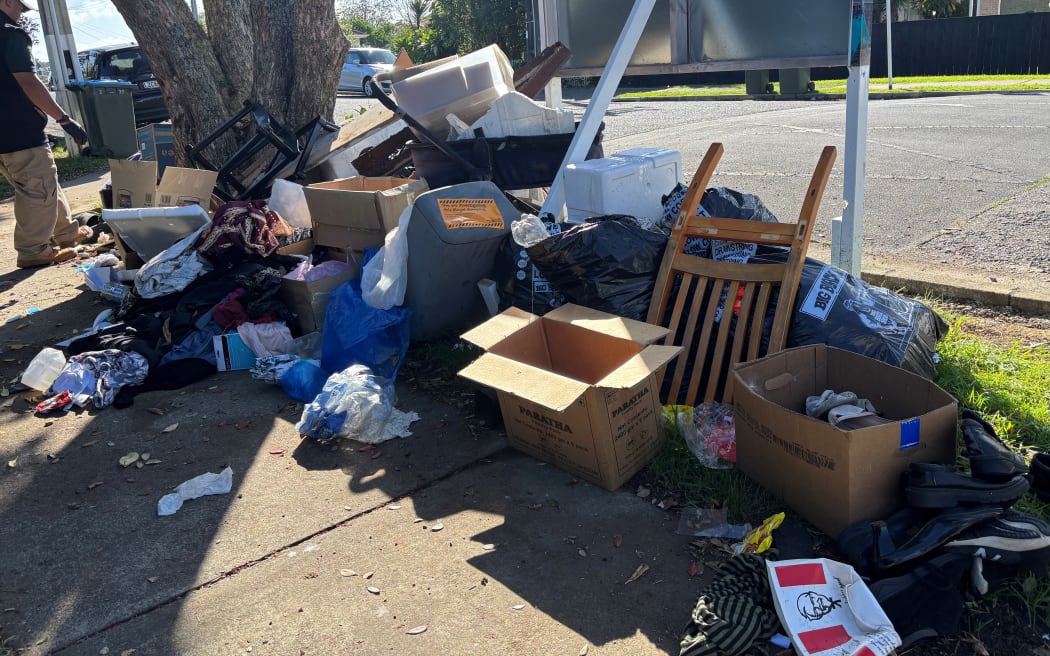
Illegally dumped rubbish in Auckland cost ratepayers $3.1 million in the 2024/2025 financial year. Photo: RNZ / Teuila Fuatai
The Cost To Ratepayers
According to Auckland Council figures, cleaning up illegally dumped rubbish cost ratepayers $3.1 million during the last financial year.
Council records show 23,964 reports of illegal dumping were lodged by members of the public.
The worst affected areas between 2021 and 2025 were:
- Papatoetoe
- Manurewa
- Papakura
- Henderson
- Flat Bush
These suburbs recorded the highest volumes of complaints and reported incidents across the city.
Thirty Hotspots Across Auckland
Mike Bedson, Operations Manager at Eco Maintenance, which contracts to Auckland Council for rubbish collection, says the city has approximately 30 illegal dumping hotspots.
These locations are monitored at least weekly due to the volume and frequency of rubbish being abandoned there.
One of those sites on Hutton Street contained piles of rubbish sacks, furniture, cardboard, polystyrene, clothing, branches and even an abandoned pram when RNZ visited.
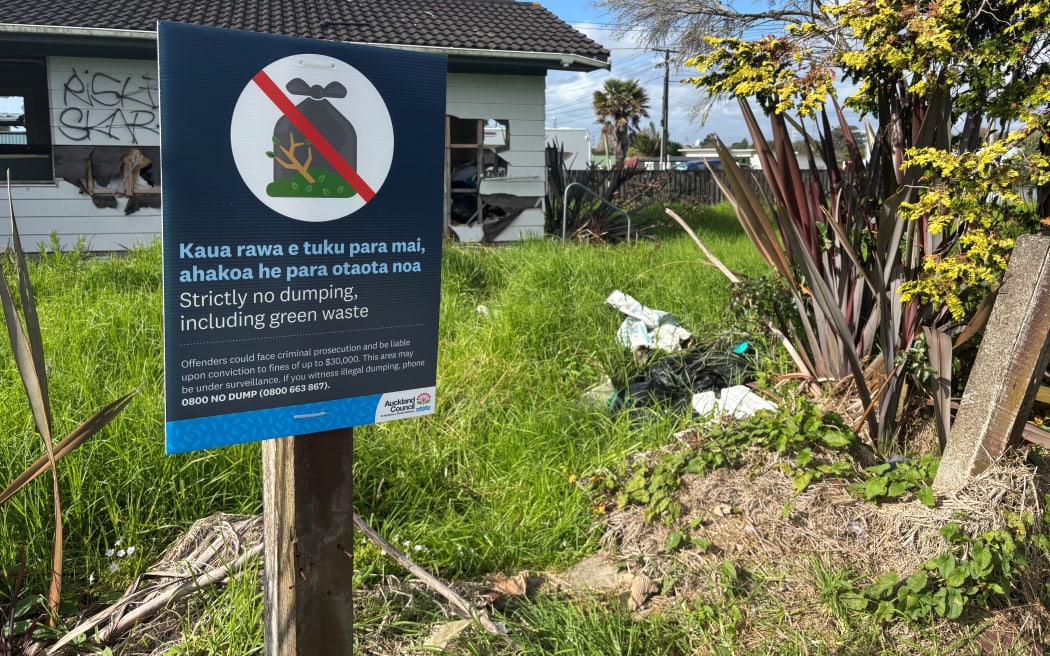
An abandoned house in Ōtāhuhu, Auckland is a popular illegal dumping spot according to resident Christina Ita'a. Photo: RNZ / Teuila Fuatai
Why Enforcement Is Difficult
Auckland Council's General Manager of Waste Management, Justine Haves, says illegal dumping remains a complex issue.
Under the Litter Act, offenders can be fined up to $400, but successful enforcement requires substantial evidence linking individuals to the dumped material.
Council data shows $160,200 worth of fines were issued during the 2024/25 financial year.
"We really do want to encourage people to report, but enforcement is also really important so that there's a consequence to the action," Haves said.
Surveillance And Monitoring
The council has increased surveillance and monitoring in several high-risk areas, particularly in suburbs such as Manurewa where illegal dumping remains persistent.
The aim is to gather stronger evidence and improve enforcement outcomes.
However, residents like Christina Ita'a remain sceptical that enough is being done.
Despite cameras and warning signs being installed near the abandoned house on Cracroft Street, she says the dumping continues.
A Growing Community Problem
Illegal dumping is more than just an environmental issue.
It affects neighbourhood appearance, property values, public safety and community pride.
For Auckland ratepayers, it also comes with a significant financial burden.
At a time when rates, water charges and living costs continue to rise, the $3.1 million annual clean-up bill is another expense ultimately being carried by the public.
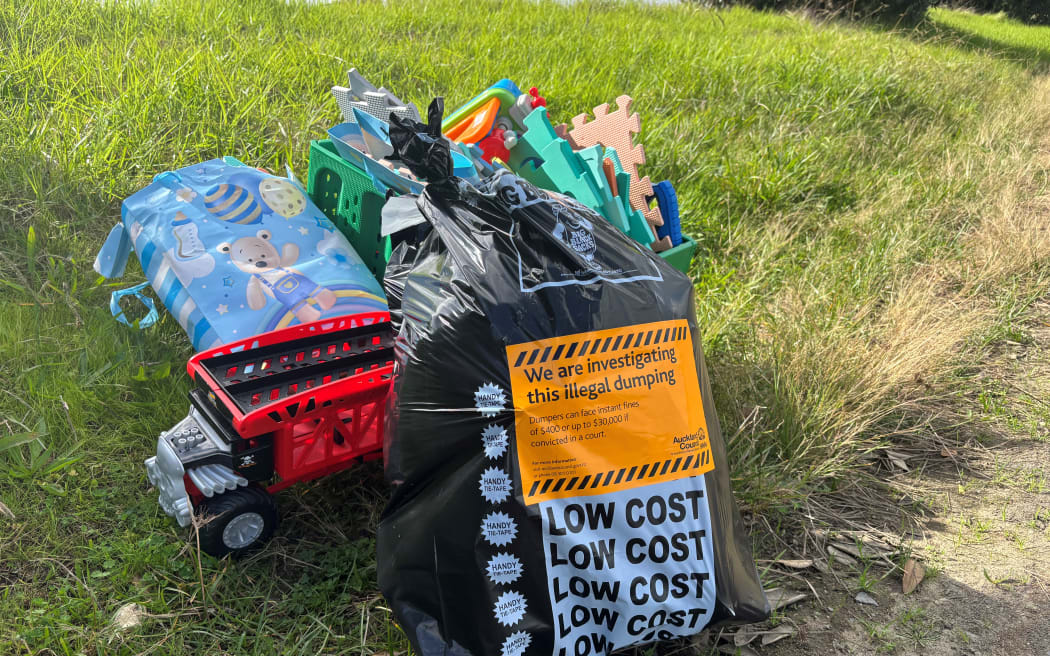
Auckland has about 30 illegal dumping "hotspots", according to the city's Council. Photo: RNZ / Teuila Fuatai
Source: RNZ reporting on illegal dumping across New Zealand and Auckland Council data.