For generations of New Zealand travellers, the brightly wrapped boiled lolly handed out as an aircraft begins its descent has become almost as familiar as the koru itself. Behind that small Kiwi ritual is an equally New Zealand story — a family business that survived economic upheaval, embraced automation and eventually fulfilled a promise made thousands of metres above the Tasman.
eLocal Report: Based on reporting by Serena Solomon for RNZ.
It began with a declaration on an Air New Zealand flight to the Gold Coast in 2005.
Dhiru Bhikha was travelling with his teenage son Raj when the familiar Air New Zealand lollies were handed out towards the end of the flight. As they unwrapped them, Dhiru told his son that one day he was going to make those lollies and supply them to Air New Zealand.
It might have sounded ambitious, but Dhiru was already more than two decades into the confectionery business.
In 1984, the electrical engineer had decided he wanted to escape Auckland's nine-to-five routine. Together with his wife Vina, he bought what they could afford: a small confectionery factory in Te Kuiti called Horners Confectionery.
Neither knew much about making lollies.
What they did understand was the potential of machinery, innovation and hard work.
From Hand-Made Lollies to Automation
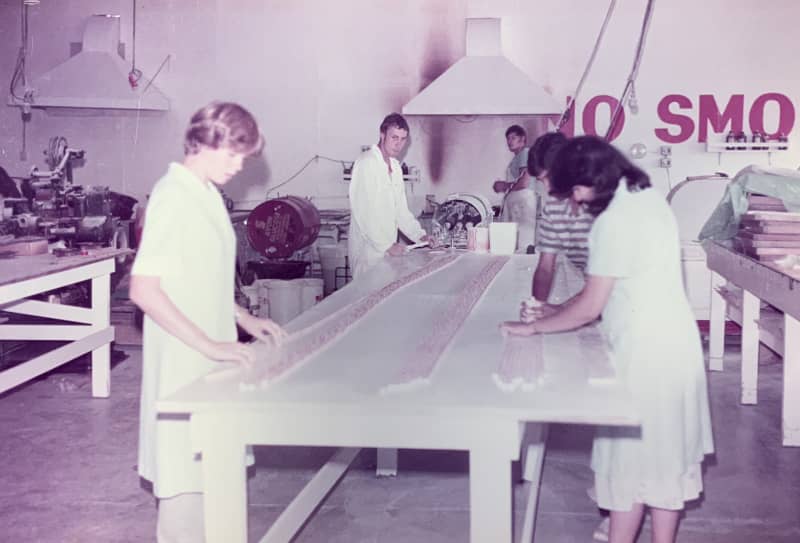
Lollies from Horners were mostly made by hand in 1984. Vina Bhikha, Dhiru's wife, is on the right. Photo: Supplied
The early Horners operation was remarkably hands-on. Candy canes were made, rolled, stretched and cut manually, while workers even inserted the sticks into lollipops by hand.
Then came one of the most difficult periods in modern New Zealand manufacturing.
During the latter half of the 1980s, New Zealand's economy was rapidly opened to international competition and cheaper imported products entered the domestic market. Horners came close to closing.
Dhiru recalled the family's attitude simply: they were in a hole and somehow had to climb out of it.
Instead of giving up, the Bhikhas invested.
In 1989, Horners imported candy-cane manufacturing and wrapping equipment from the United States. The new machinery allowed the business to increase both production and quality.
The Te Kuiti factory was so small that bathrooms reportedly had to be demolished simply to make enough room for the machinery.
Within a decade, Horners had become the dominant candy-cane producer in New Zealand and Australia.
The company eventually outgrew Te Kuiti altogether and moved its operations to Auckland in 1999.
The Air New Zealand Opportunity

Raj Bhikha has taken over leadership at Horners Confectionery from his father, Dhiru, who bought the business in 1984. Photo: RNZ / Marika Khabazi
Dhiru's prediction aboard that flight to the Gold Coast soon proved remarkably well timed.
Cadbury Pascall had supplied Air New Zealand's lollies for decades, but the closure of its domestic manufacturing operation created a problem for the airline.
Air New Zealand wanted its famous inflight lollies to continue being made in New Zealand.
Horners was one of the increasingly small number of confectionery manufacturers capable of doing the job. Its established international reputation also put the family business in a strong position.
The contract went to Horners.
There was, however, a complication.
Cadbury Pascall did not provide Horners with the recipe.
Dhiru therefore had to reverse-engineer the colours and flavours using Air New Zealand's dwindling remaining stock of lollies as his reference.
According to the family, he had cracked it within a month.
Don't Mess With the Wrapper
The flavour wasn't the only important part of the Air New Zealand lolly.
Horners and the airline discovered that lesson after replacing the familiar twisted wrapper with a pillow-style wrapper.
Passengers were not impressed.
The reaction was sufficiently strong that Dhiru went overseas in search of machinery capable of restoring the traditional twist wrapper.
The twist returned.
It is a small detail, but it demonstrates how deeply the humble lolly had become embedded in the experience of flying Air New Zealand.
Air New Zealand head of customer experience Alisha Armstrong told RNZ that sucking a lolly can help passengers equalise pressure in their ears during descent, but acknowledged that the tradition has grown into something much bigger.
For many New Zealanders, it has become a nostalgic ritual.
Children can even find themselves appointed the flight's "lolly runner", helping cabin crew hand the sweets out to passengers.
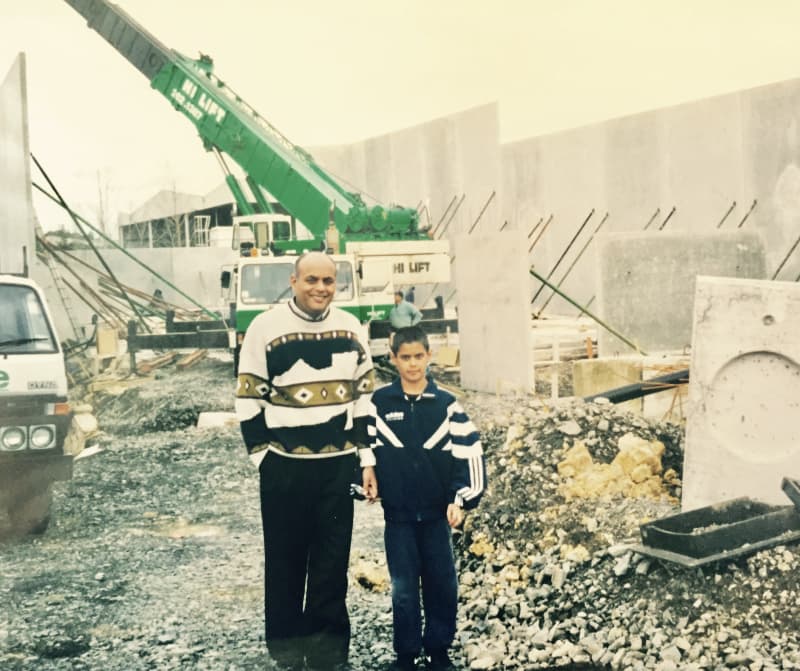
Dhiru Bhikha and his son Raj in front of the building site for Horners' Auckland factory, which opened in 1999. Photo: Supplied
So, How Many Lollies Can You Take?
It is one of those questions familiar to almost anyone who has flown Air New Zealand.
Is taking one polite?
Two?
Three?
Dhiru has developed his own formula: one for yourself, plus another for every person waiting for you at the airport.
Raj is slightly more conservative. His recommendation is two or three — one white mint and another one or two in your favourite colour.
The white lolly is apparently the runaway favourite. Horners produces approximately twice as many white lollies as each of the other five flavours.
Air New Zealand, however, appears even more generous.
Armstrong says passengers can take a whole handful — even if their fellow travellers give them funny looks.
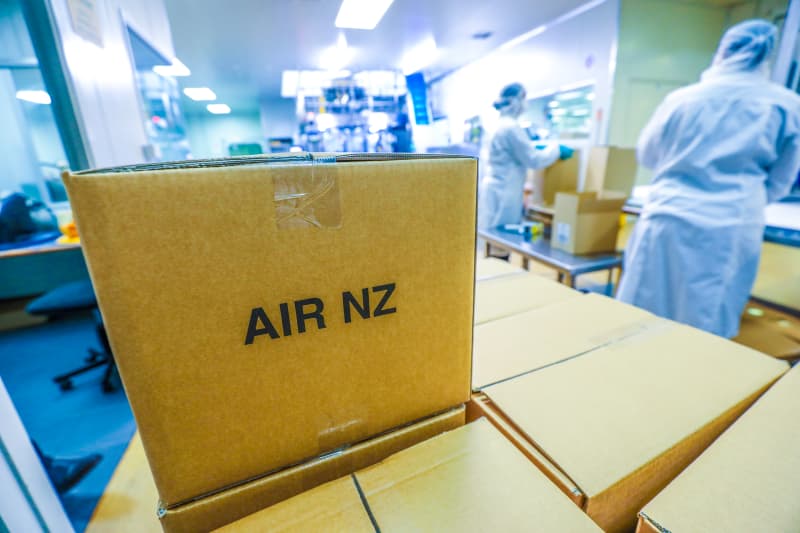
It was important to Air New Zealand that its iconic lollies be made in New Zealand. Photo: RNZ / Marika Khabazi
22 Million Lollies a Year
The numbers behind this little aviation tradition are considerable.
Horners produces approximately 22 million lollies for Air New Zealand every year.
There are also limited editions, including a blackcurrant "All Black" lolly and a Christmas candy-cane version.
Despite the huge number produced, Air New Zealand's lollies represent only a relatively small part of the wider Horners business.
They are nevertheless something the family says it takes enormous pride in.
And if you have ever wondered why you can't simply walk into a supermarket and buy a bag of genuine Air New Zealand lollies, the answer is surprisingly simple.
There is apparently nothing in the contract preventing Horners from selling them at retail.
The company deliberately chooses not to.
Dhiru's reasoning is that making the lollies widely available would diminish what makes them special.
Horners does sell other confectionery under its Kiwiland brand, including Orchard Fruits, which resemble the airline lollies but use different flavours and a more spherical shape.
A New Generation Takes Over
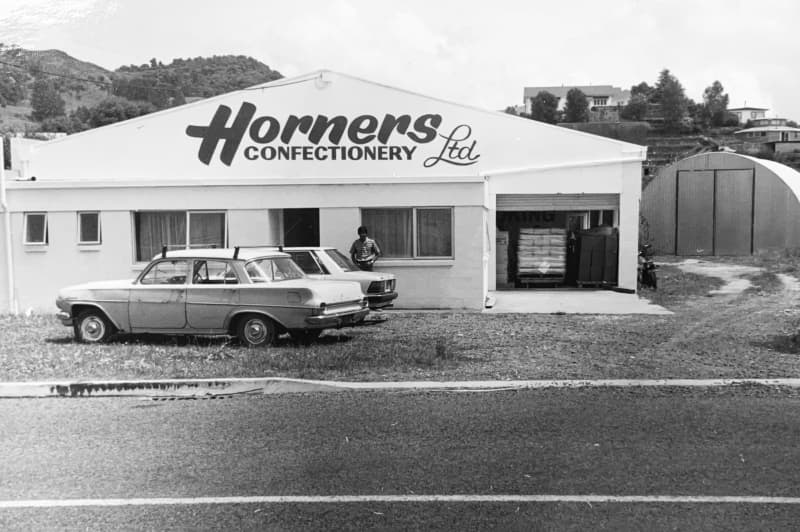
The original Horners Confectionery factory in Te Kuiti. Photo: Supplied
Today, Raj Bhikha has taken over leadership of the family company from his father.
The market around Horners has changed considerably since Dhiru and Vina bought that little Te Kuiti factory in 1984.
Cheap imports have eroded the candy-cane business that once helped establish the company, while large manufacturers dominate much of the mainstream confectionery market.
Horners has responded by moving towards higher-value products, including mānuka honey lozenges and vitamin gummies, produced both under its own brands and for third-party customers.
It is another adaptation in a business history built around surviving change.
For eLocal, there is a broader New Zealand business story here too.
At a time when New Zealand continues to debate productivity, manufacturing, imports and the loss of locally owned productive businesses, Horners is an example of a company that faced the full force of international competition and survived by investing in machinery, improving productivity and moving into products where it could compete.
And somewhere along the way, Dhiru Bhikha also kept the promise he made to his teenage son on an aircraft heading across the Tasman.
Today, some 22 million little reminders of that promise are handed out aboard Air New Zealand flights every year.
Source
Original reporting by Serena Solomon, RNZ, 11 August 2026. The supplied RNZ article and its original photography were used as the basis for this eLocal Report.