China has unveiled a new tunnelling machine designed to solve one of underground construction’s persistent problems: what happens when soft ground suddenly turns into solid rock. The 4.5-metre-wide Xianglong can excavate conventionally, drill explosive charges into a rock face and then continue boring after the rock has been fractured.
eLocal Report: Based on reporting by David Szondy for New Atlas HERE.
China has rolled out what is being described as the world's first Boring and Blasting Machine (BBM) — a huge piece of underground engineering designed to combine two traditionally different methods of tunnel construction.
Named Xianglong, or "Lucky Dragon", the machine was developed by the China Railway Science & Industry Group (CRSIC) in Wuhan in collaboration with Tsinghua University.
Its purpose is deceptively straightforward: keep tunnelling when the geology changes.
Conventional tunnel-boring machines are generally optimised for particular underground conditions. Soft-ground machines use a large rotating shield equipped with cutting tools to work through soil, clay, sand, gravel and water-bearing material. The shield also supports the tunnel face while excavated material is carried away.
Hard-rock tunnel boring machines face a different challenge. When the geology becomes granite, basalt, sandstone or other intact rock, heavy-duty cutters must progressively grind their way through it.
Xianglong attempts to bridge those two worlds in a single machine.
When the Ground Changes, the Machine Changes With It
The BBM has a diameter of 4.5 metres (14.76 ft) and incorporates a specially designed cutterhead with a hollow central section.
That centre section is critical to the machine's unusual capabilities.
When Xianglong encounters hard rock that is difficult to excavate efficiently with its conventional cutters, the cutterhead can retract slightly. Integrated drilling equipment can then operate through specialised access channels, boring holes several metres into the rock face.
Those holes can be loaded with explosive charges and tamped.
According to the New Atlas report, the system uses low-yield, high-velocity explosives intended to create micro-fractures through the rock rather than producing the much larger debris throw and concussion associated with conventional blasting.
The machine's protective shield is designed to absorb and deflect the forces generated by the blast, protecting equipment and sensors behind it.
Once the blast has fractured the rock, the cutterhead moves forward again, crushing and removing the weakened material before tunnelling continues.
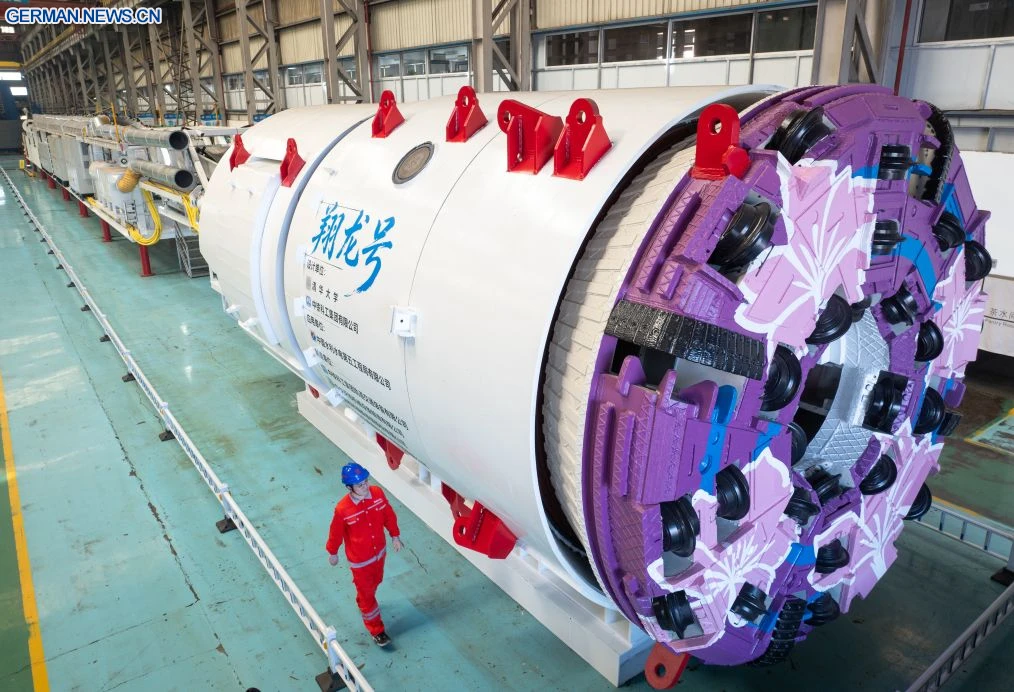
Xianglong showing its shield and tail system. Photo: Xianhua
One Machine Instead of a Geological Compromise
This capability could matter enormously on major tunnelling projects because underground geology rarely behaves as neatly as engineers might like.
A tunnel may begin in relatively soft material and then encounter large boulders or substantial sections of hard rock. Machines optimised for one condition can become significantly less effective when the geology changes.
Hybrid machines already exist for some mixed-ground conditions, but the Xianglong concept takes a different approach: instead of simply asking one cutterhead to cope with everything, it adds a controlled blasting capability to the excavation system itself.
That potentially allows the tunnelling operation to change techniques underground without replacing the entire machine.
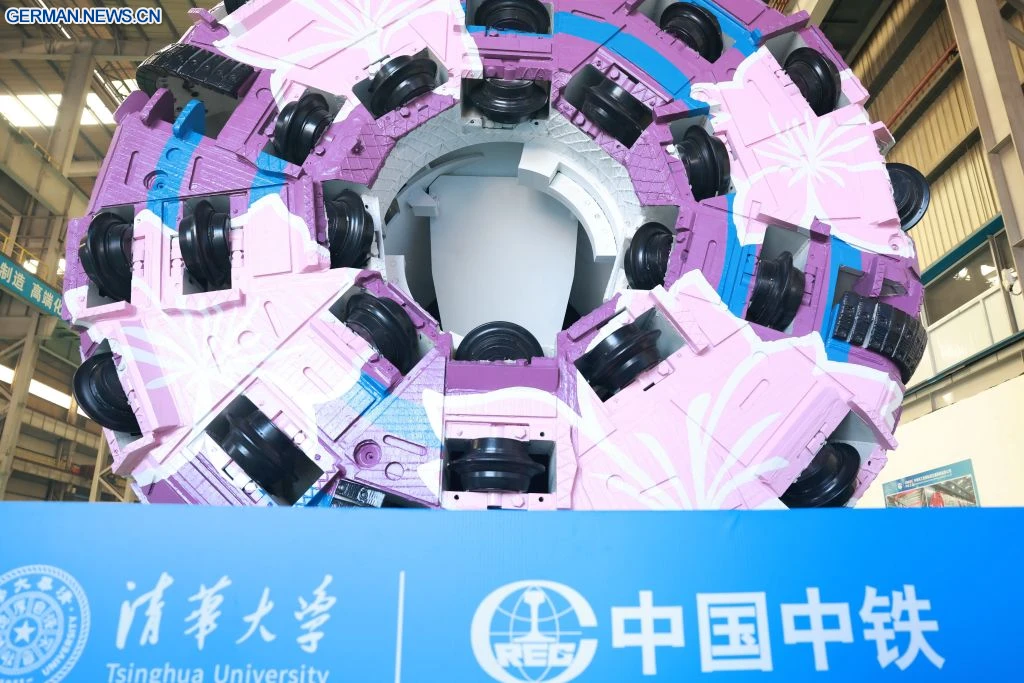
The cutterhead of Xianglong. Photo: Xianhua
China Claims a 30 Percent Efficiency Gain
According to Chinese state media cited by New Atlas, Xianglong could improve excavation efficiency by 30 percent compared with conventional boring machines.
The shield can also alter its diameter to accommodate different tunnel-lining segments.
That 30 percent figure, however, should for now be treated as a manufacturer/state-media claim rather than independently demonstrated operational performance.
New Atlas makes an important qualification: although Xianglong has now been built, how effectively the machine performs under real tunnelling conditions remains to be seen.
That distinction matters.
A successful rollout demonstrates that the engineering concept has reached the hardware stage. It does not yet establish how quickly or reliably the machine will operate over kilometres of difficult geology, how often its blasting system can be used, what maintenance requirements it will impose, or whether its claimed efficiency gains will survive the realities of a major construction project.
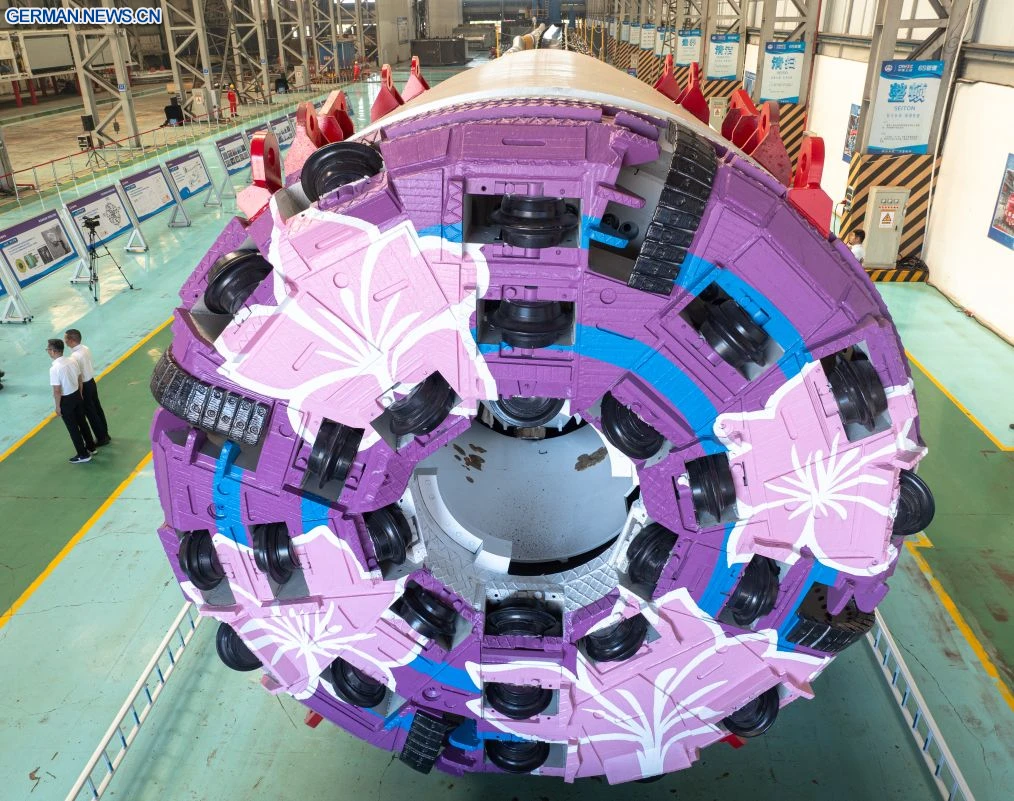
The cutterhead includes access channels for drilling holes into the rock face for explosive charges. Photo: Xianhua
Why This Technology Could Matter
The significance of Xianglong may ultimately extend beyond the machine itself.
Tunnelling is increasingly important to modern cities as transport links, water infrastructure, utilities and other services are pushed underground. One of the major uncertainties in such projects is geology.
Even extensive geological surveying cannot reveal every underground condition that a tunnelling machine will encounter.
A machine capable of adapting between soft-ground excavation and hard-rock blasting could therefore reduce one of the risks associated with long tunnels through complex geological formations.
Whether Xianglong actually achieves that promise will depend on its performance in the field.
But the engineering principle is significant: rather than building a machine around one type of ground and accepting reduced performance when conditions change, the Chinese team has attempted to give the tunnelling machine another tool.
Quite literally, when it cannot bore through the problem, it can blast through it.
Does This Affect New Zealand?
Potentially — although there is no indication in the source material that Xianglong is currently destined for a New Zealand project.
The relevance is instead technological.
New Zealand's geology presents exactly the sort of challenges that make adaptable tunnelling technology interesting: variable soils, hard rock, groundwater and complex underground conditions can all influence the cost and difficulty of major infrastructure.
For future transport, water and utility tunnels, machines capable of dealing with dramatically changing geology without stopping to change excavation systems could eventually offer significant advantages.
The important question will be whether Xianglong's claimed performance is demonstrated on major operating projects. If the reported 30 percent improvement can eventually be independently verified, the technology could become relevant well beyond China.
For infrastructure-constrained countries such as New Zealand, advances that potentially reduce the time, risk and cost of underground construction are worth watching.
Source
David Szondy, New Atlas, 23 August 2026
China's colossal tunneling machine bores AND blasts through raw ground
New Atlas cites reporting from Xinhua.
Independent reporting. Original context. Credited sources.