Hakyung Lee remains sentenced to life imprisonment for murdering her two young children, but the Court of Appeal has reduced the minimum period she must serve before becoming eligible for parole. The judges found a “stark” disparity between Lee’s sentence and that imposed on Lauren Dickason, concluding the difference could not be justified under sentencing principles.
eLocal Report: Based on reporting by Ric Stevens for the New Zealand Herald, republished by RNZ.
Hakyung Lee, the woman convicted of murdering her two young children and concealing their bodies inside suitcases, has had the minimum period she must serve before becoming eligible for parole reduced by seven years.
Lee remains subject to a life sentence for murder, but the Court of Appeal has reduced her minimum non-parole period from 17 years to 10 years.
The decision does not mean Lee will automatically be released after 10 years. It means that is the earliest point at which she can become eligible to seek parole.
The Court of Appeal concluded that the original minimum term created an unjustified disparity between Lee and another mother convicted of murdering her children, Lauren Dickason.
Court Finds a ‘Stark’ Sentencing Disparity
The comparison with Dickason was central to Lee's appeal.
Dickason is serving an 18-year sentence for murdering her three daughters but is eligible to apply for parole after six years.
Lee's lawyers argued that her original 17-year minimum non-parole period meant that, in practical terms, she was likely to remain imprisoned for almost three times as long before becoming eligible for parole.
The Court of Appeal agreed that the difference was too great.
The judges said the markedly different outcomes were not warranted when the purposes and principles of sentencing were applied, concluding that Lee's original sentence was “manifestly unjust”.
Two Children Killed in Their Papatoetoe Home
Lee was found guilty last year of murdering her eight-year-old daughter Yuna Jo and six-year-old son Minu Jo at the family's Papatoetoe home in June 2018.
The killings occurred months after Lee's husband died from cancer.
Lee subsequently wrapped the children's bodies in plastic, placed them inside suitcases and left them in storage. She later changed her name and moved overseas.
The children's remains were not discovered until 2023, when a family who had won an auction for the contents of the abandoned storage locker found the suitcases.
Although Lee had previously denied responsibility for the children's deaths, shortly before trial she admitted intentionally giving them a fatal overdose of sleeping medication mixed with juice.
Her defence was that she was legally insane at the time of the killings.
The jury rejected that defence.
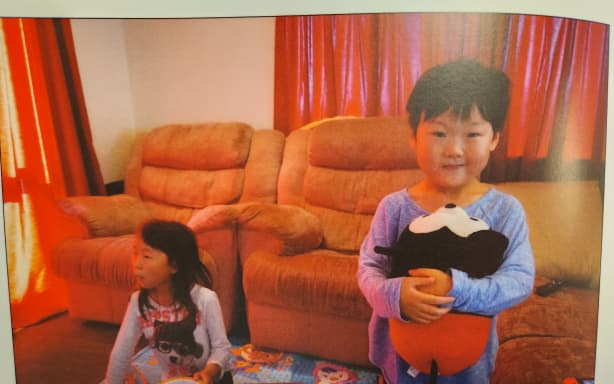
The children Yuna Jo (left) and Minu Jo (right). Photo: Supplied.
Original Judge Distinguished Lee From Dickason
When Lee was sentenced last November, High Court Justice Geoff Venning concluded that important differences existed between her offending and Dickason's.
Dickason killed her daughters — six-year-old Liané and two-year-old twins Maya and Karla — in 2021 while suffering from depression.
Justice Venning considered Dickason's actions in the context of cognitive distortion and impaired judgement that drove her offending.
In Lee's case, however, the sentencing judge concluded the evidence did not support a finding that her mental-health difficulties dominated or drove what she did.
He described Lee's killing of the children as deliberate and calculated and pointed to the steps she subsequently took to conceal her offending.
That distinction contributed to Lee receiving the extended 17-year minimum non-parole period.
Appeal Court Takes a Different View of Mental Illness
Before the Court of Appeal, Lee's counsel Chris Wilkinson-Smith argued that both Lee and Dickason were suffering from severe mental-health impairment when they killed their children.
The Court of Appeal accepted that Lee's mental illness played a much greater causal role than the sentencing decision had recognised.
Justices Christian Whata, Andru Isac and David Johnstone noted evidence that, despite the severity of her illness following her husband's death, Lee had continued trying to care for and support her children.
Unlike some other cases of filicide, the judges said there was no suggestion that Lee had physically or mentally abused or neglected the children before the killings.
The evidence instead showed her continuing to provide familiar food, arranging child-focused activities and taking the children on holidays, including a trip to Queenstown only days before their deaths.
The appeal judges concluded that Lee would not have killed the children without mental illness being a “dominating contributing factor”.
Without that illness, they said, the children would still be alive.
Why 10 Years Rather Than 17?
The appeal decision turns on an important distinction between punishment for murder and the period before a prisoner may first be considered for parole.
Lee's life sentence remains.
What has changed is the additional minimum non-parole period.
The High Court had imposed 17 years because it considered aggravating features justified keeping Lee from parole consideration substantially longer than the usual minimum.
The Court of Appeal's conclusion was that the role played by Lee's mental illness, combined with the sentencing comparison with Dickason, made that extended period unjust.
Reducing the minimum term to 10 years brings the sentence back to the point at which Lee can first seek parole consideration.
It does not guarantee release at that time.
Lee Remains a Special Patient
Lee's legal status also involves New Zealand's compulsory mental-health system.
At sentencing, an order was made requiring her to be detained as a special patient under the Mental Health (Compulsory Assessment and Treatment) Act 1992.
That order remains in force following the Court of Appeal decision.
A Difficult Sentencing Question
The case exposes one of the hardest questions confronting the criminal justice system: how should severe mental illness affect punishment when the offender has nevertheless been convicted of murder?
There are competing considerations.
Two children were intentionally killed. Their bodies were concealed for years, and the jury rejected Lee's defence that she was legally insane.
At the same time, the Court of Appeal has now found that severe mental illness was a dominating factor in the offending and that Lee's sentence could not fairly be reconciled with the treatment of a comparable case.
That does not undo the murders or diminish their consequences.
It determines how New Zealand's sentencing principles apply after guilt has already been established.
Does This Affect New Zealand?
Yes — because the judgment is about more than one offender's sentence.
Sentencing law is expected to produce proportionate outcomes while recognising the individual circumstances of offending. Comparable cases need not receive identical sentences, but significant differences require justification.
The Court of Appeal concluded that the gulf between Lee's 17-year minimum period and Dickason's six-year parole eligibility could not be justified on the evidence before it.
For the public, the distinction between parole eligibility and release is also important. Lee has not been sentenced to only 10 years in prison. She remains subject to life imprisonment.
What has changed is the earliest point at which the parole system may consider whether she can safely be released.
For the families affected, however, legal distinctions cannot alter the central tragedy of the case: Yuna Jo and Minu Jo were six and eight years old when their lives were taken.
Source: Ric Stevens, New Zealand Herald, republished by RNZ, “Hakyung Lee, who killed her children, has non-parole period cut from 17 to 10 years.” The RNZ article also preserves links to its earlier reporting on Lee's original life sentence, the Lauren Dickason case, and Dickason's sentencing.
Independent reporting. Original context. Credited sources.