The United States Senate has unanimously advanced legislation targeting forced organ harvesting in China, including sanctions against people found responsible and a formal investigation into China's transplant system. The allegations behind the legislation are extraordinary, but they are not new, and an independent tribunal concluded in 2019 that forced organ harvesting had occurred in China for years on a significant scale
INR Report: Based on reporting by Eva Fu for The Epoch Times
The US Senate passed the Falun Gong and Victims of Forced Organ Harvesting Protection Act, S.4009, by unanimous consent on 28 September 2026.
The bill has not yet become US law. The official US Government Publishing Office record shows it as an engrossed Senate bill following passage, meaning further congressional action is required before it can reach the President.
Introduced by Republican Senator Ted Cruz and Democratic Senator Jeff Merkley, the legislation proposes sanctions against foreign individuals found to have carried out or facilitated forced organ harvesting in the People's Republic of China.
More significantly, it would require the US State Department, working with health, intelligence and other agencies, to investigate China's organ transplantation system and report its findings to Congress.
That investigation would examine the number of transplants being conducted, the number and source of voluntary donors, where transplanted organs originate, how rapidly organs can be obtained, and whether reported procurement times can reasonably be reconciled with a voluntary donation system.
It would also examine US government grants connected with China's transplantation system during the preceding decade.
The Allegations Behind the Bill
Forced organ harvesting means removing organs from people without their free and informed consent, potentially killing the person in the process when vital organs are removed.
Claims that prisoners of conscience were being used as involuntary organ sources in China emerged internationally during the 2000s. Falun Gong practitioners have been at the centre of those allegations, while concerns have subsequently extended to Uyghurs and other detained populations.
Falun Gong is a spiritual practice incorporating meditation and exercises with teachings centred on truthfulness, compassion and tolerance. The Chinese Communist Party banned the movement in 1999 and began a nationwide campaign against its practitioners.
Beijing describes Falun Gong as a prohibited cult and has repeatedly rejected international criticism of its treatment of the movement as interference in China's internal affairs.
That political dispute does not, however, resolve the separate question of where organs used by China's rapidly expanding transplant sector have originated.
One of the most substantial attempts to answer that question came from the independent China Tribunal, chaired by British barrister Sir Geoffrey Nice KC, who previously led the prosecution of Slobodan Milošević at the International Criminal Tribunal for the former Yugoslavia.
After examining witness testimony, transplant statistics, hospital infrastructure, recorded telephone inquiries, medical testing of detainees and the availability of organs, the Tribunal reached an unusually strong conclusion.
It stated that its members were unanimously satisfied beyond reasonable doubt that forced organ harvesting from prisoners of conscience had occurred in China for a substantial period and involved a very substantial number of victims.
Its final judgment concluded that:
"Forced organ harvesting has been committed for years throughout China on a significant scale and that Falun Gong practitioners have been one, and probably the main, source of organ supply."
The Tribunal also examined the treatment of Uyghurs. Here the evidence was less conclusive. It found extensive medical testing and circumstances that could potentially facilitate the creation of an organ donor pool, but said the evidence available to it was insufficient to conclude that Uyghurs had already been subjected to forced organ harvesting in the same manner it found concerning Falun Gong practitioners.
That distinction is important.
The Waiting-Time Problem
One of the central questions surrounding China's transplant system has been the reported ability of some hospitals to provide matching organs extraordinarily quickly.
In conventional voluntary donation systems, recipients may wait months or years because transplantation depends on the unpredictable death of a compatible donor.
The China Tribunal examined evidence of Chinese hospitals offering waiting times dramatically shorter than those experienced in many Western countries.
That raises a basic logistical question.
If an organ can effectively be obtained when required, rather than becoming available unpredictably following the death of a voluntary donor, where is the supply coming from?
Dr Torsten Trey, executive director of Doctors Against Forced Organ Harvesting, describes the allegation as an "on-demand system", in which a transplant requirement could trigger the search for a medically compatible detained person.
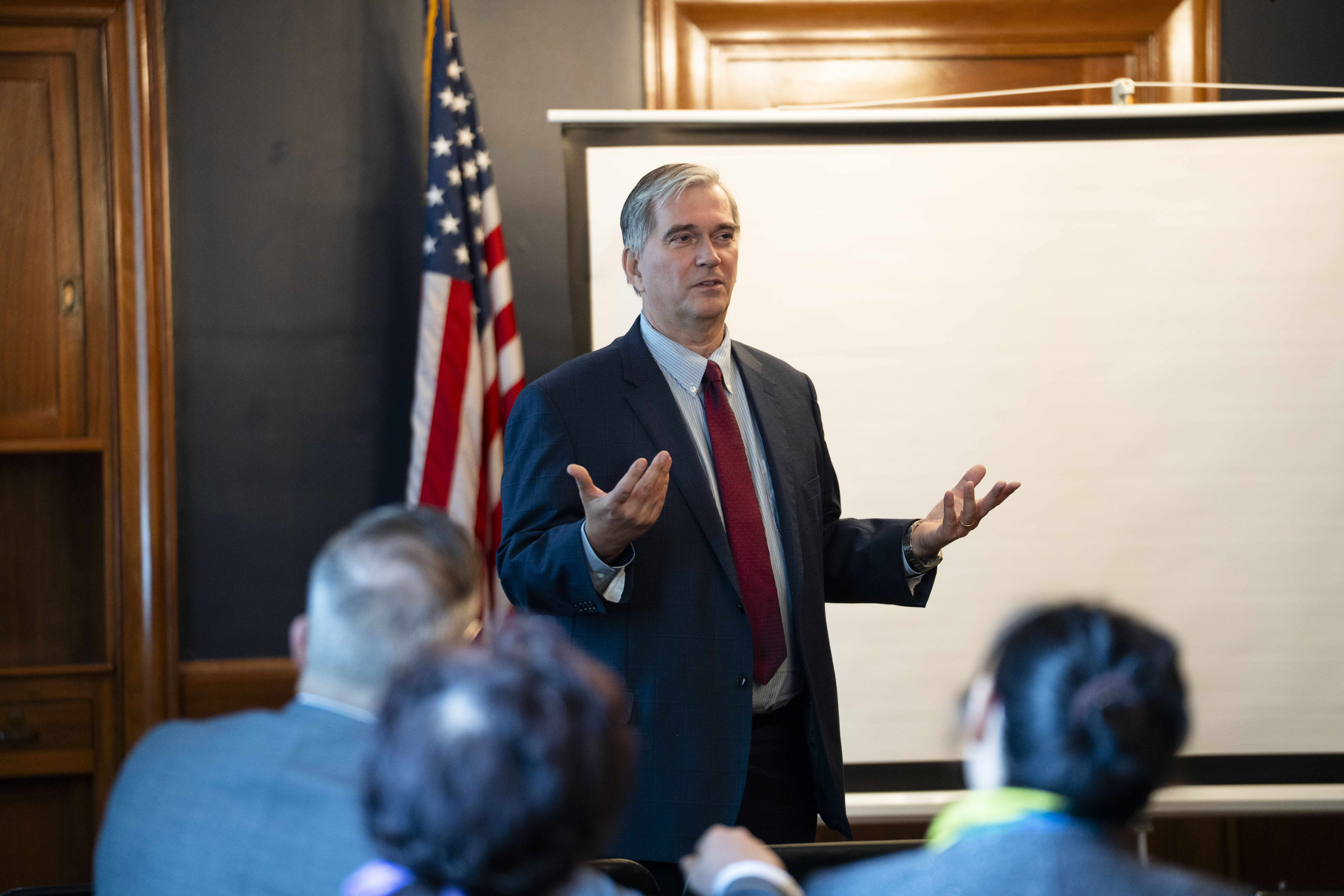
Torsten Trey, executive director of Doctors Against Forced Organ Harvesting, speaks after the screening of Silent Harvest: The Courage to Speak Up at the Senate Dirksen building in Washington on May 15, 2026. Credit: Madalina Kilroy/The Epoch Times.
That remains an allegation about the mechanism. The proposed US legislation is significant because it would require the American government to formally investigate precisely these questions rather than relying solely upon NGOs, journalists and independent tribunals.
What S.4009 Would Do
The legislation would create financial and immigration sanctions against foreign individuals determined to have engaged in or facilitated forced organ harvesting.
Those targeted could be barred from entering the United States and prevented from conducting transactions involving assets under US jurisdiction.
The bill also requires the Secretary of State to produce a detailed assessment of Chinese transplantation practices and determine whether systematic forced organ harvesting is occurring.
That creates an important distinction between the legislation and some of the political rhetoric surrounding it.
Congress is not simply legislating a final factual determination that every allegation has been proven by the US Government. The legislation would create mechanisms for investigation, reporting and sanctions where responsibility can be established.
The bill's passage through the Senate therefore moves the issue from human-rights advocacy towards formal state scrutiny.

The screening of the documentary Silent Harvest: The Courage to Speak Up in Washington on May 16, 2026. Credit: Madalina Kilroy/The Epoch Times.
The Human Dimension
The allegations are not confined to institutional reports and transplant statistics.
Falun Gong practitioner Alisa Zhou, a Maryland accountant and US citizen, told The Epoch Times that she had been campaigning for passage of the legislation since June. By September, she and friends had collected approximately 12,000 signatures supporting the measure.
The issue is also personal for Zhou. According to The Epoch Times, Chinese authorities detained her mother, Wang Youmei, in Wuhan in April following surveillance of Falun Gong practitioners.
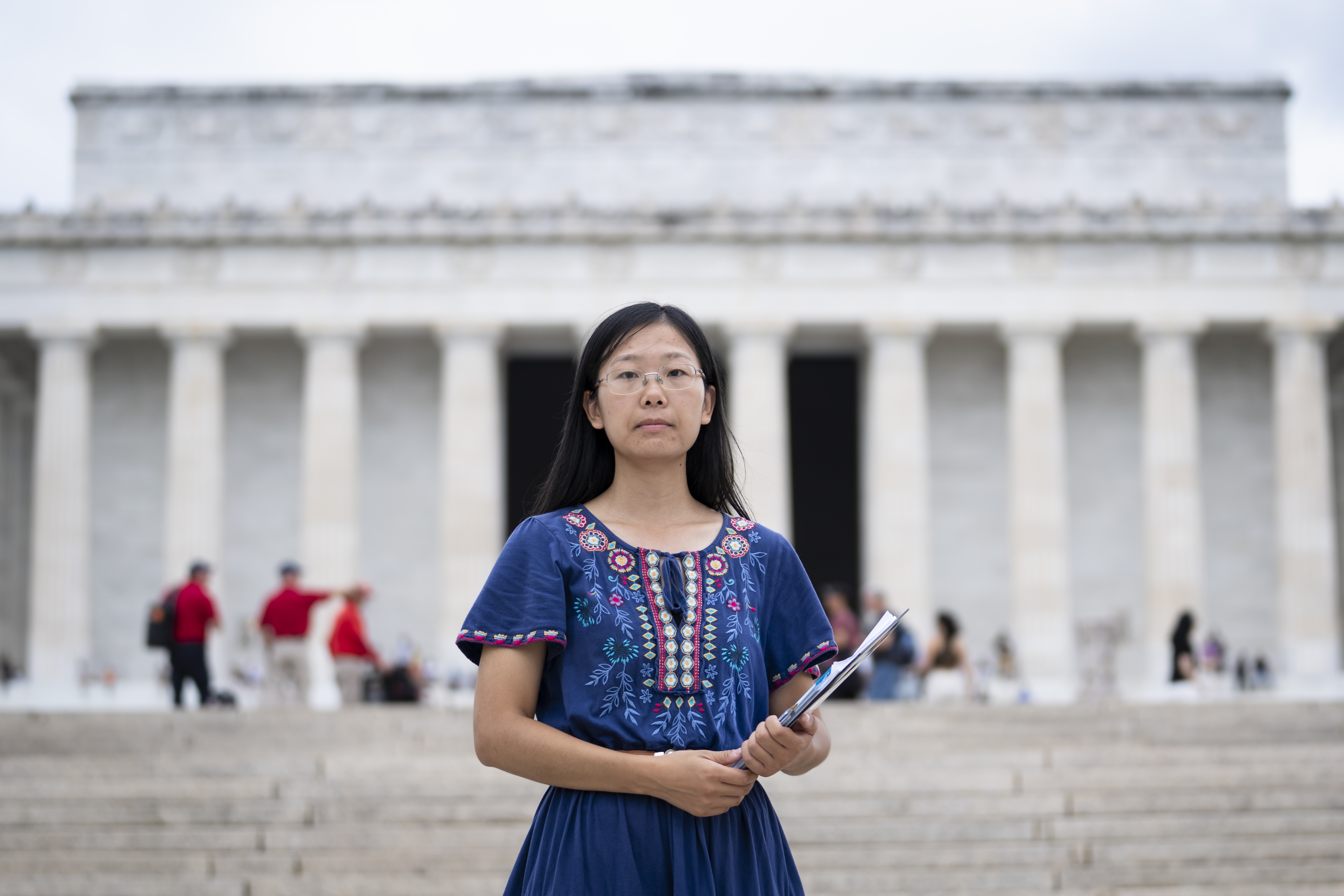
Falun Gong practitioner Alisa Zhou distributes information at the Lincoln Memorial in Washington on September 19, 2026. Zhou's mother, Wang Youmei, has been detained since April in Wuhan, China, because of her faith, according to The Epoch Times. Credit: Madalina Kilroy/The Epoch Times.
The campaign surrounding S.4009 has also involved Americans outside Falun Gong communities.

Christine Flowers, a Philadelphia immigration lawyer and syndicated columnist, signs a petition supporting the Falun Gong and Victims of Forced Organ Harvesting Protection Act at a rally in Philadelphia on September 19, 2026. Credit: Steve Wen/The Epoch Times.
New Zealand Has Already Confronted This Question
The issue is not remote from New Zealand.
In 2020, a petition by Margo MacVicar on behalf of the International Coalition to End Transplant Abuse in China was formally presented to the New Zealand Parliament with 23,213 signatures.
The parliamentary record shows that the petition asked Parliament to request that China allow a credible and independent international team to verify claims that sourcing organs from executed prisoners and prisoners of conscience had ceased.
It also asked Parliament to urge New Zealanders not to travel to China for organ transplantation and to condemn the extrajudicial execution of prisoners or prisoners of conscience for the commercial removal of their organs.
New Zealand therefore cannot reasonably regard the issue as something that has emerged only because of the latest American legislation.
The allegations, and demands for an independent investigation, have previously been placed directly before our Parliament.
New Zealand's Human Tissue Act 2008 requires appropriate consent for the collection and use of human tissue within its jurisdiction and prohibits trading in human tissue, subject to limited exemptions.
The more difficult question concerns what happens when a New Zealander travels overseas to receive an organ.
Does This Affect New Zealand?
Yes, because the fundamental issue raised by the American legislation is not simply China's internal human-rights record. It is whether citizens, medical systems, universities, researchers, pharmaceutical companies or governments outside China could knowingly or unknowingly become connected to an unethical transplant system.
For New Zealand, there are several questions worth examining.
Do we know how many New Zealand residents travel overseas for organ transplantation and where those procedures occur?
Are transplant destinations and organ sources systematically recorded when patients return to New Zealand and require continuing anti-rejection treatment?
Could existing New Zealand law prosecute a citizen who knowingly purchased or received an organ overseas that had been taken without consent?
And should New Zealand independently investigate whether public money, universities, medical institutions or research collaborations have had connections with Chinese transplant institutions subsequently implicated in forced organ harvesting allegations?
These questions do not require New Zealand to automatically adopt every conclusion reached in Washington.
They require something simpler: evidence.
The US Senate has now decided that the allegations are serious enough to warrant sanctions mechanisms and a formal government investigation into China's transplantation system. New Zealand Parliament was presented with substantially the same underlying issue six years ago.
If the American investigation proceeds and produces evidence about organ sources, transplant volumes, hospitals, officials or international research relationships, Wellington will have to decide what that evidence means for New Zealand law, medical ethics and our relationship with China.
For a country whose own legislation makes informed consent fundamental to lawful organ donation, that is not merely a foreign-policy question.
It is also a question of whether the same ethical standard applies when the transplant occurs beyond New Zealand's borders.
Independent reporting. Original context. Credited sources.
Sources
Eva Fu, The Epoch Times, 1 October 2026:
Forced Organ Harvesting Bill Passed by Senate: What to Know
US Government Publishing Office:
S.4009, Falun Gong and Victims of Forced Organ Harvesting Protection Act
US Senator Ted Cruz:
Senate Passage of the Falun Gong and Victims of Forced Organ Harvesting Protection Act
China Tribunal:
Final Judgment
New Zealand Parliament:
Petitions presented during the 52nd Parliament
New Zealand Ministry of Health:
About the Human Tissue Act