New Zealand has emerged from its 2026 general election without a definitive answer about who will govern. Labour has narrowly overtaken National in the preliminary party vote, the governing coalition is clinging to a one-seat majority, and the unexpected parliamentary breakthrough of the Opportunity Party has transformed the political landscape. With hundreds of thousands of special votes awaiting scrutiny, the country faces three weeks of uncertainty—and serious questions about the leadership that may emerge
eLocal Report: Based on RNZ's election-night coverage, the Electoral Commission's preliminary results released on 7 November 2026, and additional eLocal editorial analysis.
A Nation Divided
New Zealand's 2026 general election has delivered one of the most finely balanced parliamentary outcomes in the country's modern political history, leaving the next government dependent on the official count and the distribution of special votes.
The Electoral Commission's preliminary results show Labour receiving 29.36 percent of the party vote, compared with National's 29.21 percent. That is a margin of just 3,650 votes between the country's two largest parties, although National has secured substantially more electorate seats.
Despite finishing narrowly behind Labour in the nationwide party vote, National is provisionally allocated 42 parliamentary seats, compared with Labour's 36. Together with ACT's 13 seats and NZ First's 12, the incumbent governing parties would command 67 seats in a 131-seat Parliament.
That is enough to govern but only by the narrowest possible margin.
The Commission estimates that approximately 399,365 special votes remain to be processed, including 96,947 overseas and dictation votes. The official results are scheduled for Friday, 27 November, leaving New Zealand facing a prolonged period of political uncertainty.
The immediate question is whether the governing parties can retain their majority. The more important question may be what kind of government New Zealand will have when the counting is finished.
The Numbers That Matter
The preliminary result represents a significant reduction in National's electoral support compared with 2023, when it received 38.1 percent of the party vote.
Labour has recovered to become the largest party by party votes, but its own result remains below 30 percent. Neither major party can claim anything approaching a commanding national mandate.
The Greens have emerged with 13.30 percent of the vote and 16 seats, while ACT has received 10.92 percent and 13 seats. NZ First has secured 9.78 percent and 12 seats.
The Opportunity Party, meanwhile, has reached 5.96 percent, provisionally securing seven seats in Parliament for the first time. Te Pāti Māori is projected to retain five electorate seats despite receiving just 0.57 percent of the nationwide party vote.
The resulting Parliament is provisionally larger than the normal 120 seats because of electorate-seat overhangs. This complicates the calculations required to form a government and demonstrates how electorate results and party votes interact under New Zealand's Mixed Member Proportional electoral system.
With the governing bloc holding 67 seats and the remaining parties holding 64, a movement of only a small number of seats could fundamentally change the political arithmetic.
It is an extraordinary position for a country seeking stable government during a period of economic and international uncertainty.
Who Scrutinises the Special Votes?
The close result places the integrity and transparency of the official electoral count firmly in the public spotlight.
Special votes are not an informal or discretionary addition to the election. They are legitimate ballots cast by eligible voters whose circumstances require additional verification, including people voting outside their electorate, overseas voters and those not appearing on the printed electoral roll.
According to the Electoral Commission, New Zealand's votes are counted manually rather than by electronic vote-counting machines.
During the official count, electoral officials scrutinise the rolls to identify anyone who may have voted more than once. Ordinary votes already counted on election night are recounted, and special votes are returned to the appropriate electorates for verification.
Each special-vote declaration is checked to establish that the voter was properly enrolled and eligible to vote. Where a person's name does not appear on the electoral roll, additional checks are undertaken by the registrar of electors.
Only votes that satisfy the legal requirements are included in the official count.
The process also includes scrutineers, independent Justices of the Peace, signed certificates of results and quality-assurance checks before the final figures are declared.
These safeguards are important. However, when the future government could depend on a handful of seats, public confidence also depends on how clearly the Commission communicates its procedures, rejected-vote totals and final reconciliations.
The legitimate question is not whether special votes should be counted. They must be.
The question is whether every eligible vote is counted once, every ineligible vote is excluded, and the public can independently understand how the final result was reached.
There is no evidence in the reporting examined that the special-vote count has been manipulated. Scrutiny and transparency are nevertheless essential precisely because the result is so close.
The Opportunity Surprise
Perhaps the most unexpected development is the parliamentary breakthrough of the Opportunity Party, led by Qiulae Wong.
With 144,298 preliminary party votes, representing 5.96 percent of the total, Opportunity has crossed the five-percent MMP threshold and is provisionally entitled to seven parliamentary seats.
For a party that has never previously entered Parliament, this represents a remarkable political achievement.
Yet Opportunity is not a newly created political organisation. Its history extends back approximately a decade, making its success the culmination of a longer political campaign rather than the sudden emergence of a party formed for this election.
The result raises questions about how Opportunity managed to attract enough support to cross the threshold while both National and Labour recorded historically weak combined support.
Was the result driven by younger voters, dissatisfaction with the established parties, effective campaign organisation, or a wider appetite for political alternatives?
The preliminary figures establish the scale of Opportunity's success, but do not by themselves explain the reasons behind it.
Those questions deserve closer examination, particularly because the party's seven MPs could become influential if the final seat allocation leaves neither traditional political bloc with a majority.
Opportunity has indicated that it would speak first to the party receiving the greatest number of votes. Whether that position survives the official count and subsequent coalition negotiations remains to be seen.

Opportunity Party leader Qiulae Wong celebrates her party's breakthrough into Parliament. Photo: Phil Walter/Getty Images.
A Labour-Led Government?
The possibility of a Labour-led government returning to power raises serious questions about experience, policy direction and the country's economic future.
Labour leader Chris Hipkins previously served as Prime Minister and held several senior ministerial portfolios during the Labour governments of 2017 to 2023. His experience is undeniable, but so too is the political controversy surrounding that government's record.
New Zealanders lived through a period marked by pandemic restrictions, substantial government spending, inflationary pressures, housing affordability problems and growing public dissatisfaction with the direction of the country.
Not every economic difficulty of that period can reasonably be attributed to the Labour government. International disruptions, monetary policy and global inflation also played significant roles.
Nevertheless, voters are entitled to examine the decisions made by the previous administration and ask whether the policies of a new Labour-led coalition would address the country's underlying problems or repeat earlier mistakes.
The prospect of Labour governing alongside the Greens, and potentially requiring support from other parties, also raises questions about ministerial experience and the distribution of important portfolios.
It would be inaccurate to claim that such a government would contain no experienced ministers. Hipkins and several other Labour politicians have previously held ministerial office.
The more important issue is whether the individuals entrusted with finance, economic development, infrastructure, energy, education and public administration would have the judgement and capability to manage New Zealand's challenges.
Experience alone does not guarantee competence, just as a lack of previous ministerial service does not automatically establish incompetence.
What matters is the quality of the decisions made and the consequences for New Zealanders.
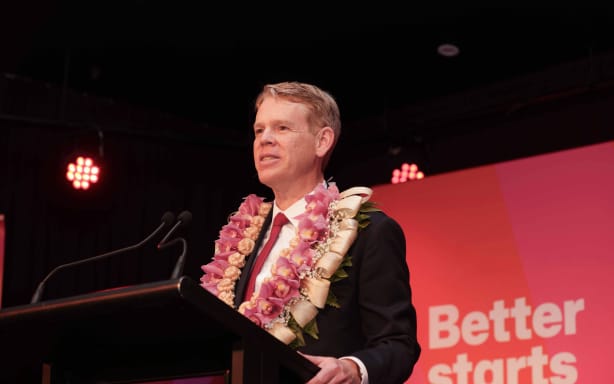
Labour leader Chris Hipkins addresses supporters as Labour emerges narrowly ahead in the preliminary party vote. Photo: Samuel Rillston.
National's Heavy Losses
The election has also inflicted serious damage on National's senior parliamentary ranks.
Finance Minister Nicola Willis, Justice Minister Paul Goldsmith and senior minister Chris Bishop are among the prominent figures facing departure from Parliament under the preliminary result.
RNZ reports that the three politicians collectively held 19 ministerial portfolios, including responsibility for finance, justice, transport and housing.
Their departure would create substantial difficulties for a National-led government attempting to maintain continuity across major areas of public administration.
For Christopher Luxon, the challenge is not simply retaining the prime ministership. It is rebuilding a ministerial team while negotiating with coalition partners whose electoral support has strengthened relative to National's.
ACT and NZ First could reasonably expect greater influence within any renewed governing arrangement.
That would leave Luxon facing a difficult balancing act between his party's priorities and those of David Seymour and Winston Peters.
A government surviving by a single seat cannot afford prolonged internal division.

National MP Paul Goldsmith was among the senior figures facing defeat in the preliminary results. Photo: Edward Gay.
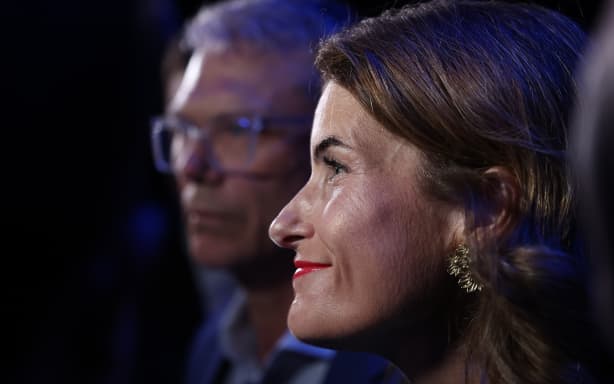
Finance Minister Nicola Willis speaks to the media at National's election-night event in Auckland. Photo: Fiona Goodall/Getty Images.
Winston Peters Holds His Ground
NZ First's performance is another significant feature of the election.
With 9.78 percent of the preliminary party vote and 12 parliamentary seats, Winston Peters has again demonstrated his ability to maintain a substantial political constituency.
Peters described the campaign as difficult, but the result places NZ First in a potentially influential position should the incumbent coalition retain power.
The same applies to ACT, whose 10.92 percent share gives David Seymour a stronger negotiating position relative to National than he held following the 2023 election.
Both parties may seek greater influence over policy and ministerial appointments.
For New Zealanders concerned about national sovereignty, immigration, government spending and the country's relationship with international institutions, the composition of the next coalition will be consequential.
However, the final allocation of seats must be established before any reliable conclusions can be drawn about the bargaining power of individual parties.
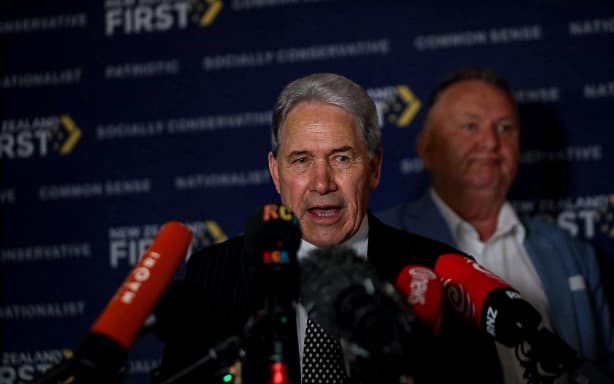
NZ First leader Winston Peters acknowledges supporters after another successful election campaign. Photo: Mark Papalii.
A Titanic Moment?
There is a troubling analogy for New Zealand's present political circumstances.
A nation facing economic pressures, expensive energy, strained public services and an uncertain international environment cannot afford a government that mistakes political survival for competent leadership.
The Titanic did not sink because it lacked impressive facilities, powerful engines or confident leadership. It sank because the danger ahead was not adequately confronted.
New Zealand's political leaders face a comparable test of judgement—not because the country is destined for disaster, but because complacency at a time of genuine vulnerability can carry enormous consequences.
An inexperienced or poorly coordinated coalition could struggle to respond to those pressures. Equally, a weakened incumbent government distracted by internal negotiations could fail to deliver the leadership voters expect.
The risk is not confined to one side of politics.
A narrow parliamentary majority is not, by itself, proof of poor government. But it leaves little room for mistakes, defections or disagreements over major policy.
The next administration will need more than parliamentary arithmetic to demonstrate that it can govern effectively.
Does This Affect New Zealand?
The outcome will determine the country's leadership, economic priorities and policy direction for the next parliamentary term.
For households already struggling with living costs, the implications are immediate. Decisions about taxation, public spending, housing, energy and infrastructure will influence the financial pressures experienced by families and businesses.
The election also highlights a broader shift in public confidence.
With National and Labour together receiving less than 60 percent of the preliminary party vote, a substantial proportion of voters have turned to smaller political parties.
That does not necessarily indicate a rejection of democracy. It may instead reflect dissatisfaction with the traditional parties and a desire for greater political choice.
Nevertheless, the resulting fragmentation makes coalition negotiations and parliamentary stability more complicated.
The Electoral Commission's final count will determine the allocation of seats. Political negotiations will then determine who can command the confidence of the House.
Both stages deserve close public attention.
Will This Make New Zealand Stronger?
The central question facing the country is not simply whether Christopher Luxon or Chris Hipkins becomes Prime Minister.
It is whether the government that emerges can strengthen New Zealand's economy, restore confidence in public institutions, protect national sovereignty and deliver practical improvements to the lives of its citizens.
New Zealand does not need political theatre masquerading as leadership. Nor does it need a government whose principal achievement is negotiating enough parliamentary support to remain in office.
It needs ministers who understand their responsibilities, make sound decisions and can be held accountable for the results.
The special-vote process must be transparent and rigorously administered. Every legitimate vote deserves to be counted, and every New Zealander deserves confidence in the final outcome, regardless of which political party benefits.
The Opportunity Party's emergence also demands attention. Its success suggests that a meaningful number of voters are looking beyond the established political choices, even if its longer-term direction remains uncertain.
For eLocal, the ultimate test remains unchanged:
Will the next government make New Zealand stronger—or will political ambition and poor judgement steer the country closer to the iceberg?
The answer will not be found in election-night speeches.
It will be found in the decisions made after the final votes are counted.
Sources
Image attributions: Original RNZ article photographs retained, in their original editorial order, with individual credits to RNZ / Nathan McKinnon, Samuel Rillston, Edward Gay, Fiona Goodall/Getty Images, Mark Papalii and Phil Walter/Getty Images. Getty Images photographs may require separate republication licensing.