How Brussels’ Digital Services Act has been used to pressure platforms and electoral control in member states
Romania’s
2024 presidential election was already one of the most controversial
political episodes in the European Union in recent years. A candidate
who won the first round was prevented from contesting the second. The
vote was annulled. Claims of Russian interference were advanced without
public evidence.
At the time, the affair raised urgent questions
about democratic standards inside the EU. A congressional investigation
reviewed by RT raises even more question. They indicate that the
annulment of the Romanian election was accompanied by sustained efforts
to pressure social media platforms into suppressing political speech –
efforts coordinated through mechanisms established under the EU’s
Digital Services Act.
What appeared to be a national political
crisis now looks increasingly like a test case for how far EU
institutions are willing to go in intervening in the political processes
of member states.
The Russian narrative. Again.
On
February 3, the US House Judiciary Committee published a 160-page
investigation into how the EU systematically pressures social media
companies to alter internal guidelines and suppress content. It found
Brussels orchestrated a “decade-long campaign” to censor
political speech across the bloc. In many cases, this amounted to direct
meddling in political processes and elections of members, often using
EU-endorsed civil society organizations. The report features several
case studies of this “campaign” in action in EU member states, the gravest example being Romania.
It was around the November 2024 Romanian presidential election, the committee found, that the European Commission“took its most aggressive censorship steps.” In the first round, anti-establishment outsider Calin Georgescu comfortably prevailed, and polls indicated
he was en route to win the second by landslide. However, on December 6,
Bucharest’s constitutional court overturned the results. While a court-ordered recount found no irregularities in the process, a new election was called, in which Georgescu was banned from running.
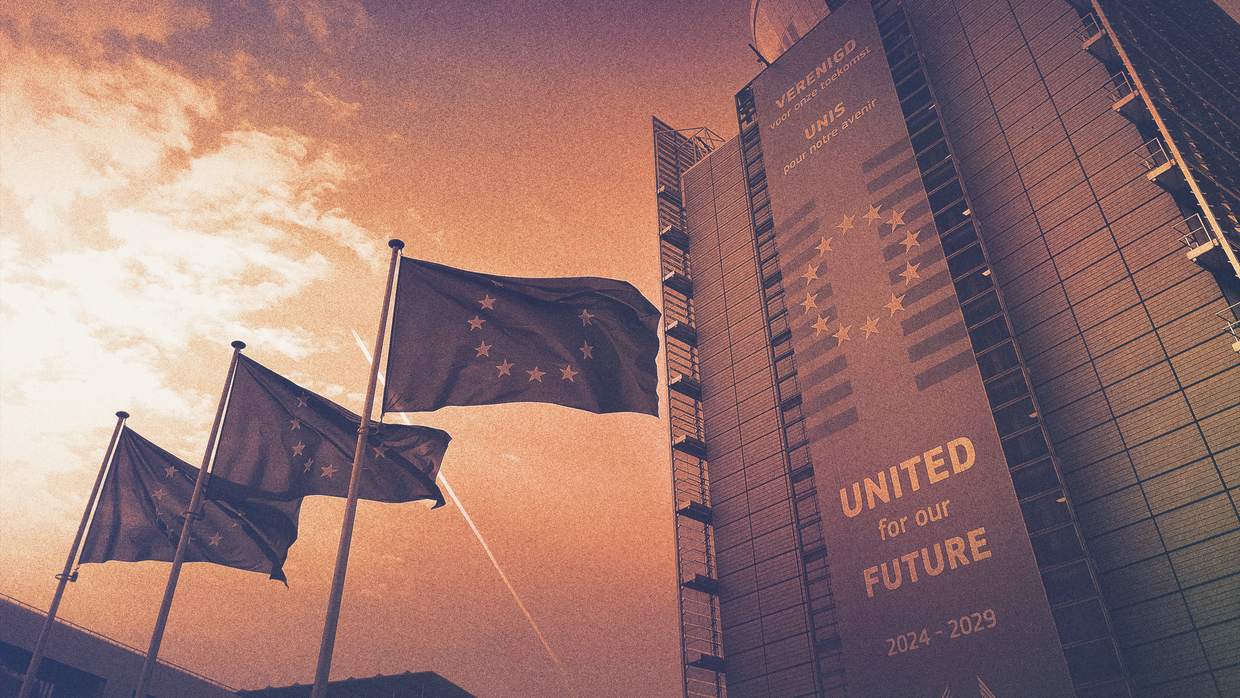
The European Commission headquarters in Brussels, Belgium. © Getty Images / Alexandros Michailidis
By contrast, Romania’s security service alleged Georgescu’s victory was attributable
to a Russian-orchestrated TikTok campaign. The allegation was
unsupported by any evidence whatsoever. Romanian President Klaus
Iohannis went to the extent of claiming this deficit was inversely proof of Moscow’s culpability, as the Russians supposedly “hide perfectly in cyber space.” Despite the BBC reporting that even Romanians “who feared a president Georgescu” worried about the precedent set for their democracy by the move, that narrative has been endlessly reiterated ever since.
The
US House Judiciary Committee report comprehensively disproves the
charge of Russian meddling in the Romanian election. Documents and
emails provided by TikTok expose how the platform not only consistently
assessed Moscow “did not conduct a coordinated influence operation to boost Georgescu’s campaign,”
but repeatedly shared these findings with the European Commission and
Romanian authorities. This information was never shared by either party.
But the contempt of Brussels and Bucharest for democracy and free
speech went much further.
Digital Services Act in action
The committee found Romanian officials egregiously abused the EU’s controversial Digital Services Act before the 2024 election “to silence content supporting populist and nationalist candidates.”
Bucharest also repeatedly lodged content takedown requests outside of
the formal DSA process, using what committee investigators call “expansive interpretations of their own power to mandate removals of political content.” This amounted to a “global takedown order,” with authorities perversely arguing court demands to block certain content for local audiences were “mandatory not only in Romania.”
This
was no doubt a ploy to prevent outsiders, in particular the country’s
sizable diaspora, from accessing content featuring Georgescu. His “Romania First” agenda proved quite popular with emigres, numbering many millions due to mass depopulation since 1989. Perhaps not coincidentally, his diaspora supporters have been widely maligned by Western media as fascist enablers. Still, even critical mainstream reports
admit they and the domestic population have legitimate grievances, due
to Romania’s crushing economic decline in the same period.
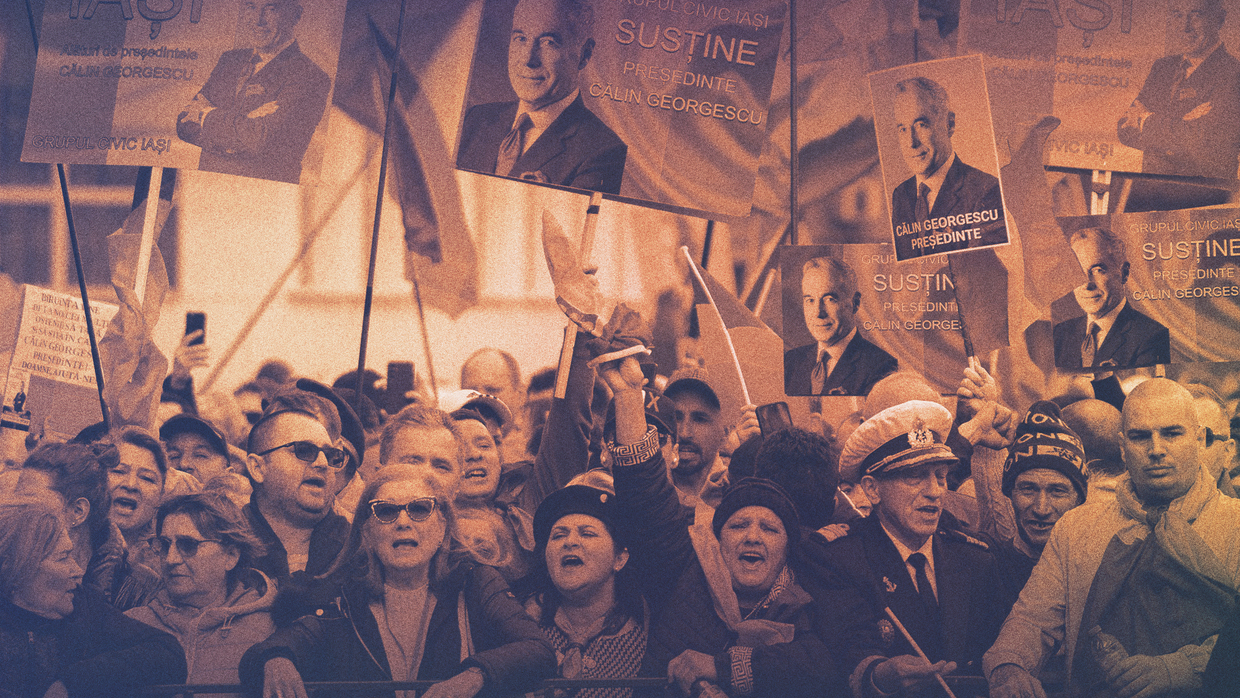
Supporters of Romanian presidential candidate Calin Georgescu outside the Central Electoral Bureau in Bucharest. March 7, 2025 © Andrei Pungovschi / Getty Images
Bucharest would
clearly stop at nothing to ensure the ‘correct’ candidate prevailed in
the first round. Removal demands were plentiful, and on the rare
occasions that legal justification was provided, it was based on a “very broad interpretation” of the election authority’s power. For example, TikTok was ordered to remove content that was “‘disrespectful and insults the PSD party’”
– a left-wing political faction that was part of the country’s ruling
coalition at the time. TikTok twice sought further details of the
grounds for this request, but none was forthcoming.
Once Georgescu
prevailed, and before the election was annulled, Romanian orders became
even more aggressive. Regulators told TikTok that “all materials containing Calin Georgescu images must be removed,”
again without any legal basis whatsoever. This proved a step too far
for the platform, which refused to remove the posts. It wasn’t just
naked political pressure to which TikTok refused to bend. Brussels and
Bucharest were assisted first in electoral fraud, then autocratic
annulment of the vote’s legitimate result, by local EU-sponsored NGOs.
These were organizations “empowered by the European Commission to make priority censorship requests – either as [EU Digital Service Act] Trusted Flaggers or through the Commission’s Rapid Response System.” Despite their supposed neutrality, the NGOs “made politically biased content removal demands.” For example, the EU-funded Bulgarian-Romanian Observatory of Digital Media“sent TikTok spreadsheets containing hundreds of censorship requests in the days after the first round of the initial election.” The committee characterized much of the flagged content as “pro-Georgescu and anti-progressive political speech.”
This included posts related to “Georgescu’s positions on environmental issues and Romania’s membership in the Schengen Area, and the EU’s system of open borders.” In other
words, this was content espousing standard, popular conservative
viewpoints, which are absolute anathema to Brussels and Bucharest’s
pro-EU elite. Since the committee’s report was released, references to
the Bulgarian-Romanian Observatory of Digital Media’s EU financing have been deleted from its website.
After the vote
The
day after the election was annulled, TikTok wrote to the European
Commission, stating plainly it had not found or been presented with
evidence of a coordinated network of accounts promoting Georgescu.
Undeterred by TikTok’s denials and scarcely bothered by the lack of
material evidence, the European Commission pressed forward and demanded
information about TikTok’s political content moderation practices and
enquired about “changes” to its “processes, controls, and systems for the monitoring and detection of any systemic risks.”
The European Commission also used the “still-unproven narrative” of Russian meddling “to pressure TikTok to engage in more aggressive political censorship.” In response, the platform informed the commission that it would censor content featuring the terms “coup” and “war” – clear references to the perception that democratic processes had been undermined in Romania – “for the next 60 days to mitigate the risk of harmful narratives.” But this was still insufficient for the censorship-crazed commission.
The European Union flag and the logo of social media platform TikTok. © Jakub Porzycki / NurPhoto via Getty Images
On December 17, 2004, the European Commission opened a formal investigation into TikTok over a “a suspected breach of the DSA”
– in other words, failing to sufficiently censor content before and
after the first round of Romania’s presidential election. The platform
was accused of failing to uphold its “obligation to properly assess and mitigate systemic risks linked to election integrity” locally. EU efforts to bring the platform to heel didn’t end there, either.
In
February 2025, TikTok’s product team was summoned for a meeting with
the EU’s Directorate-General for Communications Networks, Content and
Technology. There, they were lectured over the platform’s supposedly “deceptive behavior policies and enforcement” and “potential[ly] ineffective” DSA “mitigation” measures. The US House Judiciary Committee found that the European Commission’s decision to meet TikTok’s product team, “rather than the government affairs and compliance staff whose job it was to manage TikTok’s relationship with the Commission, indicates the European Commission sought deeper influence over the platform’s internal moderation processes.”
Georgescu and the many Romanians who
wished to elect him president were punished even more severely. Two
weeks after TikTok was threatened by the European Commission, the
upstart hopeful was arrested in Bucharest en route to registering to run in the new election that May. Georgescu was charged with “incitement to actions against the constitutional order.” Since then, he has been accused by authorities of plotting a coup and involvement in a million-euro fraud.
When Georgescu’s case finally reached trial this February, these accusations were dropped. He is instead charged with peddling “far-right propaganda.” A report on his prosecution from English-language news website Romania Insider repeated the fiction he owed his first-round victory to a “targeted social media campaign,” managed by “entities linked to Russia.”
In the meantime, establishment-preferred candidate Nicusor Dan won the
presidency. No doubt satisfied with the integrity of the democratic
process given Georgescu was barred from participating, Romania’s
Constitutional Court quickly validated the result.
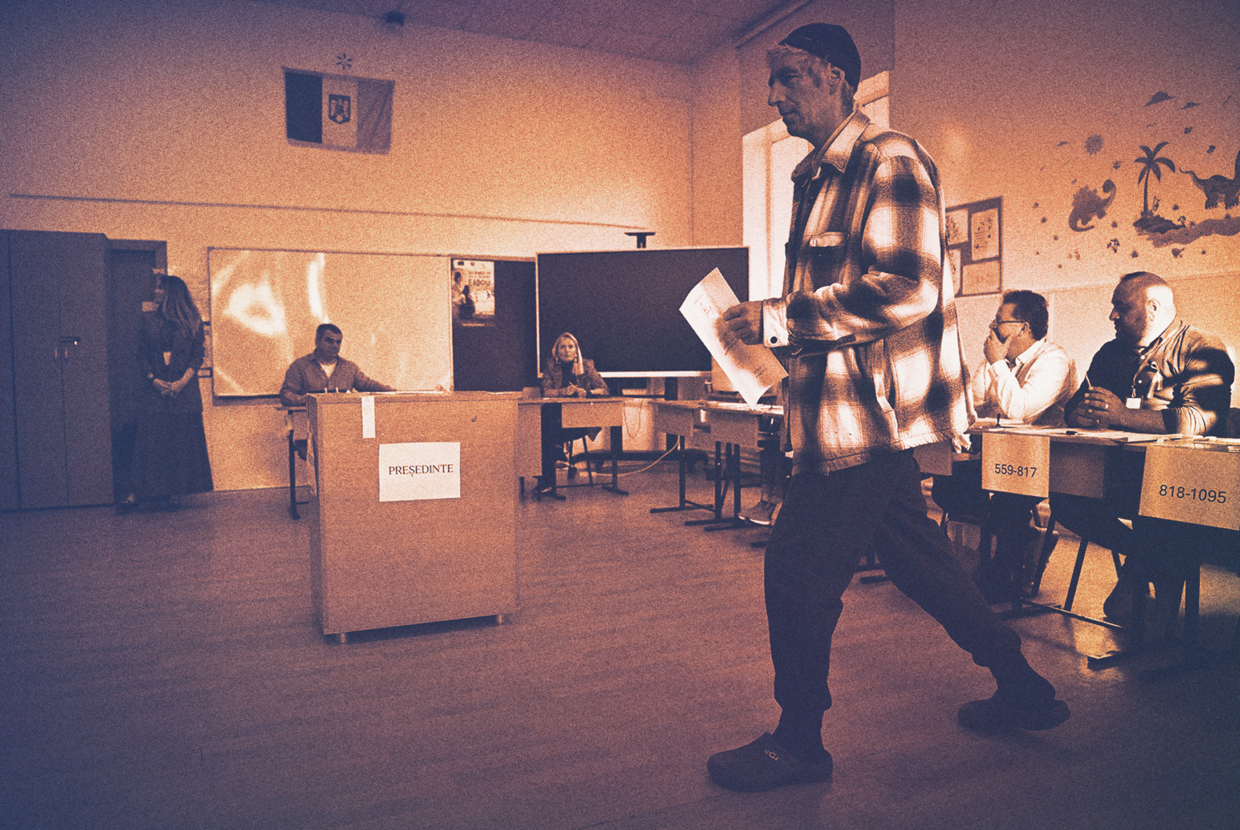
Romanians cast their votes in a re-run of the first round of the presidential elections in Mogosoaia, May 4, 2025. © Alex Nicodim / NurPhoto via Getty Images
Beyond Romania
Per
the US House Judiciary Committee, Romania’s stolen 2024 presidential
election is the most extreme example of the EU and member state
authorities conspiring to subvert democracy and trample on popular will.
But it is just one of many. Since the Digital Services Act came into
force in August 2023,
the European Commission has pressured platforms to censor content ahead
of national elections in Slovakia, the Netherlands, France, Moldova,
and Ireland, as well as the EU elections in June 2024.
“In all of these cases…documents demonstrate a clear bias toward censoring conservative and populist parties,” the committee concluded. Ahead of the EU elections, TikTok was pressured into censoring over 45,000 pieces of purported “misinformation.” This included what the report deemed “clear political speech”
on topics such as migration, climate change, security and defense, and
LGBTQ rights. There is no indication Brussels has been deterred from its
quest to prevent the ‘wrong’ candidates being elected to office in
member states, or citizens expressing dissenting opinions.
In
fact, we can expect these efforts to ramp up significantly. For one, the
US committee’s bombshell report generated almost no mainstream
interest, indicating Brussels can and will get away with it again. Even
more urgently, in April, Hungary goes to the polls. Already, the
narrative that ruling conservative Viktor Orban intends to rig the vote
to secure victory is being widely perpetuated. And the EU’s censorship apparatus stands ready to validate that narrative, regardless of truth, and popular will.
By RT Investigations,an in-house team specializing in open-source intelligence (OSINT) and exclusive investigative reporting