Fuel prices have rapidly climbed into one of the biggest political and economic concerns facing New Zealanders, according to a new Ipsos Issues Monitor survey that paints an increasingly uneasy picture of household confidence heading into the next election cycle.
By elocal Political Desk
Fuel prices have rapidly climbed into one of the biggest political and economic concerns facing New Zealanders, according to a new Ipsos Issues Monitor survey that paints an increasingly uneasy picture of household confidence heading into the next election cycle.
The survey shows concern about fuel prices surged 17 points since February, making it the fourth-biggest issue worrying voters nationwide.
The sharp rise reflects mounting pressure on households already grappling with rising grocery costs, mortgage stress, elevated power prices and broader economic uncertainty linked to global instability.
Fuel Anxiety Climbs Rapidly
Only months ago, fuel ranked outside the major political concerns dominating public debate.
Now it sits just behind cost of living, healthcare and the broader economy.
The shift comes as international tensions, shipping disruptions and Middle East instability continue flowing through into New Zealand’s energy costs.
RNZ reported the Ipsos survey found Labour was narrowly rated as the party most capable of managing fuel-related concerns, despite both Labour and National seeing small declines in confidence on the issue.
The results are likely to concern the government given fuel prices directly impact transport, food distribution, freight costs and household spending across almost every sector of the economy.
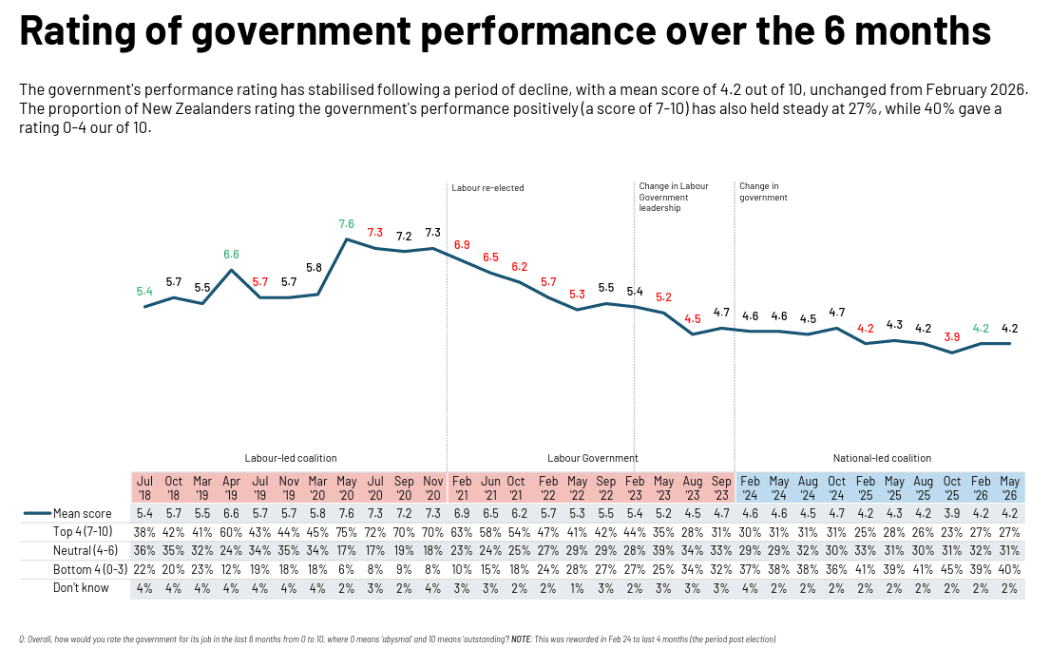
Pollsters' rating of government performance. Source: Supplied / Ipsos
Cost Of Living Still Dominates
The survey found cost of living remains New Zealand’s number one concern overall, with 61 percent of respondents identifying it as one of the country’s biggest issues.
Healthcare remained second, while economic concerns held third place.
Housing concerns eased slightly in the latest survey, while crime and law-and-order concerns fell below fuel prices for the first time in recent polling.
The findings suggest economic pressure is increasingly overtaking traditional political narratives as households focus more heavily on day-to-day affordability.
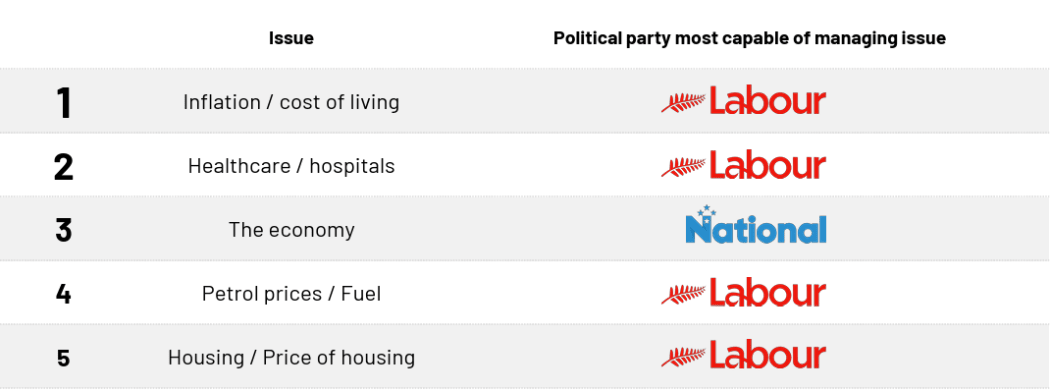
A graphic showing which political party pollsters thought could best manage an issue. Source: Supplied / Ipsos
Economic Pressure Reaching Across The Economy
Fuel prices rarely operate in isolation.
Higher diesel, petrol and shipping costs flow directly into supermarket prices, freight costs, construction expenses and business operating costs.
The survey comes as many economists continue warning that inflationary pressure linked to global supply chains and energy markets could remain elevated longer than expected.
At the same time, growth indicators across New Zealand’s economy remain weak.
Recent banking commentary has warned the country may face an extended period of slow economic recovery stretching well into 2027 or beyond.
Political Pressure Building Ahead Of Election
The Ipsos survey also highlights growing political pressure around economic management.
Labour rated strongest on nine of the top twenty voter concerns, while National led on four.
Government performance overall remained weak, with respondents rating current performance at just 4.2 out of 10.
The findings suggest voters may be increasingly looking for practical economic relief rather than ideological positioning.
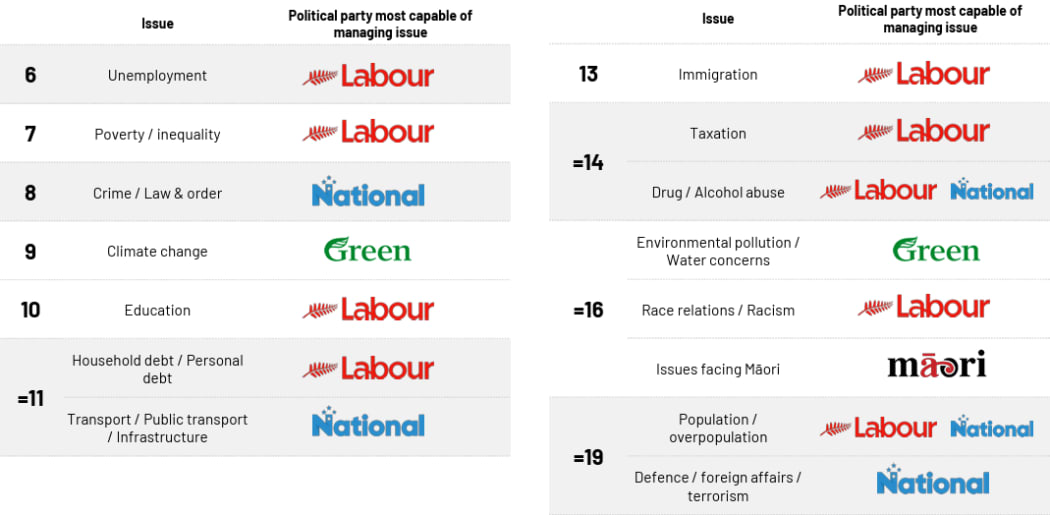
A graphic showing which political party pollsters thought could best manage an issue. Source: Supplied / Ipsos
Fuel Security Becoming A National Issue
The growing prominence of fuel concerns may also reflect wider public awareness around energy security vulnerabilities.
New Zealand remains heavily dependent on imported refined fuel following the closure of Marsden Point refinery operations.
Any future disruption to shipping routes, international refining capacity or geopolitical instability now has the potential to flow rapidly into domestic prices and supply concerns.
While political debate often focuses on short-term relief measures, the survey may signal that energy affordability and long-term fuel resilience are becoming broader national issues.
The Bigger Picture
The latest Ipsos polling highlights a country increasingly focused on economic survival rather than political slogans.
Fuel prices are no longer simply a transport issue.
They now sit at the centre of wider concerns around inflation, living costs, energy security and economic resilience.
As Budget 2026 and the next election cycle approach, pressure is likely to intensify on all major parties to explain not only how they plan to manage fuel costs, but how they intend to rebuild long-term economic stability for ordinary New Zealanders.