For almost four years, three New Zealand children remained hidden in the rugged country around Marokopa with their father, Tom Phillips. The Public Inquiry into their disappearance has now concluded that authorities missed opportunities both to prevent their second disappearance and to bring them home sooner
eLocal Report: Based on reporting by Sam Sherwood, National Crime Correspondent for RNZ, and the Report of the Public Inquiry into the Disappearance of the Phillips Children. Read the original RNZ report HERE: https://www.rnz.co.nz/news/crime-and-justice/1406566/tom-phillips-report-the-missed-opportunities-to-find-the-children
The disappearance of Tom Phillips and his three children became one of New Zealand's longest and most extraordinary missing-person investigations. But the final report of the Public Inquiry, conducted by former High Court judge Simon Moore KC, shifts attention from the difficulty of finding a family hidden in remote bush to a more uncomfortable question: could the second disappearance have been prevented in the first place?
The Inquiry's conclusion is that more could have been done. It found that the harm caused by Phillips isolating the children from their mother, siblings, wider family, friends and society was underplayed, minimised or overlooked by agencies for significant periods. It also found that concerns raised by the maternal whānau were too often treated as part of a parenting dispute rather than as information potentially relevant to the children's welfare.
The Government has accepted all of the Inquiry's recommendations. Police and Oranga Tamariki have also accepted its findings and acknowledged shortcomings in information sharing, coordination and the urgency attached to the case.
The First Disappearance
The critical sequence began in September 2021.
Phillips disappeared with his children after leaving his ute on Kiritehere Beach. An extensive search followed. Eighteen days later, Phillips and the children reappeared.
Phillips subsequently told Police that the disappearance had been a spontaneous camping trip and "not a deliberate act to take the kids away and avoid the Family Court proceedings."
The Inquiry did not accept that explanation.
Its assessment was that the explanation sat uncomfortably with the known facts and that the evidence supported the inference that Phillips had entered the bush with the children intending not to be found.
That distinction matters because the first disappearance was not merely history when the children vanished again. It was information available to authorities when assessing the probability that Phillips might repeat his actions.
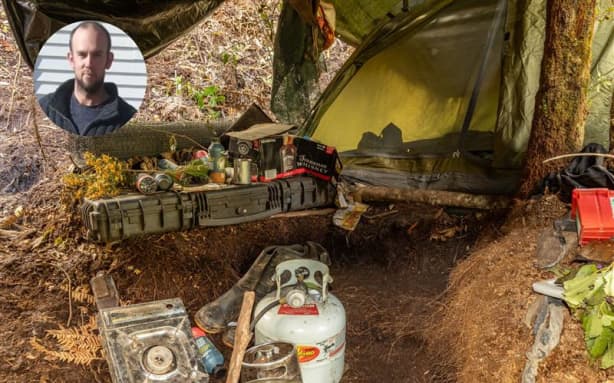
One of the campsites Tom Phillips used. Credit: RNZ / Supplied / Police
Warning Signs Were Already There
Police had accumulated substantial information about Phillips during the first search.
According to the Inquiry, Police had developed an extensive profile through interviews with family and friends and searches of properties associated with Phillips and the children. Information gathered during Operation Marokopa included concerns about Phillips' behaviour, alcohol use and mental state, together with accounts from people close to him about his attitude towards authorities.
Police made a report of concern to Oranga Tamariki on 30 September 2021.
That record itself contained a striking contradiction. Concerns were recorded that Phillips might disappear again and questions were raised about his mental state and why his vehicle had been left below the tideline. Yet the record also stated that Police had "no immediate concerns" for the children's safety.
On 1 October, Police developed a safety plan. Phillips was expected to remain on the family farm, have another family member present and advise Police of plans to leave.
On 5 October he was charged with making a false report to Police.
Two days later, a Police assessment recommended the temporary suspension of his firearms licence on the basis that he was not considered a fit and proper person to possess firearms. The notice was issued on 8 October, but was not served on Phillips for nearly two months.
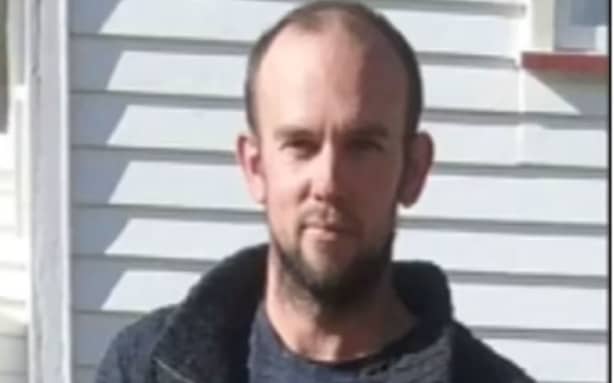
Tom Phillips. Credit: Supplied
The Critical Gap Between Agencies
One of the most important findings concerns what happened next.
After Police made the report of concern, the Inquiry found Police and Oranga Tamariki did not communicate again between 1 October and the children's second disappearance in December 2021.
The Inquiry regarded the original Police report of concern as appropriate, but found that simply transmitting the report was not enough. Relevant information needed to be shared and critical discussions between agencies needed to continue.
Oranga Tamariki visited the children and Phillips at his parents' Marokopa property on 5 October. Phillips described the earlier disappearance as "spontaneous but somewhat planned" and maintained that he would never harm his children.
The family was recorded as presenting well.
Yet less than three months after returning from the first disappearance, Phillips took the children again.
This time they would not return for nearly four years.
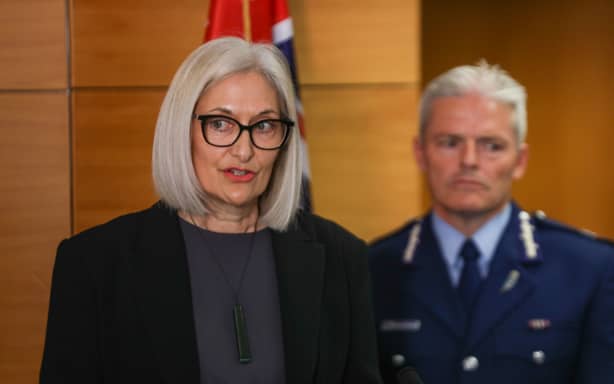
Oranga Tamariki chief executive Amanda Malu at the Tom Phillips Inquiry release. Credit: RNZ / Baz Macdonald
The Second Disappearance
Phillips disappeared with the children again in December 2021.
Some Police officers immediately feared for their safety. The then-district commander later described to the Inquiry a sense of "foreboding" and recalled wondering whether Phillips might have harmed himself and the children.
But this was not the dominant operational assessment.
The Inquiry found that the prevailing Police view was that there was no immediate evidence the children were unsafe. A January 2022 internal record said there was no evidence indicating the children were at risk if Phillips had again gone into the bush with them.
That assessment influenced what happened next.
Police initially pursued a strategy intended to encourage Phillips to return voluntarily rather than escalating the situation. The approach was described as working softly through people within the local community who knew the area and its residents.
There was a legitimate operational consideration behind that strategy: authorities did not want to provoke an unpredictable confrontation around three children.
But the Inquiry concluded that the underlying assessment of the risk to those children was wrong.
Phillips Appears Without the Children
By January and February 2022, there had been sightings indicating Phillips remained in the wider Marokopa area.
Then came an important event.
At approximately 12.30am on 9 February, Phillips visited his parents' home alone.
His parents went to Te Kūiti Police Station the following afternoon and reported the encounter. They told Police that the children had not been with him. Phillips had not disclosed where they were, although he had assured his parents they were safe.
He reportedly requested cash and took a significant quantity of food.
The children were somewhere else.
Yet the investigation still had not become the fully resourced, proactive operation that the Inquiry would later conclude was warranted.
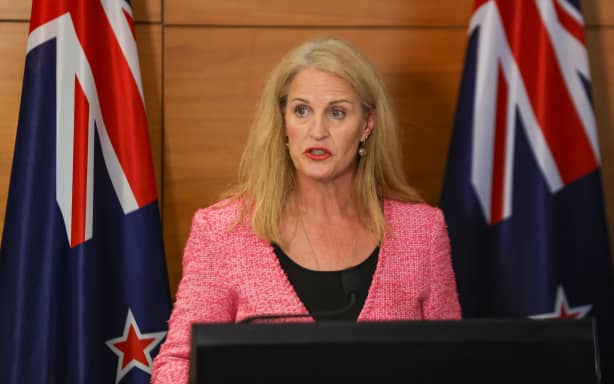
Minister for Social Development Louise Upston at the Tom Phillips Inquiry release. Credit: RNZ / Baz Macdonald
Operation Curly
Police formally reassessed the investigation in April 2022 and established Operation Curly.
Over the following years Police pursued a substantial number of leads. The Inquiry recorded about 1080 investigative "taskings", including sightings and offending potentially connected to Phillips. Police examined phone records, bank accounts and social media, investigated people who might have known Phillips' whereabouts, conducted media campaigns and area canvasses, and later offered an $80,000 reward.
The Inquiry was clear that Police did not simply abandon the search.
But it also identified a crucial distinction between enormous effort over four years and whether the investigation had been structured, resourced and escalated appropriately at the beginning.
An internal review commissioned in 2022 and followed by a more substantial review in March 2023 found the investigation had effectively stalled. It had relied heavily on new sightings or information coming into Police rather than continuously generating new investigative avenues.
The review also identified fragmented information across Police databases and a lack of clear investigative ownership.
Its conclusion was direct: the safety and welfare of the missing children had to be the paramount consideration and more resources were required.
From May 2023, the investigation moved to the Major Crimes Unit.
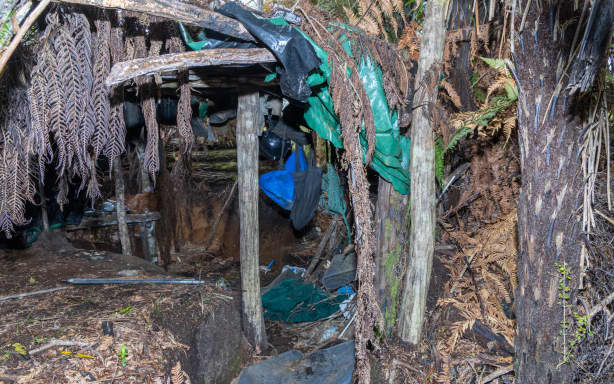
One of the family's campsites. Credit: NZ Police / Supplied
The May 2023 Sighting
Then came one of the most significant missed opportunities identified by the Inquiry.
On 28 May 2023, a woman living on the main road towards Marokopa contacted Police on the 105 number. About 90 minutes earlier, a man had arrived at her home asking for help jump-starting a vehicle that he said was stranded on a forestry road.
The woman and her mother-in-law drove him back towards the vehicle.
She recorded its number plate and reported seeing a girl beside the vehicle and other children inside it. The circumstances made the women suspicious that the man might be Phillips.
Police dispatched a unit approximately half an hour after receiving the report. But that unit was subsequently diverted to a family-harm incident, which ordinarily carried higher priority.
What happened afterwards became a major focus of the Inquiry.
It found no evidence that the initially dispatched officers visited the woman's home or went to the reported location. The Inquiry said Police could not explain why the incident was ultimately designated as requiring no further action.
A senior constable did briefly follow up, but the Inquiry described what followed as a series of missteps and circumstances that delayed Police properly recognising the significance of the sighting.
The Inquiry concluded that Police should have recognised the report as credible and investigated it more thoroughly and quickly. Had that happened, it found, there might have been a real prospect of locating the children.
A Warning About Violence
Another piece of information emerged in July and August 2023.
Detectives visiting the Phillips family farm discussed Phillips' February 2022 visit with his father. His father told them Phillips had warned that Police would not take him alive.
The officer in charge told the Inquiry that this information materially changed the assessment of the risk Phillips presented.
From that point, Police searches involving Phillips were conducted with Armed Offenders Squad or Special Tactics Group involvement.
The risk calculus had fundamentally changed. Locating Phillips was no longer simply a missing-person problem. Police had to consider the possibility of an armed confrontation occurring with children nearby.
In August 2023, Phillips was captured on CCTV at his parents' farm. He was subsequently seen at Bunnings in Hamilton and on Kawhia Road. Those sightings contributed to Police identifying him as the offender in an armed robbery committed in Te Kūiti several months earlier.
The Inquiry described a surge of investigative activity after these developments.
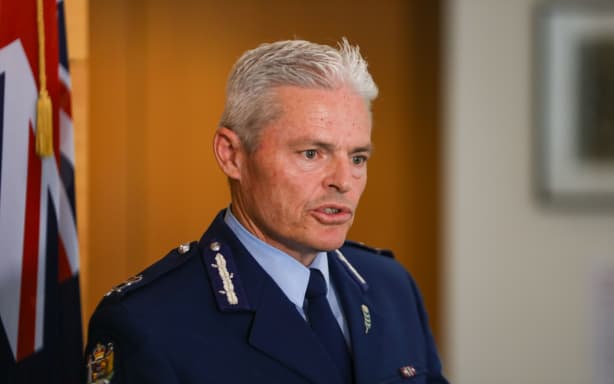
Police Commissioner Richard Chambers at the Inquiry media conference. Credit: RNZ / Baz Macdonald
The Search Narrows
In October 2024, pig hunters photographed Phillips and the children crossing open farmland near Marokopa.
Police and the New Zealand Defence Force subsequently developed a more intensive strategy using trail cameras, road cameras and other surveillance methods to narrow the area in which the family was operating.
Further sightings followed.
The Inquiry records that Police increasingly faced a difficult operational problem. Finding the family was only one objective. Authorities also needed an opportunity to recover the children without triggering an armed confrontation involving Phillips.
By July 2025, planning was focused on identifying his resupply location so the Special Tactics Group could attempt to safely recover the children and arrest him.
Police had good reason for that caution. The Inquiry records that Phillips possessed multiple firearms and substantial ammunition during the second disappearance.
The search ultimately ended not through a planned recovery operation but after another alleged burglary.
On 8 September 2025, Police encountered Phillips. He shot and critically wounded a Police officer before another officer fatally shot him. The three children were recovered safely that day.
What the Inquiry Actually Found
The Inquiry's findings do not support a simplistic conclusion that Police did nothing for four years.
They show something more complicated.
Police officers, specialist units, the NZDF and eventually Oranga Tamariki committed extensive resources and effort to finding the children. The Inquiry expressly recognised that dedication, and Police Commissioner Richard Chambers has noted that the investigation became extraordinarily difficult because of the terrain, the risks posed by firearms and the need to avoid placing the children in danger.
But the Inquiry also concluded that the investigation began from an incorrect assessment of the seriousness of the risk to the children.
That initial assessment had consequences.
Police should have recognised the serious welfare risk from the beginning of the second disappearance and developed a proactive investigative strategy immediately. The Inquiry found that specific opportunities to gather information were missed during the first two months, more CIB resources should have been involved earlier, and formal reviews of the investigation should have occurred sooner.
The report described what followed as a kind of ripple effect. Once the original risk assessment placed the case on a lower footing, subsequent escalation occurred incrementally rather than urgently.
The passage of time itself then became part of the harm.
The children were not simply physically missing. They were being isolated from their mother, siblings, extended family, schooling, community and ordinary childhood life.
Accountability Across Agencies
The Inquiry's criticism extends beyond Police.
Its central finding is that a more consistent and collaborative approach between government agencies could have prevented the second disappearance and could have resulted in the children being recovered earlier.
Oranga Tamariki has accepted the findings and recommendations. Chief executive Amanda Malu acknowledged that opportunities were missed and that the children's mother and older siblings were not listened to as they should have been.
Police Commissioner Richard Chambers has similarly accepted that the initial investigation was not given the focus and resources it required, while emphasising the enormous commitment shown by officers once the investigation intensified.
The Government has accepted all of the Inquiry's recommendations.
That makes the enduring issue larger than the actions of any individual officer or social worker. It is about how information moves through institutions, who assumes ownership when several agencies have overlapping responsibilities, how risk is reassessed when circumstances change, and whether concerns about children are treated primarily as a family dispute or as potential child-protection information.
What Happens After the Inquiry?
Will this in fact make New Zealand stronger? The test now is whether the Inquiry produces institutional change rather than becoming another report filed after the event. New Zealand is stronger when agencies entrusted with coercive powers and child protection are also accountable for how those powers are exercised, when information is shared quickly enough to matter, when warning signs are tested rather than normalised, and when the welfare of children remains the central measure of the response.
There is also an important counterweight. The Inquiry does not establish that every missed opportunity would certainly have resulted in the children being recovered. Marokopa presented exceptionally difficult terrain, Phillips knew the region intimately, and later evidence indicated that confronting him could have produced exactly the violent outcome Police feared.
But uncertainty about whether an intervention would have succeeded is different from whether an opportunity existed. That distinction is at the heart of Simon Moore KC's report.
For nearly four years, the children's mother and older sisters lived without knowing whether the children were safe or even alive. Phillips' own family also suffered the consequences, while Police officers and others involved in the search carried the burden of trying to resolve an increasingly dangerous situation.
The children were eventually brought home.
The question left by the Inquiry is why it took so long, and whether New Zealand's institutions have learned enough from the opportunities that came before those four years began.
Sources
Sam Sherwood, RNZ, Tom Phillips report: The missed opportunities to find the children:
https://www.rnz.co.nz/news/crime-and-justice/1406566/tom-phillips-report-the-missed-opportunities-to-find-the-children
Department of Internal Affairs, Public Inquiry into the Disappearance of the Phillips Children, Final Report:
https://www.dia.govt.nz/Public-Inquiry-into-the-Disappearance-of-the-Phillips-Children---Final-Report
New Zealand Police, Statement on the Public Inquiry into the Disappearance of the Phillips Children:
https://www.police.govt.nz/news/release/statement-public-inquiry-disappearance-phillips-children
Oranga Tamariki, Oranga Tamariki accepts Public Inquiry recommendations on Phillips children:
https://www.ot.govt.nz/about-us/news/phillips-children-inquiry-response/
Ministry of Social Development, Government Response to the Public Inquiry into the Disappearance of the Phillips Children:
https://www.msd.govt.nz/about-msd-and-our-work/newsroom/2026/government-response-disappearance-of-the-phillips-children.html
Independent reporting. Original context. Credited sources.