Articles by Dr Don Brash
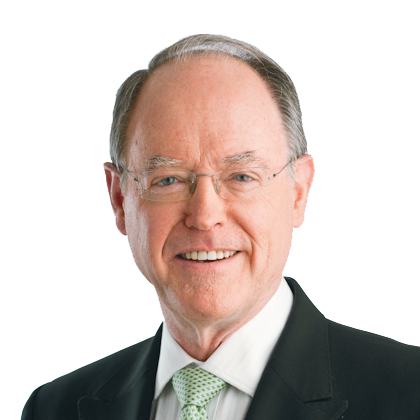
Dr Don Brash is an economist and former Member of Parliament. He served as the Governor of the Reserve Bank of New Zealand from 1988 to 2002.
How Long Will Her Popularity Last?

elocal Digital Edition • August 2021 • Opinion
by Dr Don Brash
One of the most amazing aspects of politics in New Zealand in recent decades is the enduring popularity of a Prime Minister who leads a Government which has failed in almost every major policy area. It is indeed a sad reflection on democracy itself that voters seem more impressed by a pretty smile than by the Government’s ability to deliver on its important policy objectives. Too harsh? What about the brilliant way the Government has dealt…
The Future of New Zealand Is at Stake

elocal Digital Edition • July 2021 • Opinion
by Dr Don Brash
In January 2004, I addressed the Orewa Rotary Club by asking: · What sort of nation do we want to build? > Is it to be a modern democratic society, embodying the essential notion of one rule for all in a single nation state? · Or is it the racially divided nation, with two sets of laws, and two standards of citizenship, that the present Labour Government is moving us steadily towards? · But the spirit of the Treaty of Waitangi was expressed…
Maori Separatists are Using Labour to Rewrite Our Constitution

elocal Digital Edition • June 2021 • Opinion
by Dr Don Brash
Last month, I wrote about the way in which radicals are working to reinterpret the meaning of the Treaty of Waitangi, often arguing that the Treaty of Waitangi (in English) and Te Tiriti o Waitangi (in te reo) are two quite different documents, and that there is no way that Maori chiefs would have surrendered sovereignty in 1840. Given the speeches made by Maori chiefs on 5 February 1840, and at the conference of chiefs at Kohimarama in 1860,…
Surely, the Treaty Gives Maori a Special Right to Be Heard?

elocal Digital Edition • May 2021 • Opinion
by Dr Don Brash
A couple of issues back, I wrote about the way in which the Government had passed legislation under urgency to prevent ratepayers having any right to demand a referendum before local authorities establish Maori wards, as a previous Labour Government had explicitly legislated for. I want to discuss this issue a bit further because I’ve had some people say to me that the Treaty gave Maori New Zealanders a constitutional preference, a special…
Michael Reddell on House Prices

elocal Digital Edition • April 2021 • Opinion
by Dr Don Brash
Throughout my almost 14 years as Governor of the Reserve Bank, Michael Reddell was one of my most insightful advisers. And one of the many issues he warned about was the danger to social and economic stability of a continuing escalation in house prices. As a result of that warning, I commissioned a study on the issue by Owen McShane, who in turn pointed out the potentially disastrous consequences of the tight constraints on the availability of…
Where to Begin?

elocal Digital Edition • March 2021 • Opinion
by Dr Don Brash
So much has happened since I wrote my last column for the February edition that it’s hard to know what on Earth to focus on both internationally and here in New Zealand. In the February edition, I expressed the view that Donald Trump was the worst US President in my lifetime. And since then we have seen Trump’s impeachment, for the second time, this time for inciting the insurrection of 6 January. The Senate voted 57 votes to 43 to find him…
Trump: The Worst U.S. President in my Lifetime

elocal Digital Edition • February 2021 • Opinion
by Dr Don Brash
Days after Donald Trump was elected as US President in November 2016, I wrote one of my very first columns for Elocal. This was my opening paragraph: ·It’s a very long time since I’ve felt so depressed about the future of the United States and of the world. In President-elect Trump we have a man who, at least to judge from his pre-election rhetoric, seems to have not a single redeeming quality. · In mid-2018, eighteen months into his four-year…
Further Proof We've Gone Mad

elocal Digital Edition • January 2021 • Opinion
by Dr Don Brash
My column this month argues that we’ve gone mad, with the widespread push to create local government wards based on race; with the increasing use of the Maori language in situations where almost nobody understands it; and with the rather ridiculous assertion that in 1840 Maori chiefs didn’t really surrender sovereignty to the British Crown – despite the clear wording of the Treaty – but rather entered into a “partnership” with the Crown. Just…
We Have Gone Mad!

elocal Digital Edition • January 2021 • Opinion
by Dr Don Brash
Earlier this year, I wrote a column headed “The country is going mad”. I was wrong: we have already gone mad. I produce three pieces of evidence. The first relates to the very widespread push in recent months to create Maori wards in local government: New Plymouth, Tauranga, Kaipara, Whangarei, Northland, Taupo, Gisborne, Ruapehu, Nelson and South Taranaki. In several of those areas, councils have tried to create Maori wards previously, only to…
House Prices Have Gone Crazy!
Who's to blame this time?

elocal Digital Edition • December 2020 • Opinion
by Dr Don Brash
In the middle of November, the Real Institute reported that the median house price across New Zealand had risen by 19.8 percent over the year to the end of October. Across the country as a whole, the median price had risen to an astonishing $725,000, while in the Auckland region the median price had reached $1 million. In Auckland city the median reached $1.2 million, on the North Shore $1.15 million, and in Manukau $1 million. These are…
Read more…
Search by keywords:
or
filter by category:
- A.I. Artificial Intelligence
- Analysis
- Animals
- Arts & Culture
- Automotive
- Aviation
- Beauty
- Big Tech
- Books
- Business
- Central Government
- Climate Change
- Columns
- Community
- Conspiracy
- Crime
- Crypto Currency
- Culture
- Current Affairs
- Economics
- Editors Note
- Education
- Election
- Energy
- Environment
- Farming
- Feature
- Food & Wine
- Freedom of Speech
- General Interest
- Geopolitics
- Health
- History
- Home & Living
- Human Rights
- Immigration
- In Depth
- Innovation
- Interviews
- Letters to the Editor
- Local Government
- Media
- Military
- Money & Finance
- Motoring
- Music
- Mysteries
- Opinion
- Peace
- People in Business
- Pet of the Month
- Philosophy
- Profiles
- Property
- Real Estate
- Religion
- Retirement
- Science
- Social Issues
- Space
- Spirituality
- Sport
- Technology
- Travel
- War
- War Crimes
- Wellness
- World News